Home Oven Max Temp Workarounds for Better Pizza

You can’t make a home oven hit 450°C, but you can squeeze far more usable pizza heat out of one than its dial suggests — by exploiting the broiler, the self-clean cycle, and rack position rather than chasing a number the thermostat won’t allow. Most home ovens cap out around 250–290°C, well below the 400°C-plus of a dedicated pizza oven, and that gap is the real reason home pizza often disappoints. But the oven’s air temperature isn’t the whole story. This guide walks the legitimate workarounds, in the order I’d try them, plus the ones that aren’t worth the risk.
These tricks build on the surface and technique decisions elsewhere in this cluster — they assume you’ve got a hot, well-soaked surface to work with. If you haven’t sorted that yet, start with the steel vs stone verdict and the broiler method, because a workaround can’t rescue a cold-core surface.
Workaround 1: the broiler is your real high-heat source
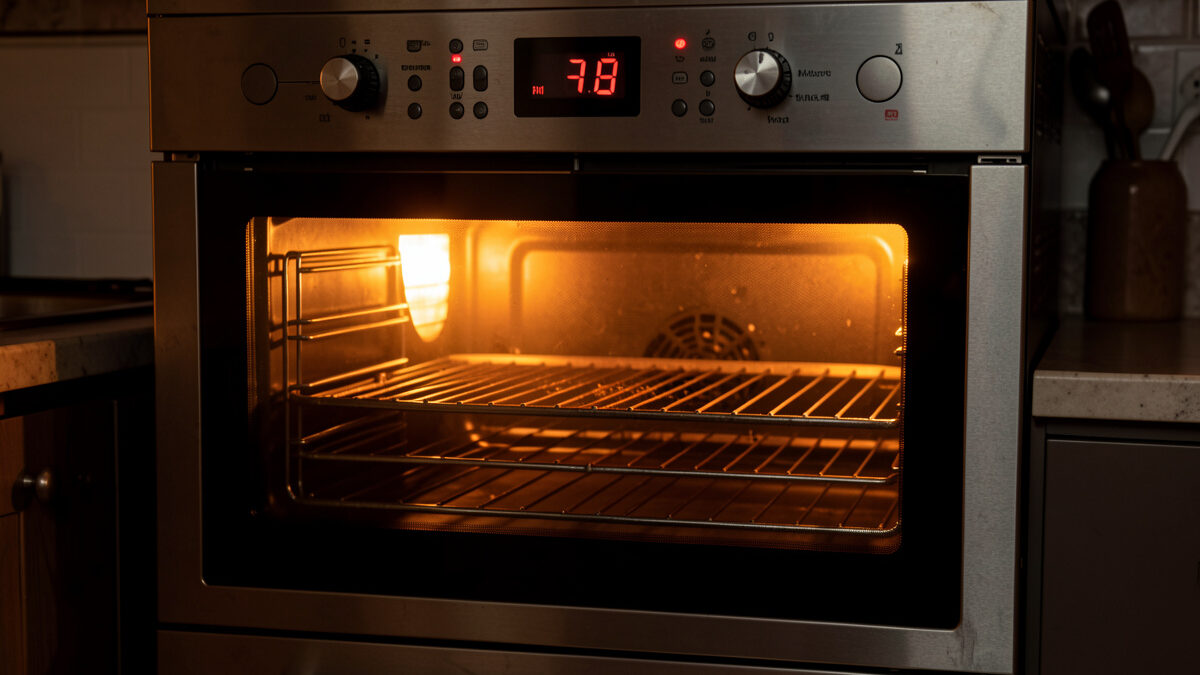
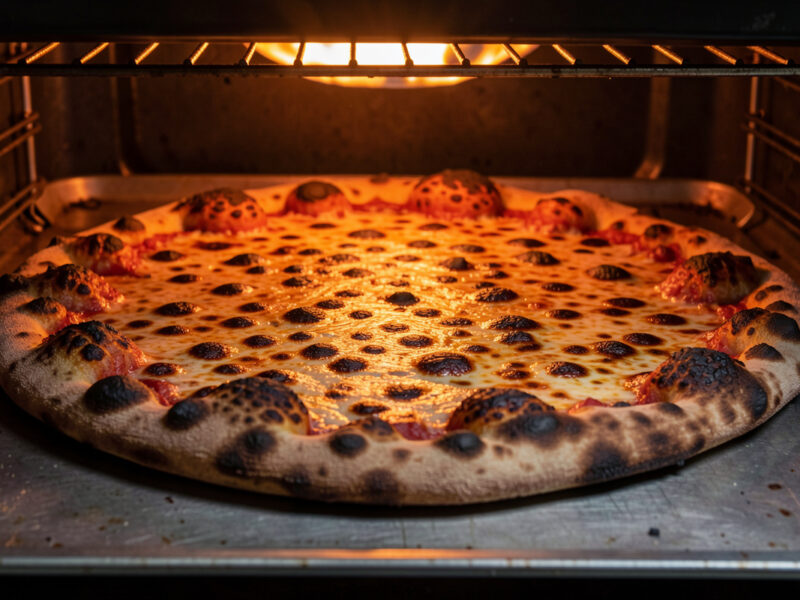
The most important thing to understand is that your broiler runs far hotter than your oven’s maximum bake temperature — it’s a dedicated radiant element designed to sear. So while your oven air maxes out at 275°C, the broiler is throwing much more intense heat from above, and a steel sitting near it absorbs and reflects that into a surface temperature well past the dial. This is why the broiler method is the foundation of every other workaround: you’re not limited to the air temperature, you’re using the broiler as a heat source the thermostat doesn’t cap. Preheat the steel fully, then run the broiler to push both top heat and surface temperature past what bake mode allows. The full sequence is in the broiler method walkthrough.
Workaround 2: rack position
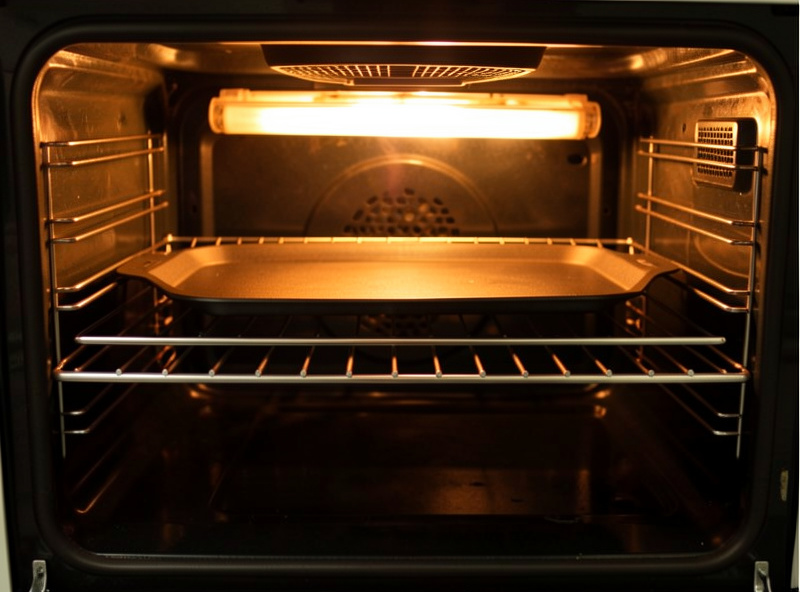
Where you put the steel changes how much of that broiler heat it captures. Run the steel high — upper third of the oven — so it sits close to the broiler element and soaks up maximum radiant heat, and so the pizza top is close enough to the broiler to brown. The same steel run in the middle or bottom of the oven captures far less of the broiler’s output and gives you a weaker bake. This costs nothing and is the single easiest adjustment most people miss: they preheat a steel on the middle rack out of habit and wonder why the top stays pale.
Workaround 3: the self-clean cycle (with real cautions)
Here’s the workaround people whisper about: many ovens reach far higher temperatures during their pyrolytic self-clean cycle — often 400°C-plus — than they’ll allow on the normal bake dial. In theory, that’s pizza-oven territory. In practice, this comes with serious cautions and I treat it as a know-the-risks option, not a casual default. Self-clean cycles usually lock the door, so you can’t get a pizza in or out during the cycle. Some ovens can’t be interrupted once started. Running the oven that hot stresses components, and manufacturers explicitly don’t design the cycle for cooking. Some people exploit the ramp-up or cool-down phases around the lock, or ovens that allow a manual high-temp mode, but this is genuinely oven-specific and you need to know your model. I mention it because it’s the one path to true high heat in a standard oven, but I won’t pretend it’s risk-free or universally doable — read your oven’s manual and understand the lock behavior before you try anything near a self-clean cycle.
Workaround 4: trap and concentrate the heat
A few small moves help your oven hold and concentrate what heat it has. Keep the door closed religiously — every peek dumps heat that takes minutes to recover. Preheat longer than feels necessary so the entire oven cavity, walls included, is heat-soaked and radiating, not just the air. And bake one pizza at a time with the surface fully recovered between launches rather than rushing and pulling the surface temperature down. None of these raise the ceiling, but they keep you pressed against it instead of bleeding heat.
There’s also a convection wrinkle worth knowing: if your oven has a fan (convection or fan-bake), it circulates heat more aggressively and can help the cavity reach and hold temperature more evenly, which is generally good for preheating a steel. But during the actual bake, strong convection can dry the top of a pizza or fight your broiler’s radiant heat, so I usually preheat with the fan to load the oven fast and then bake under the broiler with the fan off if my oven lets me separate them. Experiment with your own oven — some convection broilers are excellent for pizza, others over-dry the crust, and the only way to know is to bake one each way and compare.
What’s not worth it
Some “hacks” float around that I’d skip. Defeating the oven’s thermostat or door-lock with manual overrides is genuinely unsafe and can damage the oven or worse — don’t. Stacking two stones or steel-plus-stone to “trap” heat mostly just doubles your preheat time for a marginal benefit. And no amount of workaround turns a kitchen oven into a true 450°C deck oven — if you find yourself fighting your oven this hard every bake, that’s the honest signal that a dedicated outdoor oven is what you actually want, not another trick. The workarounds are for getting genuinely good pizza out of the oven you have, not for faking an oven you don’t.
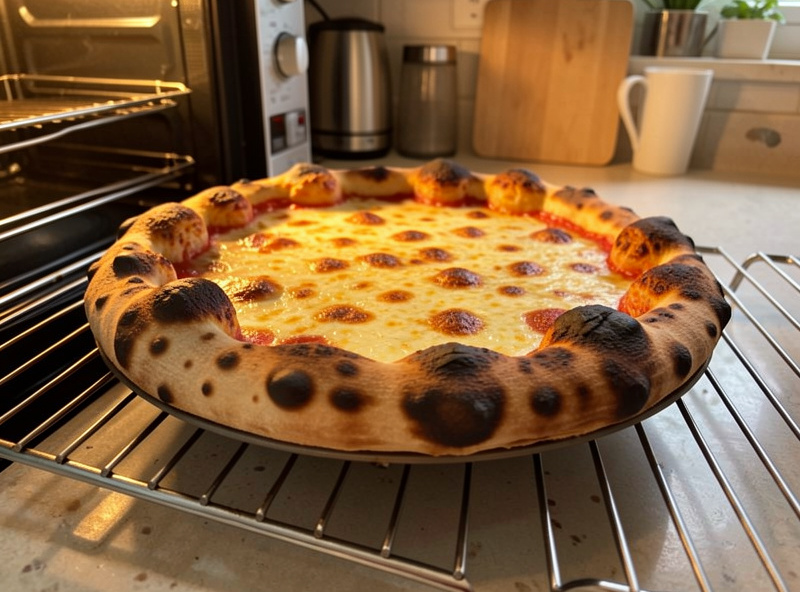
The gear that makes the ceiling visible
As an Amazon Associate I earn from qualifying purchases. The link below is a search link, not a specific listing.
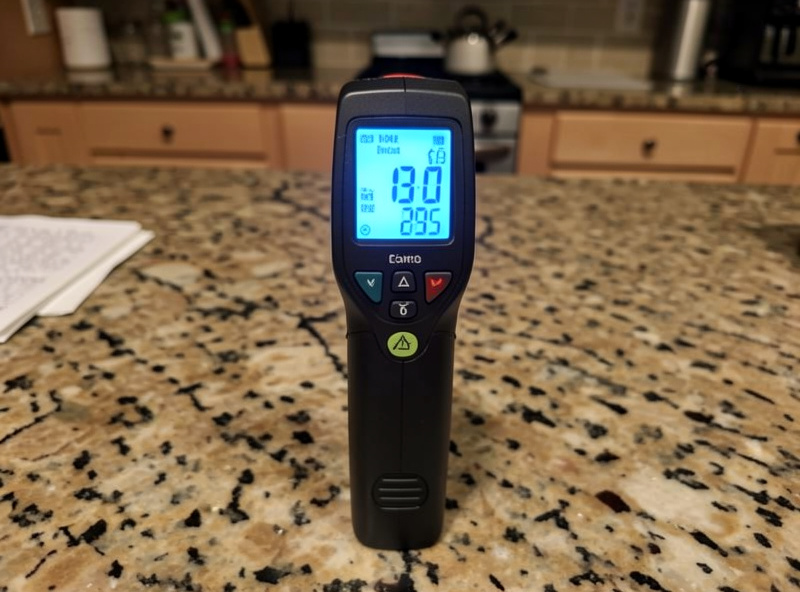
The single most useful tool for any of this is an infrared thermometer gun, because every workaround here is about the surface temperature, not the air, and the only way to know whether the broiler-plus-position trick actually got your steel to 350°C is to point an IR gun at it. Without one you’re guessing; with one you can see exactly how much heat each workaround buys you and stop chasing the ones that don’t help your particular oven.
Putting it together
The honest order of operations: fully heat-soak a steel, run it high under a fully-heated broiler, keep the door shut, and measure the surface so you know what you’ve actually got. That combination gets the large majority of home ovens to a genuinely good pizza — not Neapolitan-fast, but crisp, charred, and far past what the dial implied. The self-clean route is there for the determined, with real cautions. And if after all this your oven still fights you every bake, you’ve learned the most useful thing of all: the steel-and-broiler setup is the benchmark, and a dedicated oven is the upgrade — a want you’ve now earned the knowledge to choose well.
Frequently asked questions
How hot can a home oven get for pizza?
Most cap at 250-290C on the bake dial, well below a pizza oven’s 400C-plus. But the broiler runs much hotter than the bake maximum, so a steel run high under the broiler reaches a surface temperature far above the dial setting – that’s where the usable pizza heat actually comes from.
Can I use the self-clean cycle to cook pizza?
Some ovens hit 400C-plus during self-clean, which is pizza-oven territory, but the cycle usually locks the door so you can’t get a pizza in or out, and it stresses the oven. It’s oven-specific and risky – read your manual and understand the lock behavior before attempting anything near it.
Where should the pizza steel go for maximum heat?
In the upper third of the oven, close to the broiler. That position lets the steel absorb maximum radiant heat and keeps the pizza top close enough to brown. The same steel on the middle or bottom rack captures far less of the broiler’s output.
Why does my home oven make bad pizza even on the highest setting?
Usually because you’re relying on bake mode’s air temperature alone, which is too low, instead of the broiler. Add a fully heat-soaked steel run high under the broiler and the result jumps dramatically – the air temperature was never going to be enough on its own.
Is it safe to override my oven’s temperature limit?
Defeating the thermostat or door-lock with manual overrides is unsafe and can damage the oven, so don’t. Stick to the legitimate workarounds – broiler, rack position, longer preheat, door discipline – which get you genuinely good pizza without risking the appliance or yourself.
Further reading
- Pizza steel vs stone: the home-oven verdict
- The broiler method for home-oven pizza
- Preheat time: steel vs stone
- Pizza steel thickness: how thick is worth it?
More from This Cluster
- “Pizza Stone and Steel Care: Cleaning
- “Pizza on the Grill With a Stone: What Actually Works”
- “Preheat Time: Steel vs Stone (and Why the Gap Matters)”
- “The Broiler Method: Real Neapolitan-ish Pizza in a Home Oven”
- “Pizza Steel Thickness: How Thick Is Worth It?”
- “Pizza Steel vs Stone: The Honest Home-Oven Verdict”

About Kenny Nyhus Fadil
A home pizza maker documenting deck temps, dough logs, and the occasional wrecked launch.
Keep Baking
The Broiler Method: Real Neapolitan-ish Pizza in a Home Oven
Pizza on the Grill With a Stone: What Actually Works