Pizza on the Grill With a Stone: What Actually Works

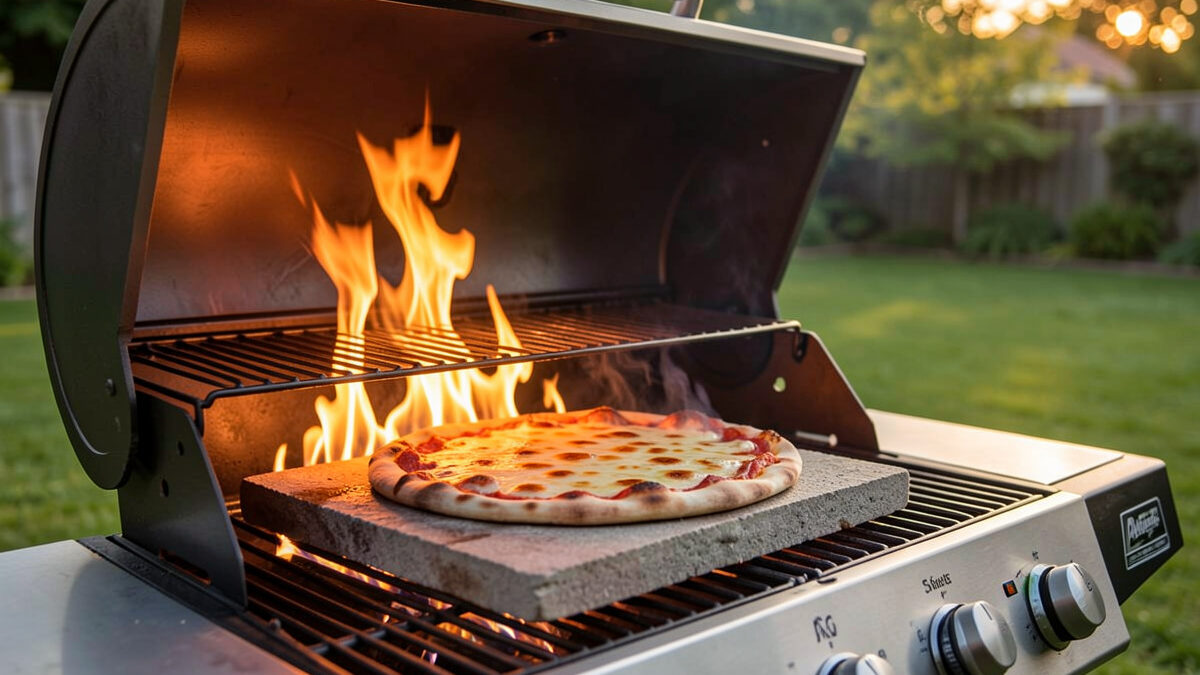
Putting a stone on a covered grill is a legitimate way to bake pizza hotter than most kitchen ovens can — a closed gas or kettle grill can run well past a home oven’s ceiling and gives you live-fire heat from above. It’s not a dedicated pizza oven, and there are real pitfalls (thermal-shock cracking, vicious hot spots, a base that chars before the top is done), but done right it’s one of the better warm-weather workarounds for a limited indoor oven. I reach for a stone rather than a steel on the grill specifically, and this guide explains why, plus the two-zone setup that makes it actually work.
If you’re weighing this against your indoor options, the steel vs stone verdict covers the indoor decision; the grill is a separate path you turn to when your kitchen oven’s heat ceiling is the real bottleneck.
Why a stone, not a steel, on the grill
Indoors I’m a steel evangelist, but the grill flips the logic. A grill’s bottom heat is fierce, direct, and uneven — flames or coals right under the grates. A steel’s whole superpower is aggressively conducting that heat into the base, which indoors is exactly what you want but on a grill is too much: the steel transmits the grill’s brutal direct heat straight into the dough and incinerates the base before the top has a chance. A stone’s gentler, more even heat release buffers that fierce bottom heat into something the dough can survive. On a grill, you want the surface to moderate the heat, not amplify it — which is the one situation where the stone’s slower conduction is the feature, not the limitation.
The two-zone setup is everything
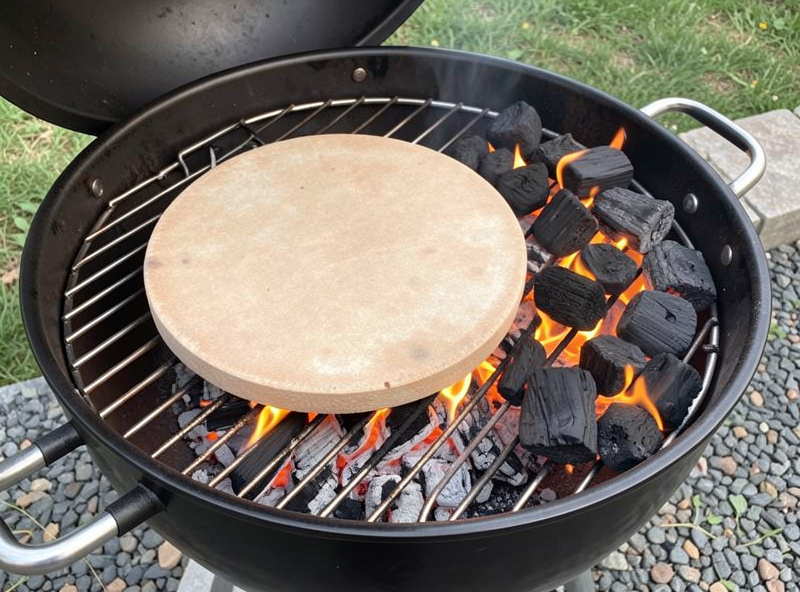
The single technique that makes grill pizza work is a two-zone fire: concentrate your heat on one side (coals banked to one half on a kettle, or only some burners lit on a gas grill) and place the stone over the cooler, indirect side. The closed lid traps and circulates the heat so the whole chamber gets hot, while the stone sits out of the direct flame path so its base doesn’t scorch. This is the difference between grilled pizza and a charcoal disc. Direct heat under the stone is how people crack stones and burn bases; indirect heat under a closed lid is how you get a balanced bake.
The step-by-step
1. Build a two-zone fire. Bank coals to one side, or light the burners on one side of a gas grill. Leave the other side unlit for the stone.
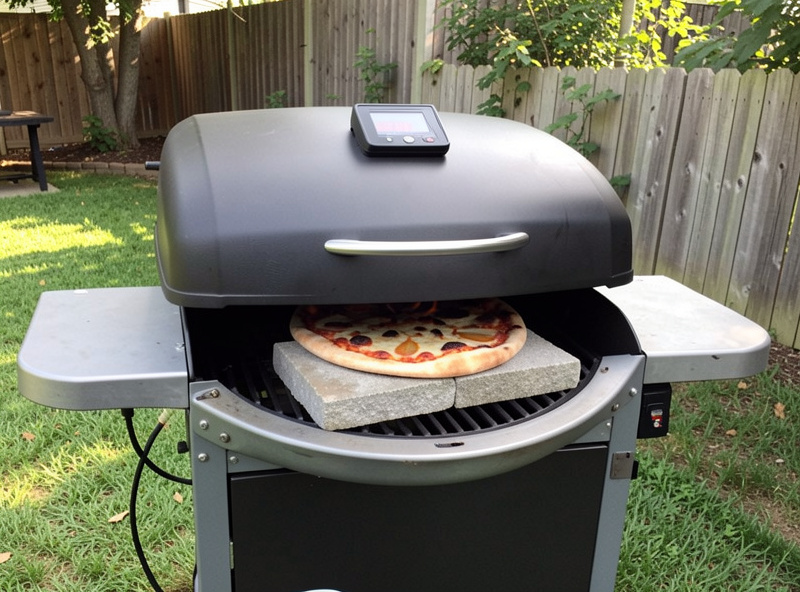
2. Preheat the stone with the lid closed. This is where people rush and crack stones. The stone must come up to temperature gradually under the closed lid — give it a full 30–45 minutes. A stone slammed onto a screaming grill from cold is a thermal-shock crack waiting to happen.
3. Get the chamber hot. With the lid closed and a lid thermometer, you’re aiming for a chamber temperature well above what your indoor oven manages. The closed lid is what gives you the top heat — without it you’ve just got a hot plate outdoors.
4. Launch onto the indirect side. Slide the pizza onto the stone over the cooler zone, lid back down immediately to keep the heat trapped.
5. Turn for hot spots. Grills are even less even than ovens — the side nearest the fire runs hotter. Turn the pizza partway through so it bakes evenly, using a turning peel.
The cracking risk is real
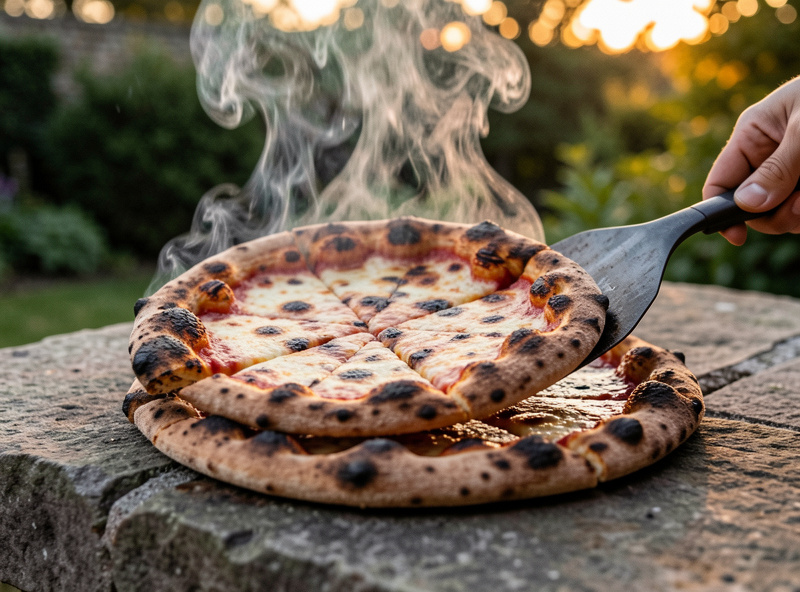
The most common way grill pizza ends badly is a cracked stone, and it’s almost always thermal shock — a sudden temperature change the brittle ceramic can’t handle. The two ways it happens: putting a cold stone onto a hot grill (always preheat the stone with the grill from cold, gradually), and putting anything cold or wet onto a hot stone (a frozen pizza, a wet base, a splash of water). Direct flame licking the underside of a stone also creates uneven expansion that cracks it. Preheat gradually, keep the stone over indirect heat, and don’t shock it, and a stone will survive plenty of grill seasons. The same rules apply to storing it: keep a grill stone dry between uses, never wash it with soap, and dry-brush the char off rather than scrubbing — a stone that’s drunk water in storage is far more crack-prone the next time it heats.
It’s also worth saying that grill stones live a harder life than indoor ones. They take more thermal abuse, they’re exposed to weather if you store the grill outside, and the direct-heat risk is always one careless launch away. Treat a dedicated grill stone as a consumable that may eventually crack — a hairline crack from thermal stress doesn’t necessarily end its life if it still sits flat and bakes evenly, but a stone that’s snapped or rocks is done. Buy one you won’t mourn, and don’t put your nicest indoor stone on the grill.
Gear that actually helps
As an Amazon Associate I earn from qualifying purchases. The links below are search links to the gear category, not specific listings.
Two tools make grill pizza far more reliable. A round grill pizza stone sized to sit comfortably over your grill’s indirect zone is the foundation — a round stone fits a kettle better than a rectangular one. And because grill hot spots are so much worse than an oven’s, a metal turning peel is close to essential for spinning the pizza mid-bake without dragging it off the stone. A standard launch peel gets the pizza on; the turning peel is what keeps it baking evenly once it’s there.
Charcoal vs gas for grilled pizza
Both work; they trade different things. A gas grill is faster to set up and easier to hold at a steady temperature — light some burners, close the lid, and your chamber temperature is reasonably stable, which makes for a more repeatable bake. Charcoal takes longer to set up and is harder to hold steady, but it can run hotter and adds a faint live-fire character to the ambient bake that gas doesn’t. If you just want reliable grilled pizza on a weeknight, gas is the lower-effort path. If you’re chasing the highest heat and a bit of fire character and you don’t mind managing coals, charcoal rewards the effort. Either way the two-zone, lid-down, indirect-stone method is identical — only the fuel and the temperature management differ.
One caveat for gas: many gas grills genuinely struggle to reach the kind of chamber temperatures that make grilled pizza sing, especially smaller two-burner units. If your gas grill tops out modestly, you may find it’s barely better than your indoor oven, in which case the indoor steel-and-broiler is the easier win. Check your grill’s real closed-lid ceiling before assuming it beats your kitchen.
Honest expectations
Grill pizza is a genuine upgrade over a weak indoor oven on a summer evening, and the live-fire ambient heat does add something. But set expectations: it’s fiddlier than indoors, the hot spots demand attention, and it’s weather-dependent in a way the indoor steel-and-broiler setup never is. For me it’s a warm-season treat, not a replacement for the year-round indoor reference — which, if you want the most consistent home bake regardless of season, still comes back to a steel under the broiler indoors.
Frequently asked questions
Can you cook pizza on a grill with a stone?
Yes, and a closed grill can run hotter than most kitchen ovens. The key is a two-zone fire: heat banked to one side and the stone over the cooler indirect side, lid closed to trap top heat. Direct flame under the stone burns the base and risks cracking it.
Should I use a stone or a steel on the grill?
A stone. A steel conducts the grill’s fierce direct heat straight into the base and incinerates it before the top is done. A stone’s gentler heat release buffers that brutal bottom heat – the one situation where a stone’s slower conduction is an advantage.
Why did my pizza stone crack on the grill?
Almost always thermal shock: a cold stone put onto a hot grill, something cold or wet placed on a hot stone, or direct flame under the stone causing uneven expansion. Always preheat the stone gradually with the grill from cold, and keep it over indirect heat.
How hot should the grill be for pizza?
Get the closed chamber well above your indoor oven’s ceiling, read on a lid thermometer. The closed lid is essential – it traps and circulates heat to cook the top. Without the lid down you only have bottom heat and the top stays raw.
Do I need a special pizza stone for the grill?
A round stone sized to your grill’s indirect zone works best, especially on a kettle where a rectangular stone fits awkwardly. Any quality cordierite stone is fine as long as you preheat it gradually and keep it off direct flame.
Keep building
- Pizza steel vs stone: the home-oven verdict
- The broiler method for home-oven pizza
- Preheat time: steel vs stone
More from This Cluster
- “Home Oven Max Temp Workarounds for Better Pizza”
- “Pizza Stone and Steel Care: Cleaning
- “Preheat Time: Steel vs Stone (and Why the Gap Matters)”
- “The Broiler Method: Real Neapolitan-ish Pizza in a Home Oven”
- “Pizza Steel Thickness: How Thick Is Worth It?”
- “Pizza Steel vs Stone: The Honest Home-Oven Verdict”

About Kenny Nyhus Fadil
A home pizza maker documenting deck temps, dough logs, and the occasional wrecked launch.
Keep Baking
Pizza Steel vs Stone: The Honest Home-Oven Verdict
Pizza Stone and Steel Care: Cleaning, Seasoning, and Cracks