The Broiler Method: Real Neapolitan-ish Pizza in a Home Oven

The broiler method is the closest a standard kitchen oven gets to a real pizza oven: preheat a steel near your oven’s max, switch to the broiler so the top element screams, and launch — you get fierce bottom heat from the steel and fierce top heat from the broiler at the same time. That balance is the whole secret, and it’s the single highest-impact technique in home-oven pizza. Without it, a steel chars the base long before the top has color; with it, you get genuine oven spring, leopard spotting, and a bake that surprises people who think you need an outdoor oven.
I run this protocol as my year-round indoor reference, the bake I judge every specialty oven against. It rides on top of the surface choice — if you haven’t decided yet, read the steel vs stone verdict first, and if you’re picking a steel, the thickness guide covers what to buy. This piece assumes a steel and shows you how to drive it.
Why the broiler is non-negotiable
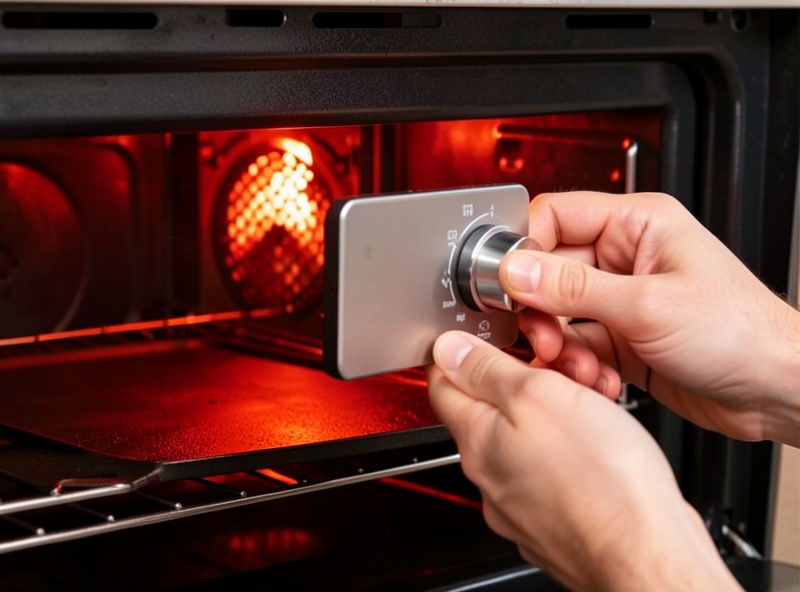
A steel solves half the home-oven problem brilliantly: it delivers aggressive base heat, which is exactly what a weak oven can’t otherwise produce. But pizza needs balance. In a real pizza oven, the dome radiates intense heat down onto the top of the pizza while the floor cooks the base, and the two finish together. A home oven on bake mode has nothing like that top heat — the air is hot, but there’s no fierce radiant source above the pizza. So a steel on bake-only gives you a beautifully charred bottom and a pale, sad top, and if you wait for the top to brown, the bottom is carbon. The broiler is the missing radiant top heat. Fire it and you finally have both halves of the equation.
The protocol, step by step
Here’s the exact sequence I run. The details matter, especially the position and the sequencing of the mode switch.
1. Position the steel high. Put the steel on a rack in the upper third of the oven — close enough to the broiler that its radiant heat reaches the pizza top, but with enough room to launch. This is the opposite of where most people put a stone. The proximity to the broiler is the whole point.
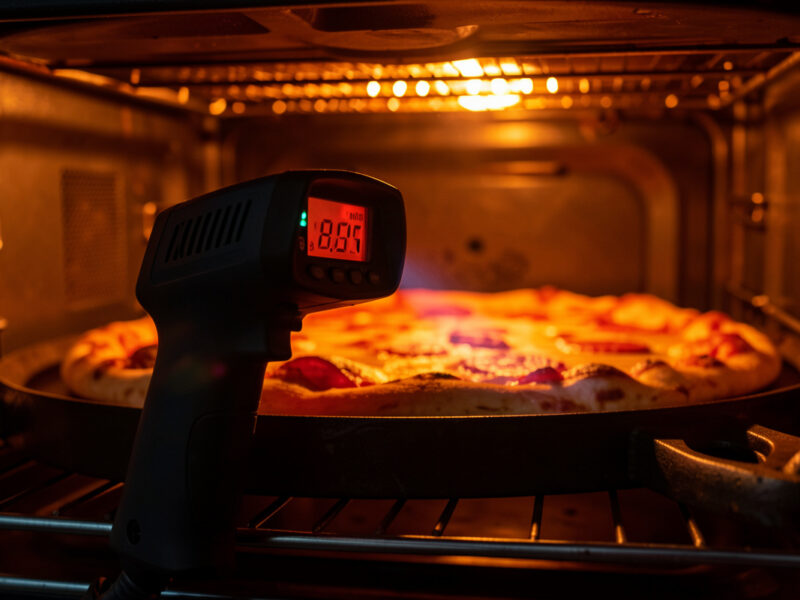
2. Preheat long on bake mode. Run the oven at its maximum bake temperature and give the steel a full heat-soak — at least 45 minutes for a 6mm steel. The steel must be fully loaded with heat before you ever touch the broiler. A surface that’s hot but core-cold will fail you. Check it with an IR thermometer if you have one; the oven dial doesn’t tell you the steel’s real temperature.
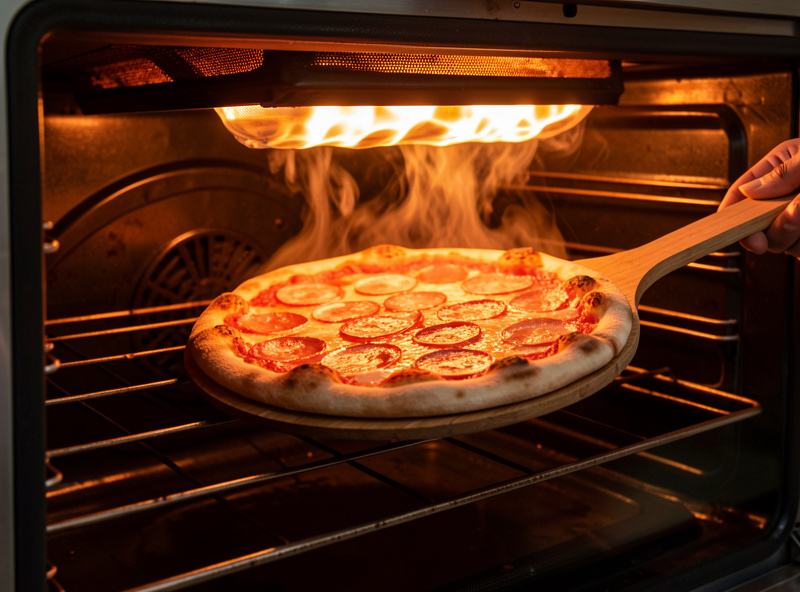
3. Switch to broil several minutes before launch. Once the steel is fully soaked, flip the oven to its highest broiler setting and let the broiler element come fully up to temperature — a few minutes. Now both your heat sources are maxed: the steel from below, the broiler from above.
4. Launch fast and confidently. Slide the pizza onto the steel in one decisive motion. A timid launch is how pizzas stick and tear. The bake is quick from here — often just a few minutes — so don’t wander off.
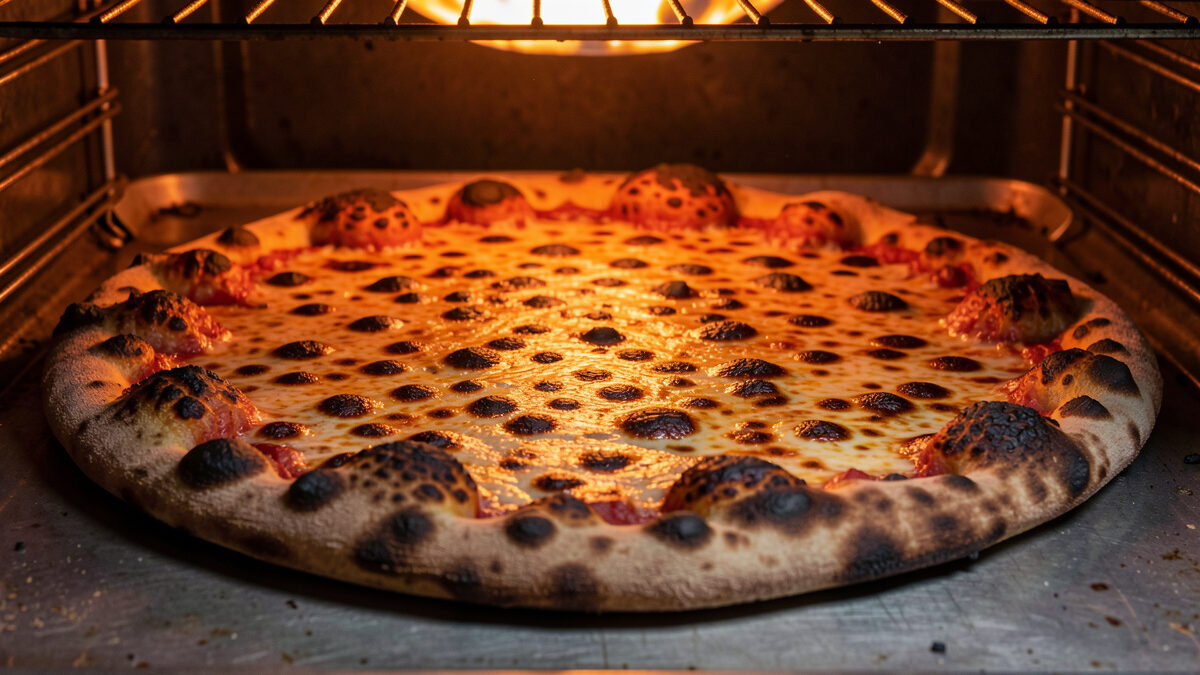
5. Watch, turn, pull. With the broiler running you can go from perfect to scorched in under a minute, so watch through the door. Turn the pizza partway through if your broiler has hot spots (most do). Pull when the cornicione is puffed and spotted and the cheese is bubbling with color.
Reading the bake
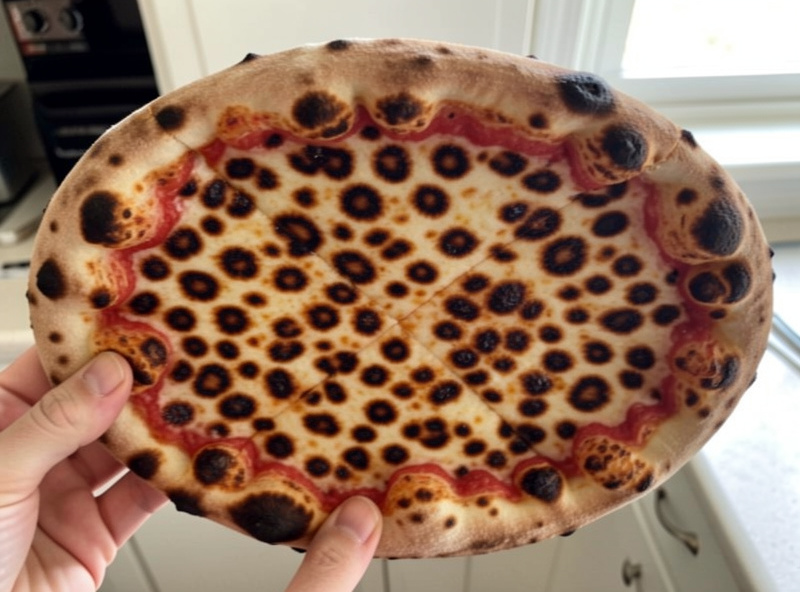
The thing to learn is the leopard spotting on the cornicione — those dark blistered spots are the signature of a properly hot bake and they come from the broiler’s radiant heat hitting a well-fermented dough. If your top stays pale, your broiler isn’t hot enough or the steel was too low; if the top burns before the base sets, the steel wasn’t soaked long enough. The fix is almost always more preheat, not less broiler. And the dough matters here as much as the heat: a long, cold-fermented dough leopard-spots beautifully, while an under-fermented same-day dough browns flat no matter how perfect your broiler game. The dough guide covers the ferment that makes spotting possible.
Common broiler-method mistakes
- Steel too low. If the steel is in the middle or bottom of the oven, the broiler’s heat is too far from the pizza top and you lose the balance. Run it high.
- Switching to broil too early or too late. Switch after the steel is fully soaked, then give the broiler a few minutes to roar. Launching the instant you hit the broiler button means the top element is still climbing.
- Walking away. A broiler bake is fast and unforgiving. Stay at the door.
- Cold-core steel. The most common failure. A short preheat means the steel can’t hold its surface temperature when the pizza lands. Give it the full soak.
Knowing your broiler: not all are equal
One reason the broiler method works brilliantly for some people and frustrates others is that home broilers vary enormously. An electric broiler with a dedicated upper element that glows bright orange is ideal — it’s a strong, even radiant source right where you want it. A gas broiler hidden in a drawer beneath the oven is a different animal: you can’t run a steel under it, so the drawer-broiler crowd has to lean entirely on a high-positioned steel and the oven’s own top heat, which is weaker. And some broilers cycle on and off on a thermostat rather than staying lit, which means your “constant” top heat is actually pulsing — learn your broiler’s rhythm and time your launch for when it’s firing.
The practical move is to spend one throwaway bake just watching your broiler with no pizza in: see how fast the element comes up, whether it cycles, and where the hot spots fall on the steel. That five-minute reconnaissance tells you more about your home-oven ceiling than any spec sheet, and it’s exactly the kind of instrument-the-oven thinking that turns a frustrating setup into a repeatable one.
When the broiler isn’t enough
If you’ve nailed the preheat, run the steel high, and your broiler still can’t get the top to color before the base over-bakes, your oven’s top heat is genuinely the bottleneck — and there are further workarounds beyond the broiler, from exploiting the self-clean cycle’s higher temperature to repositioning for more radiant exposure. But for the large majority of ovens, a properly soaked steel run high under a fully-heated broiler is all you need, and chasing more becomes a game of diminishing returns against a kitchen oven’s hard physical limits.
A note on gear
As an Amazon Associate I earn from qualifying purchases. The link below is a search link, not a specific listing.
You don’t need much for this, but the one tool that makes the broiler method reliable instead of guesswork is an infrared thermometer gun — it turns “is the steel ready?” from a vibe into a number, and a fully-soaked steel is the difference between this method working and failing. Everything else is the steel you already chose and a peel you can launch confidently with.
Frequently asked questions
Should I bake pizza on bake or broil in a home oven?
Both, in sequence. Preheat the steel fully on bake mode at the oven’s maximum, then switch to broil for the last few minutes before launch so the top element matches the steel’s bottom heat. Bake-only chars the base before the top colors; the broiler fixes the top.
How high should the steel be for the broiler method?
In the upper third of the oven, close enough that the broiler’s radiant heat reaches the pizza top but with room to launch. This is higher than you’d run a stone – the proximity to the broiler is the entire point of the method.
How long does a broiler-method pizza take to bake?
Usually just a few minutes once both the steel and broiler are fully hot. It’s fast and unforgiving – you can go from perfect to scorched in under a minute, so watch through the door and turn the pizza if your broiler has hot spots.
Why is my pizza top still pale with the broiler on?
Either the broiler hasn’t fully heated, the steel is too low so the pizza sits too far from the element, or you launched before the broiler came up to temperature. Run the steel high, give the broiler a few minutes after switching, and use a well-fermented dough that browns readily.
Can I use the broiler method with a stone instead of steel?
You can, but it helps less. The broiler fixes top heat, which was never the stone’s weakness – the stone’s limitation is slower base heat. A steel benefits more because the broiler complements the steel’s already-fierce bottom heat for true top-and-bottom balance.
Related reading
- Pizza steel vs stone: the home-oven verdict
- Pizza steel thickness: how thick is worth it?
- The complete pizza dough guide
More from This Cluster
- “Home Oven Max Temp Workarounds for Better Pizza”
- “Pizza Stone and Steel Care: Cleaning
- “Pizza on the Grill With a Stone: What Actually Works”
- “Preheat Time: Steel vs Stone (and Why the Gap Matters)”
- “Pizza Steel Thickness: How Thick Is Worth It?”
- “Pizza Steel vs Stone: The Honest Home-Oven Verdict”

About Kenny Nyhus Fadil
A home pizza maker documenting deck temps, dough logs, and the occasional wrecked launch.
Keep Baking
Pizza Steel vs Stone: The Honest Home-Oven Verdict
Pizza on the Grill With a Stone: What Actually Works