Fixing Watery Pizza Sauce

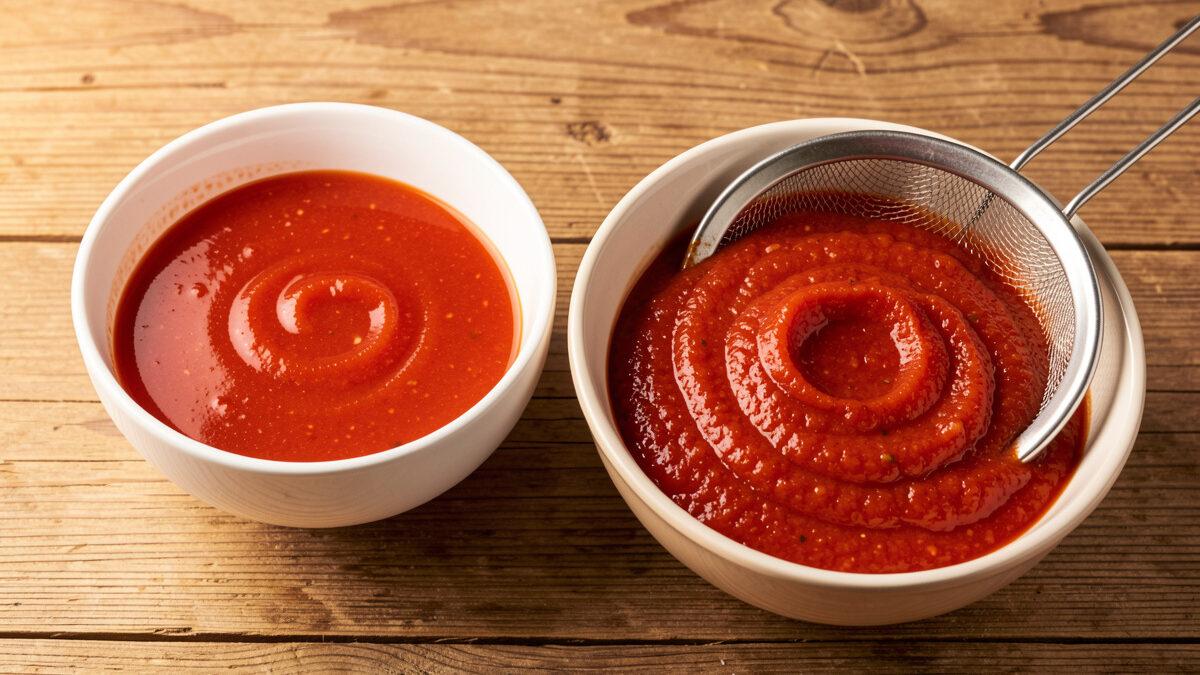
If your pizza sauce is too watery, the fastest fix is to drain and strain it rather than cook it — lifting the tomato solids out of the thin free liquid keeps the bright, fresh flavor while losing the water that soaks your crust. Reaching straight for the stove or a spoon of flour is the common reflex, and it is usually the wrong first move: cooking dulls a raw sauce and starch makes it pasty. Remove the water, do not mask it. A can of whole peeled tomatoes can be a third thin juice by volume, so a watery sauce is almost always a tomato or a draining problem — and both are quick to fix.
Watery sauce matters because it has a direct, ugly consequence on the baked pie: the dough drinks the excess liquid and you get a gum line — that pale, dense, undercooked band right under the sauce. So this is not a cosmetic issue, it is the difference between a crisp base and a soggy one. Here is how I diagnose where the water is coming from and fix it in order of least to most damage to the flavor.
First, find where the water is coming from
Watery sauce has a few usual causes, and the fix depends on which one you have. The most common is simply not draining canned tomatoes — whole peeled and crushed tomatoes sit in a lot of thin juice, and if you tip the whole can into the bowl, that juice goes onto the pizza. The second is the wrong tomato: round or salad tomatoes, fresh or canned, carry far more free water than plum tomatoes. The third is blending — whizzing tomatoes in a blender whips in air and breaks down the pulp into a thin, foamy liquid. And the fourth is a mismatch with the bake: a perfectly fine loose sauce can read as “too watery” only because it is going on a slow oven that gives the dough time to absorb it.
That last point is worth pausing on, because the fix is different. If your sauce is genuinely loose and you bake fast, you may not have a problem at all — a juicy sauce suits a 90-second bake. If you bake slow, the same sauce needs to be drier. Sort out whether you have a water problem or a bake-time mismatch first; the sauce consistency guide covers how thickness should track your oven.
The fixes, from best to last resort
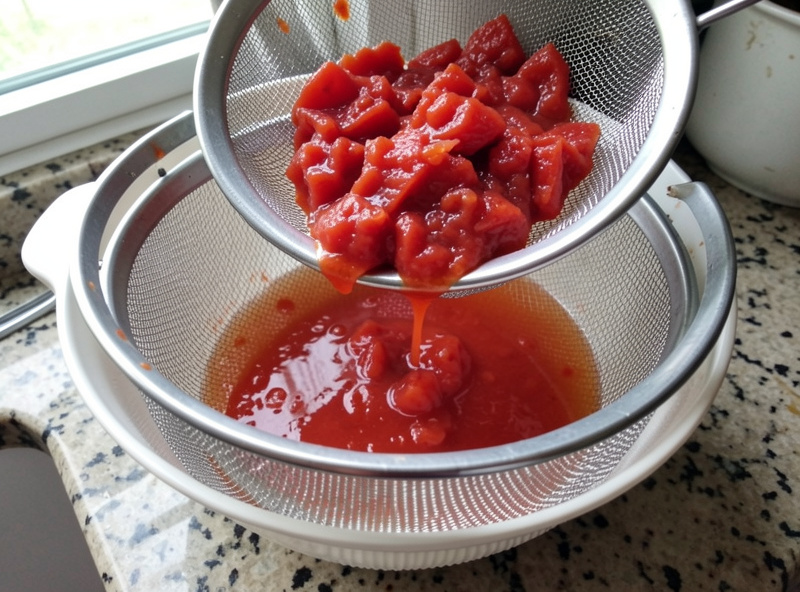
Work down this list and stop as soon as the sauce passes the spoon test — coating the back of a spoon and dripping off slowly. Drain first: tip the crushed tomatoes into a sieve, or just lift the solids out with a slotted spoon and leave the thin juice behind. This alone fixes most watery sauces and costs no flavor. Strain or food-mill: for a smoother, thicker result, pass the tomatoes through a food mill or push them through a sieve to take out seeds and watery pulp while concentrating the tomato.
Reduce on the stove: if draining is not enough, simmer the sauce gently to drive off water — but understand this turns a raw sauce into a cooked sauce, which is fine for slow bakes but changes the flavor toward deeper and sweeter. Tomato paste: a small spoon of paste thickens and deepens a cooked sauce, but it tastes flat in a raw one, so it is a cooked-sauce tool only. What I never reach for is flour, cornstarch, or breadcrumbs — they kill the tomato flavor and leave a gluey texture that is worse than the water you started with.
Fixes compared
| Fix | How fast | Keeps fresh flavor? | Best for |
|---|---|---|---|
| Drain off the juice | Instant | Yes | Any sauce, first move |
| Strain / food mill | A few minutes | Yes | Smoother, thicker raw sauce |
| Reduce on stove | 10–20 min | No — becomes cooked | Slow-bake sauces |
| Tomato paste | Instant | Cooked only | Adding body to cooked sauce |
| Flour / starch | Instant | No — avoid | Not recommended |
The application trick that saves a loose sauce
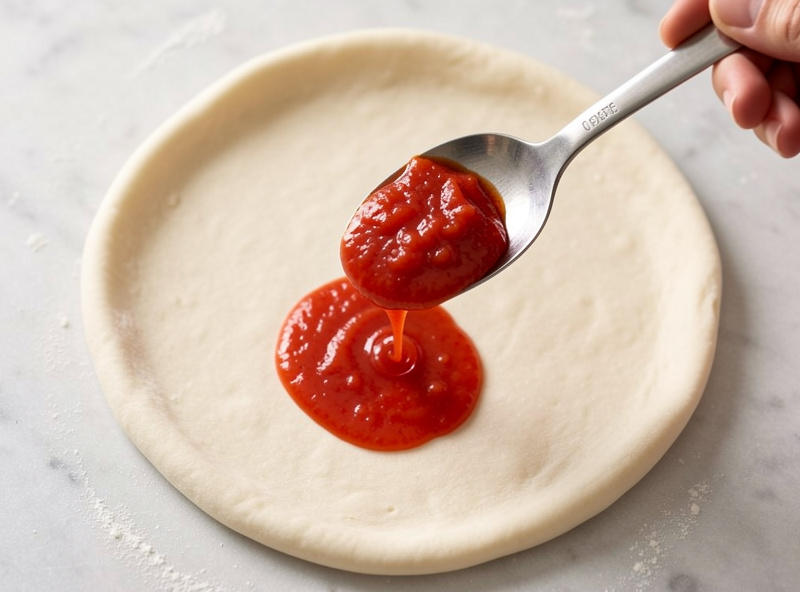
Even with a slightly loose sauce, how you put it on the pizza matters. Apply it with a slotted spoon or ladle and let the thin liquid drip back into the bowl before it hits the dough — you place the solids on the pie and leave the water behind. Spread it thin, in a spiral from the center out, and use less than instinct tells you to; a thin layer bakes into the dough while a thick puddle steams. This alone can rescue a sauce that is borderline without changing the recipe at all.
Combine that with a properly stretched, well-fermented base and you have attacked the gum line from both sides. The base has to be able to bake through in the time it has, so a thick, under-stretched dough makes any sauce look wetter than it is. The full picture of why that pale band forms — and the dough side of the fix — is in the gum line explainer.
Preventing watery sauce next time
The durable fix is upstream. Start with whole peeled plum tomatoes rather than round or diced ones, and drain the thin juice before you season — covered in the San Marzano versus regular and passata versus crushed comparisons, since the format you buy decides how much water you are fighting. Crush by hand rather than blending. And set your target thickness to your oven’s bake time from the start, so you are not rescuing a watery sauce at all. Do that and “too watery” stops being a recurring problem and becomes a one-time adjustment you make before the sauce ever touches dough — the whole approach is laid out in the pizza sauce styles guide.
Frequently Asked Questions
How do I fix watery pizza sauce?
Drain it first — tip the crushed tomatoes into a sieve or lift the solids out with a slotted spoon and leave the thin juice behind. For a smoother result, strain or food-mill the tomatoes. Only reduce on the stove if draining is not enough, since cooking changes a raw sauce. Avoid flour or starch.
Why is my pizza sauce so watery?
Usually because canned tomatoes were not drained of their thin juice, or because you used round or diced tomatoes that hold more water than plum tomatoes, or because the sauce was blended into a thin foam. Sometimes a fine sauce just looks watery because it is going on a slow oven.
Can I add flour or cornstarch to thicken pizza sauce?
You can, but you should not. Flour, cornstarch, and breadcrumbs mute the tomato flavor and leave a gluey, pasty texture. Removing water by draining, straining, or reducing concentrates the tomato instead and tastes far better. Starch is a last resort that usually makes the sauce worse.
Should I cook watery pizza sauce to thicken it?
Only if draining and straining are not enough, and only for slow bakes. Reducing on the stove drives off water but turns a raw sauce into a cooked one with a deeper, sweeter flavor. For a fast oven where you want a fresh raw sauce, drain rather than cook.
Does watery sauce cause a soggy pizza?
Yes. Excess water in the sauce soaks into the dough during the bake and creates a gum line — a pale, dense, undercooked band under the sauce. Removing the free liquid, applying the sauce thin with a slotted spoon, and stretching the base properly all prevent it.
Related Guides
- Pizza Sauce Styles and Technique: The Complete Guide
- Pizza Sauce Consistency Guide
- No-Cook vs Cooked Pizza Sauce, Compared
- The Gum Line in Pizza, Explained
- Passata vs Crushed Tomatoes for Pizza

About Kenny Nyhus Fadil
A home pizza maker documenting deck temps, dough logs, and the occasional wrecked launch.