Pizza Sauce Styles and Technique: The Complete Guide

The single biggest mistake home pizza makers make with sauce is treating it like pasta sauce: simmered down, layered with garlic and oregano, sweetened, reduced. On a pizza that bakes in 90 seconds, all of that is wasted effort. The right pizza sauce is mostly a decision about how long your oven takes to bake the pie — fast bakes want a thin, raw, high-acid crushed tomato; slow home-oven bakes want something cooked down and thicker. Get the match right and the sauce becomes the easiest part of the build.
I came to pizza from the fermentation bench, where the whole discipline is “do less to the ingredient and let time and temperature do the work.” Sauce is the same idea compressed into the last 90 seconds. After years of splitting the same dough batch across a gas Ooni, a dome oven, an indoor electric, and a steel in my home oven, I started doing the same thing with sauce: same tomatoes, same evening, different prep, side by side. This guide is the map that came out of those bake-offs — which sauce style belongs on which oven, and why most of the recipe-blog ritual around pizza sauce is solving a problem you do not have.
The one rule: match the sauce to the bake time
Pizza sauce style is downstream of bake time, not personal taste. A Neapolitan pie at 430–480°C stone temperature is in and out in 60–90 seconds — the sauce barely cooks on the pizza, so it must already taste finished and stay loose. A New York or home-oven pie at 250–300°C bakes for 6–12 minutes, which both cooks the sauce further and drives off water, so you start thicker and cooked. That is the whole framework.
When I check the stone with the IR gun and it reads 450°C, I reach for raw crushed San Marzano with nothing but salt. When the steel in my kitchen oven tops out around 285°C after a long heat soak and a broiler finish, I reach for a sauce I have already cooked and reduced. Same tomatoes, opposite prep, and the deciding variable is the clock on the bake, not the flavor I am chasing. Everything else in this guide hangs off that one relationship.
The tomato is the recipe
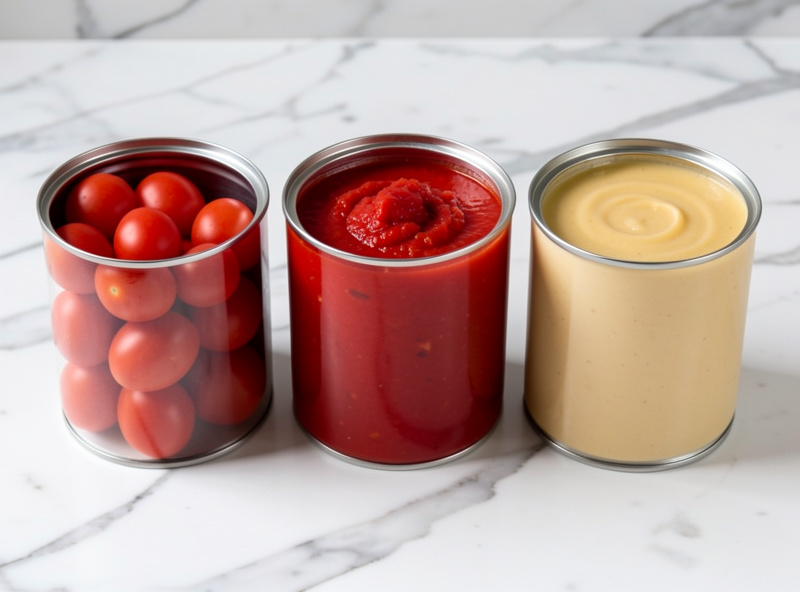
For red sauce, 80% of the result is the can you open. A good Italian plum tomato — San Marzano DOP or a comparable plum variety — is low in seeds, low in free water, sweet, and balanced in acid. A cheap diced tomato in firm calcium-chloride cubes will never break down into a sauce no matter how long you crush it. So the first decision is format, and the formats are not interchangeable.
Whole peeled plum tomatoes are the most flexible: you crush them by hand to the texture you want and you control the water. Crushed tomatoes are convenient but already broken down, often with added puree. Passata — strained, seedless, smooth — sits in its own lane: pourable, consistent, and a different texture decision entirely. If you only ever buy one thing for pizza, buy good whole peeled plums and crush them yourself. I go deeper on the canned-tomato question in the dedicated piece on the best canned tomatoes for pizza sauce, and on the specific San Marzano versus regular tomato debate, which has more myth attached to it than almost anything else in pizza.
No-cook versus cooked: the real dividing line
No-cook sauce is just good tomatoes crushed with salt — maybe a thread of olive oil — and used cold. It is the default for any oven that bakes a pie in under three minutes, because the tomato finishes cooking on the pizza and keeps a bright, fresh top note that simmering destroys. Cooked sauce is for longer bakes and for when you want a deeper, rounder, slightly sweet tomato that holds up against heavier toppings.
The honest summary: most home setups that are not a dedicated 450°C oven benefit from at least a light cook, because the longer bake would otherwise leave a raw, splitting sauce. But if you own a gas or dome oven that hits Neapolitan temperatures, cooking your sauce is actively working against you. I lay out the full side-by-side — flavor, texture, and which oven each belongs on — in the no-cook versus cooked pizza sauce comparison.
Consistency is the variable nobody measures
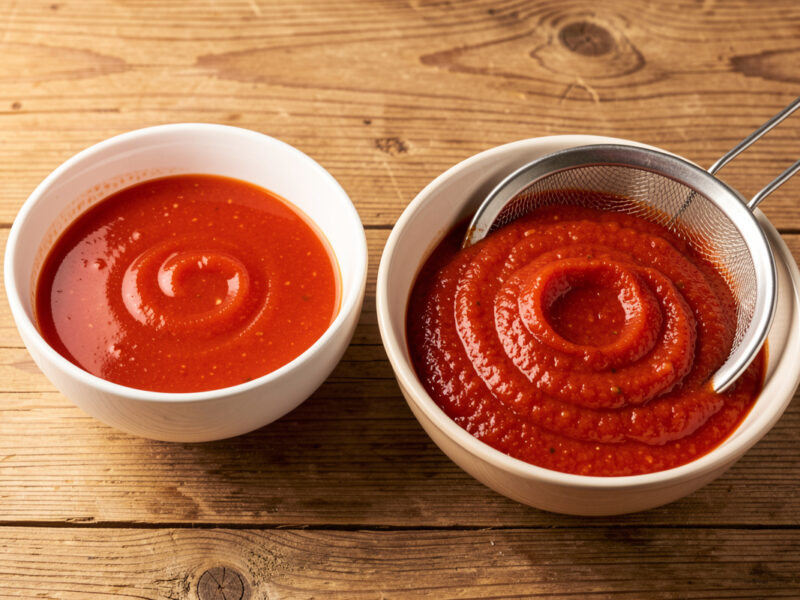
Sauce consistency is the second-most important thing after the tomato, and almost nobody talks about it in numbers. Too thin and the water soaks into the dough and you get the dreaded gum line — that pale, dense, undercooked band just under the sauce. Too thick and it sits like paste, refuses to spread, and bakes into a dull stripe. The target is “coats the back of a spoon and falls off slowly,” and you tune it by tomato choice, by straining, and by how hard you crush.
The water content of your sauce should scale inversely with bake time. A 90-second Neapolitan bake can tolerate a looser, juicier sauce because the dough is at the heat too briefly to absorb much; a 10-minute home-oven bake needs a thicker, drier sauce because the dough has all that time to drink the water. I treat this exactly like dough hydration — a number I tune to the oven — and the full method is in the pizza sauce consistency guide. If your sauce is already too loose in the bowl, the watery sauce fix walks through draining and straining without cooking the freshness out of it.
Beyond red: white and pesto bases
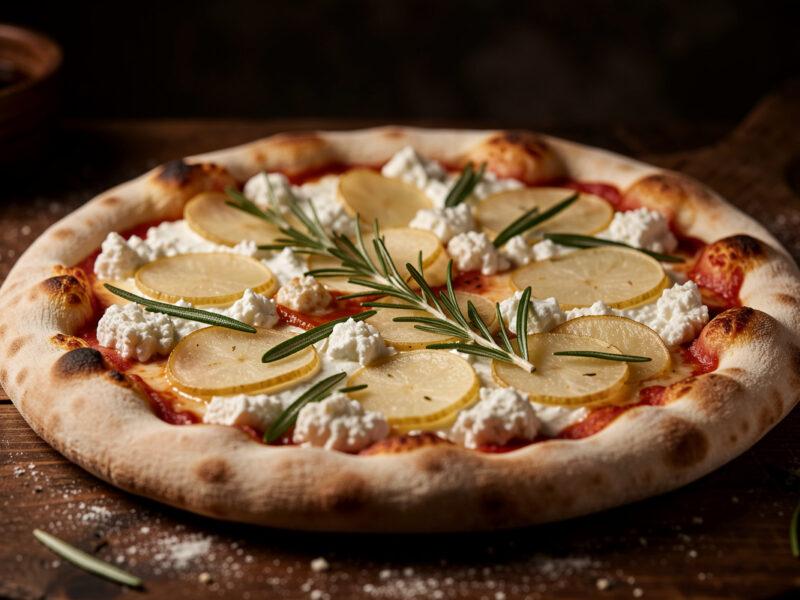
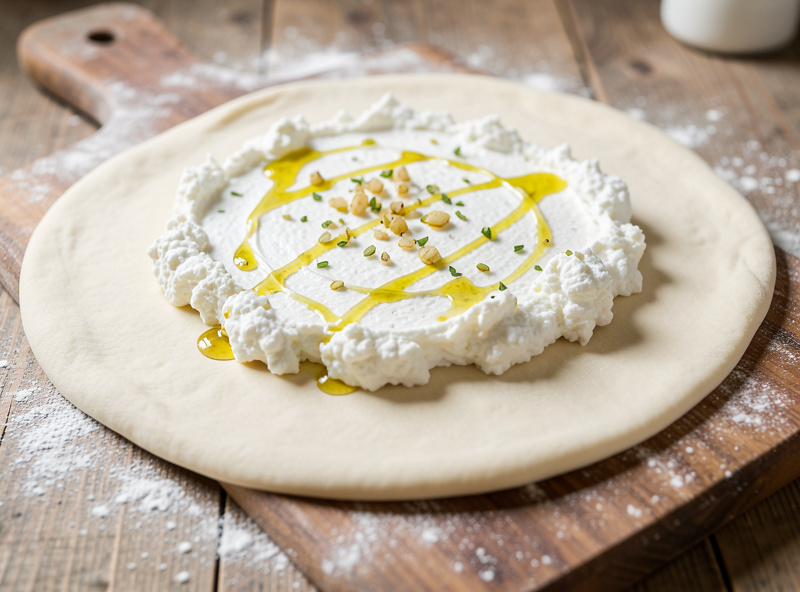
Not every pizza wants tomato. A white base — pizza bianca — swaps the tomato for a thin layer of ricotta, fior di latte, garlic, and olive oil, sometimes with a splash of cream loosened to a spreadable consistency. It is the right move when your toppings are delicate or already sweet — pear and gorgonzola, potato and rosemary, mushroom — and a bright tomato would fight them. The technique is its own discipline because dairy on a hot stone behaves nothing like tomato; I cover it in the homemade white pizza sauce guide.
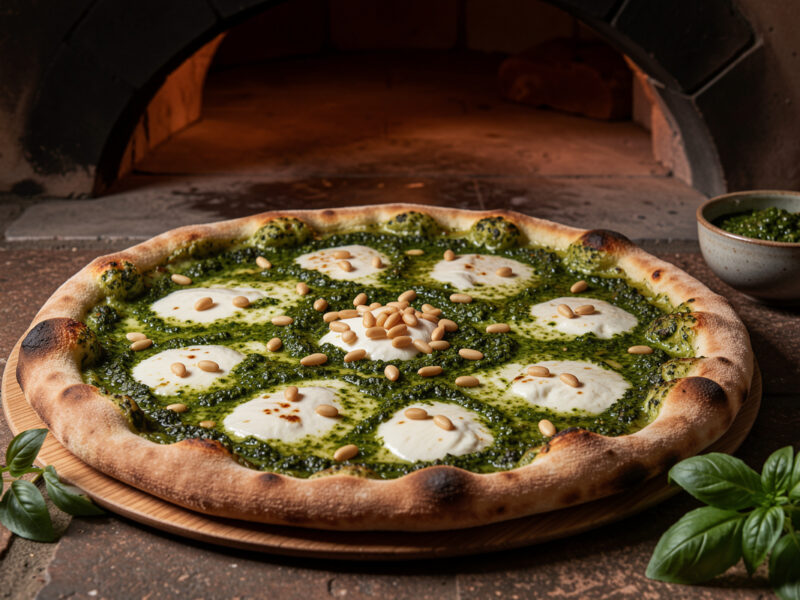
Pesto is the other non-tomato base, and it comes with one hard rule: it is heat-fragile. Basil pesto scorched at 450°C turns bitter and dull, so on a fast oven it goes on after the bake or in the last few seconds, not as a base layer. On a slower home oven you have more room. The when-and-how — base versus finish, and how to keep the green alive — is in the pesto pizza base guide.
Seasoning: salt first, everything else optional
The most common over-build I see is a sauce loaded with garlic, oregano, sugar, onion powder, and olive oil before it ever touches dough. For a fast Neapolitan bake, salt is the only non-negotiable — it wakes up the tomato and that is the whole job. A little raw garlic and a few torn basil leaves can go on the pizza rather than in the sauce, where the brief bake keeps them fresh rather than stewing them.
Sugar deserves a specific note: you only need it if your tomatoes are sharp and underripe, which good plum tomatoes are not. Reaching for sugar is usually a sign you bought the wrong can. For longer cooked sauces on a home oven, a little dried oregano and a clove of garlic warmed in olive oil first do belong — the longer cook gives those flavors time to integrate. The rule scales with the bake: fast bake, season minimally and let the tomato lead; slow bake, you have room to build.
Building a no-cook sauce, step by step
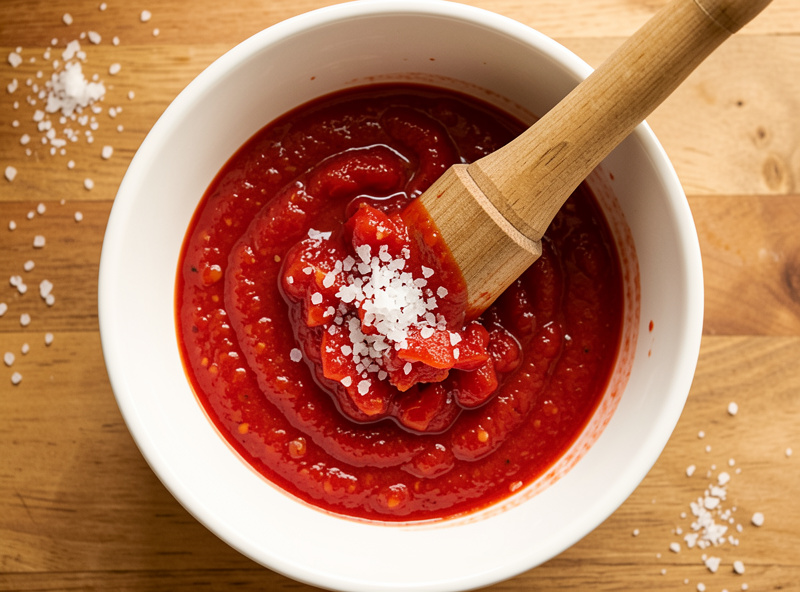
The no-cook sauce is so simple that people distrust it, so here is exactly what I do. Open a can of good whole peeled plum tomatoes — a standard 400g tin sauces two to three pizzas. Tip them into a bowl and crush by hand or with a potato masher to a rough, broken texture with some structure left; you are not making puree. If the tomatoes are swimming in thin juice, lift the solids out and leave most of that watery liquid behind in the can — that single step prevents more gum lines than any other.
Salt to taste, starting with about a quarter teaspoon of fine sea salt per 400g and adjusting upward — the tomato should taste seasoned and bright in the bowl, because it will not get more seasoning on the pizza. That is the entire recipe. No simmering, no garlic stewed in, no oregano, no sugar. A thread of good olive oil is optional and goes on the pizza just as happily as in the sauce. If you want a smoother texture without losing the freshness, run the crushed tomatoes through a food mill to take out the seeds and skin rather than reaching for a blender, which whips in air and turns the sauce pink and foamy.
Spread it thin. The classic Neapolitan move is a ladleful in the center, then a spiral out toward the rim with the back of the spoon, leaving a clean border for the cornicione. A thin, even layer bakes into the dough; a thick puddle in the middle steams and sogs. If anything, you are using less sauce than instinct tells you to.
Reading the sauce after the bake
The baked pizza tells you whether you got the sauce right, and learning to read it is faster than any recipe. Lift a slice and look at the underside and the cross-section. A pale, dense, slightly wet band of crumb directly under the sauce is a gum line — the sauce was too wet for the bake or laid on too thick, and the dough absorbed water it could not bake off. The fix is a drier sauce, a thinner layer, or a hotter, faster bake, in that order.
If the sauce on top looks dried out, dull, and almost leathery, you went the other way — too thick, too little, or a bake that was too long and too low. On a fast oven, a correctly built sauce comes out glossy and just-set, still tasting of fresh tomato. On a slow oven, it comes out deeper and a little jammy, which is exactly what the longer bake should do to a sauce you cooked first. I treat each baked pie as a data point the same way I log a dough: note the tomato, the consistency, the oven, and the result, and the pattern resolves in a handful of bakes.
Common sauce mistakes
The recurring faults are predictable. Over-seasoning a fast-bake sauce so it tastes of garlic and oregano instead of tomato. Using diced tomatoes that never break down and leave hard cubes on the pie. Blending the sauce to a foamy pink puree that bakes flat and lifeless. Laying the sauce on thick because a thin layer “looks like not enough” in the bowl. And the most common of all: using a raw, juicy sauce on a slow home oven, where the long bake guarantees a soggy center. Every one of these is a mismatch between the sauce and either the tomato quality or the oven’s bake time — which is the same lesson this whole guide keeps coming back to.
My standing sauce protocols by oven class
Here is what actually lives in my dough log next to the hydration numbers — the sauce I default to for each oven without thinking about it. These are starting points, not laws, but they are where I land after splitting the same tomatoes across machines on the same night more times than I can count.
- Gas oven (Ooni-class, 430–480°C stone): raw crushed San Marzano, salt only, on the looser side. The 90-second bake does the cooking.
- Dual-fuel dome oven: same raw sauce; if I am baking wood-fired at a slightly lower temperature with a longer bake, I crush it a touch thicker.
- Indoor electric (Effeuno-class, ~450°C with biscotto): raw crushed, salt only — it bakes Neapolitan-fast, so it gets the Neapolitan sauce.
- Home oven with steel (250–290°C, broiler finish): lightly cooked, reduced, thicker sauce. The 8–10 minute bake will punish a raw, watery sauce with a gum line every time.
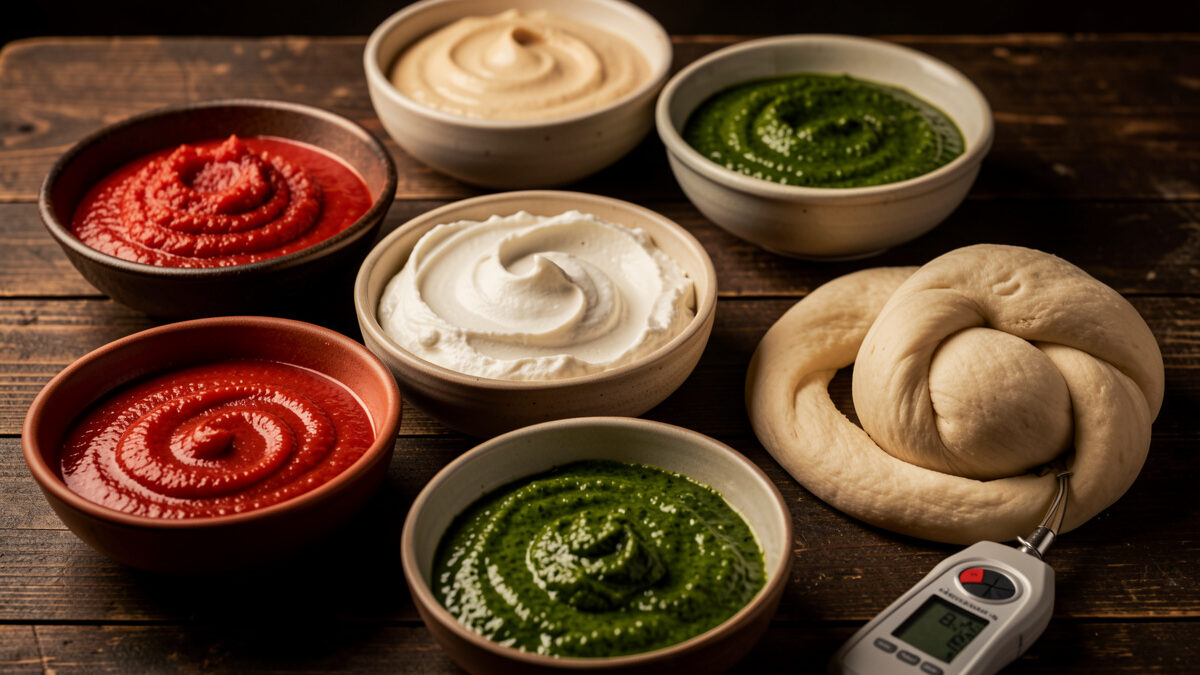
Sauce style comparison
| Sauce style | Best oven / bake time | Cook the sauce? | Target consistency | Season with |
|---|---|---|---|---|
| No-cook crushed (Neapolitan) | Gas / electric, 60–90 sec | No | Loose, juicy | Salt only |
| Cooked & reduced red | Home oven / NY, 6–12 min | Yes | Thick, coats a spoon | Salt, garlic, oregano |
| Passata-based | Either, depends on reduction | Optional | Smooth, medium | Salt, basil |
| White (bianca) | Any; delicate toppings | No (dairy) | Spreadable, thin | Garlic, salt, oil |
| Pesto | Slow oven base / fast oven finish | No | Loose, spoonable | Pre-seasoned |
How sauce fits the rest of the build
Sauce is one of three controlled variables, and it does not work in isolation. A loose sauce on an under-stretched, thick base is a guaranteed gum line; the same sauce on a properly thin, well-fermented base bakes clean. If you are still dialing in the dough, the pizza dough guide and hydration explainer come first — sauce can only be as good as the base under it. And because so much of sauce choice is really a heat question, the stone temperature by style map is the companion piece: it tells you what your oven is actually doing when you decide how wet your sauce can be. For the toppings that go on top of the sauce, the toppings and cheese guide picks up where this one stops — this guide ends at the sauce layer on purpose.
Apply that everywhere and you stop thinking of pizza sauce as a recipe to memorize and start thinking of it as one dial — wetness and cook level — that you set to match your oven. That is the whole game. As an Amazon Associate I earn from qualifying purchases. For the home build, a basic tomato food mill is the one tool that genuinely changes your sauce, letting you strain seeds and skins out of whole tomatoes for a smoother base without cooking.
Frequently Asked Questions
Do you cook pizza sauce before putting it on the pizza?
It depends on your oven. For a fast bake under three minutes (gas or electric pizza oven), do not cook it — raw crushed tomatoes with salt finish cooking on the pizza and stay fresher. For a slow home-oven bake of 6 to 12 minutes, cook and reduce the sauce first so it is not watery.
What is the best canned tomato for pizza sauce?
Whole peeled Italian plum tomatoes, crushed by hand, give you the most control over water and texture. San Marzano DOP is the classic but any good plum tomato low in seeds and free water works. Avoid firm diced tomatoes in calcium chloride — they never break down into sauce.
How thick should pizza sauce be?
It should coat the back of a spoon and fall off slowly. Looser sauce suits fast 90-second bakes where the dough has no time to absorb water; thicker, reduced sauce suits longer home-oven bakes that would otherwise leave a gum line under the sauce.
Do you need to add sugar to pizza sauce?
Usually not. Good ripe plum tomatoes are already sweet and balanced. Sugar is only needed if your tomatoes are sharp and underripe, which is a sign you bought a lower-quality can. Fix the tomato rather than masking it with sugar.
What can I use instead of tomato sauce on pizza?
A white base of ricotta, fior di latte, garlic and olive oil (pizza bianca) suits delicate or sweet toppings. Pesto works too, but it is heat-fragile and is best added after a fast bake or used as a base only on slower ovens to keep it from turning bitter.
Why does my pizza get soggy under the sauce?
Most often the sauce is too watery for the bake time, so the dough absorbs the water and forms a pale, dense gum line. Strain or drain the sauce, or cook it down for longer bakes, and make sure the base is stretched thin enough to bake through.
Related Guides
- San Marzano vs Regular Tomatoes for Pizza
- No-Cook vs Cooked Pizza Sauce, Compared
- Pizza Sauce Consistency Guide
- White Pizza Sauce (Bianca), Homemade
- Pesto as a Pizza Base
- Fixing Watery Pizza Sauce
- Passata vs Crushed Tomatoes for Pizza

About Kenny Nyhus Fadil
A home pizza maker documenting deck temps, dough logs, and the occasional wrecked launch.