White Pizza Sauce (Bianca), Homemade

A homemade white pizza sauce — pizza bianca — is not a sauce you cook at all. It is a thin layer of dairy and fat: ricotta dotted across the dough, a little fior di latte, garlic, good olive oil, and salt. The whole point is restraint, because dairy on a hot stone behaves nothing like tomato — it browns, it can break and go greasy, and it scorches faster. On a 450°C stone dairy browns and can split in a way tomato never does, so build it thin, dot rather than spread, and let the toppings do the talking. A white base is the right move whenever a bright tomato sauce would fight delicate or already-sweet toppings.
I came to white pizza from the same place I come to everything on this site: the dough is the constant and I change one variable to see what happens. Swapping tomato for a dairy base changes how the top bakes, how the heat behaves, and which toppings make sense — so it deserves its own technique rather than being treated as “red pizza without the red.” Here is how I build it across my fast and slow ovens.
What a white base actually is
There is no single bianca recipe — there is a family of fat-and-dairy bases. The simplest is just garlic-infused olive oil brushed on the dough, with cheese and toppings going straight on top: clean, light, and the most forgiving on a fast oven. The classic is ricotta dotted across the base with olive oil, garlic, and salt, often with fresh mozzarella between the dollops. The richest is a thin béchamel or a splash of cream loosened to a spreadable layer, which gives the most coverage but is also the most likely to brown and the heaviest on the slice.
All three skip tomato entirely, which means you lose tomato’s acidity — the thing that normally cuts richness. That is the single most important fact about white pizza: without acid to balance it, a white base wants brightness from somewhere else, which is why lemon zest, a hit of black pepper, fresh herbs, or a sharp cheese almost always earn their place on a bianca.
How dairy behaves on a hot stone
This is where white pizza catches people out. Tomato sauce is mostly water and sits as a protective wet layer; dairy is fat and protein that browns, bubbles, and can split into greasy pools if you overload it or run the oven too hot for too long. On my fast gas oven at 450°C, a heavy béchamel layer scorches before the base is done, so I either dot the ricotta sparingly or drop the temperature slightly and accept a few extra seconds of bake. On the slower home oven, dairy has more room — the gentler, longer bake browns it evenly rather than burning it.
The practical rules that come out of this: use less than feels right, leave gaps so the heat reaches the dough, and keep the richest bases for slower bakes. A white pizza that comes out greasy almost always had too much dairy, too thick, or too hot a bake — the same family of mistakes as a watery tomato pie, just from the opposite direction. Managing that is really a heat question, which is why the stone temperature by style map applies here just as much as it does to red sauce.
My base bianca, step by step
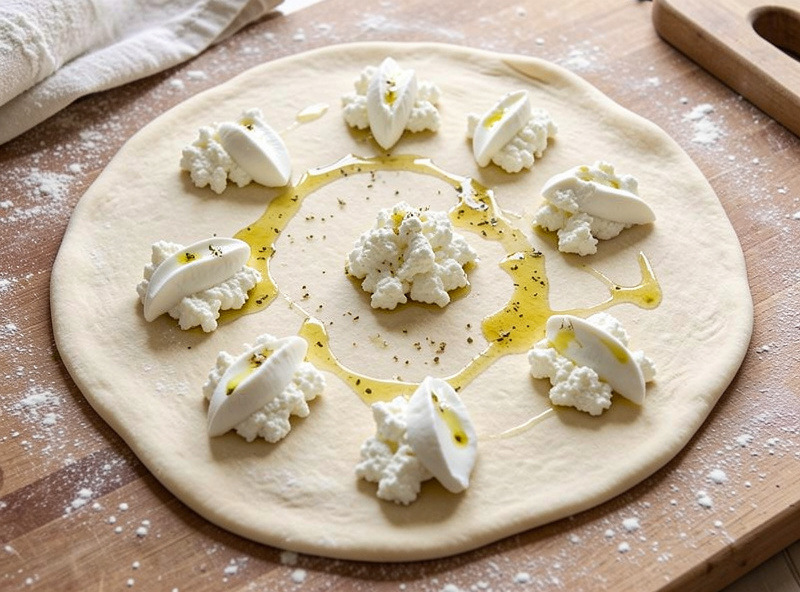
Stretch and prepare the dough as you would for any pizza — a white base does not change the stretching and launching technique. Brush the surface with olive oil and a little finely grated or pressed raw garlic, leaving the rim clean. Dot ricotta in spoonfuls across the base — not a solid layer, just islands — and tuck small pieces of fior di latte in the gaps. Salt lightly. That is the base; toppings go on next.
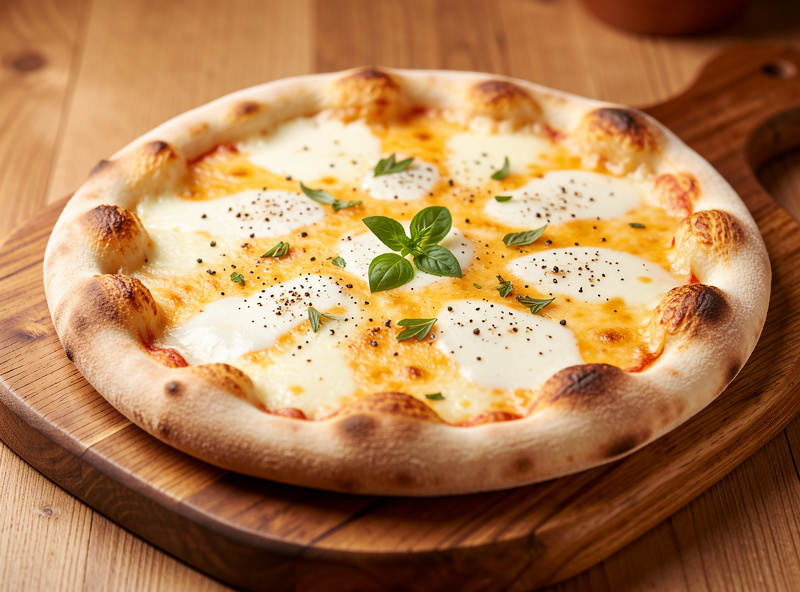
After the bake, this is where white pizza comes alive: finish with the bright, fresh elements that would have scorched inside the oven. A grating of parmesan or pecorino, cracked black pepper, lemon zest, fresh herbs, a final thread of olive oil. The cooked dairy gives richness; the post-bake additions give the lift that the missing tomato would otherwise have provided. This finish-after-the-bake habit is the same instinct that makes pesto on pizza work — heat-fragile, flavor-forward ingredients belong on after the heat, not under it.
White base types compared
| Base | Richness | Browning risk | Best for |
|---|---|---|---|
| Garlic olive oil only | Light | Low | Fast ovens, crisp light pies |
| Ricotta dots + mozzarella | Medium | Medium | Most white pizzas |
| Béchamel / cream | Rich | High | Slow ovens, full coverage |
What to put on a white pizza
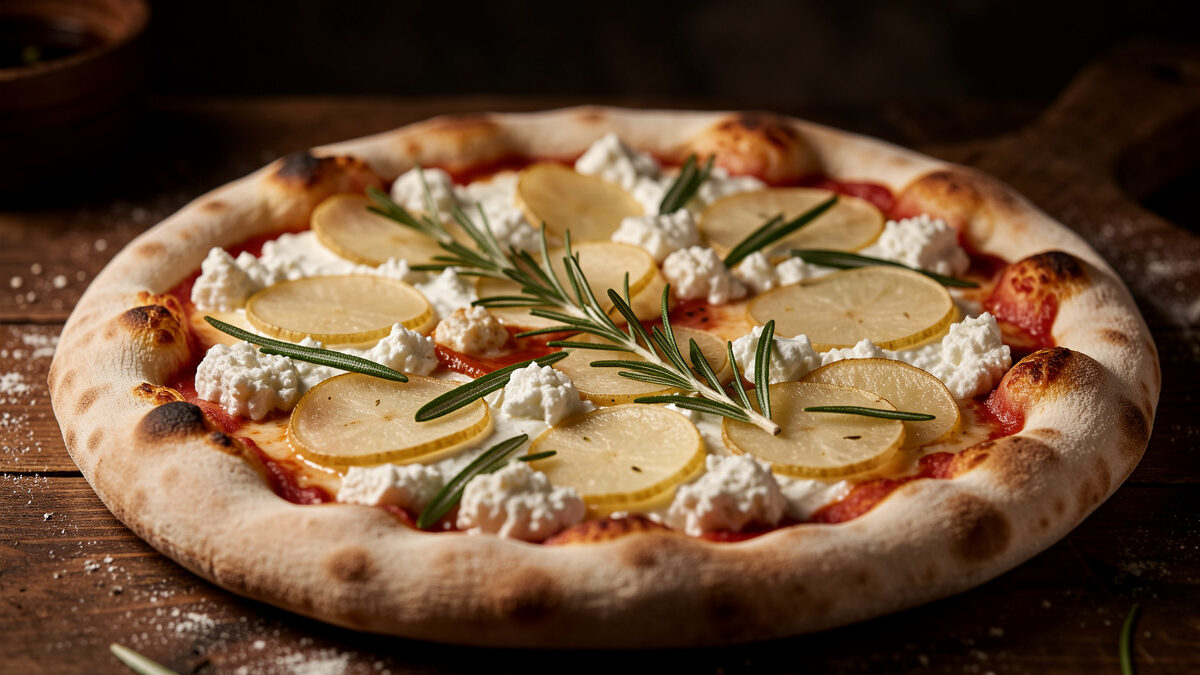
White bases shine under toppings that a tomato sauce would overpower or clash with. Potato sliced paper-thin with rosemary and olive oil; pear with gorgonzola and walnut; mushrooms with thyme; spinach with garlic; prosciutto added after the bake. The common thread is that these are delicate, earthy, or sweet — flavors that want a creamy backdrop, not an acidic one. The cheese choice matters more on a white pizza too, since there is no tomato to hide behind; the toppings and cheese guide goes deep on melt behavior and blends, and the fresh versus dry mozzarella question is especially relevant when dairy is already the base.
What to avoid: piling on wet ingredients. A white base has no water buffer, so watery mushrooms or under-drained spinach will pool and make the pie greasy and soft. Pre-cook or pat dry anything that releases water, and keep the load light. White pizza rewards a lighter hand than red.
Frequently Asked Questions
What is white pizza sauce made of?
White pizza sauce is a thin dairy-and-fat base rather than a cooked sauce. The most common version is ricotta dotted across the dough with olive oil, garlic, salt and a little fresh mozzarella. Lighter versions use just garlic-infused olive oil; richer ones use a thin béchamel or cream.
Do you cook white pizza sauce first?
No. A ricotta or garlic-oil base goes on raw and cooks on the pizza. Only a béchamel needs making ahead because it is a cooked sauce, but it still goes on as a thin spread. The dairy browns rather than simmering, so it does not need pre-cooking like a reduced tomato sauce.
Why does my white pizza turn out greasy?
Almost always too much dairy, applied too thick, or baked too hot for too long, which makes the fat split and pool. Use less than feels right, dot ricotta in islands rather than a solid layer, leave gaps for the heat, and keep rich béchamel bases for slower bakes.
What toppings go on a white pizza?
Delicate, earthy, or sweet toppings that a tomato sauce would overpower — potato and rosemary, pear and gorgonzola, mushroom and thyme, spinach and garlic, or prosciutto added after the bake. Avoid wet ingredients, since a white base has no water buffer and will go greasy.
How do you add brightness to white pizza without tomato?
Because there is no tomato acid to cut the richness, finish the pizza after baking with bright elements: grated parmesan or pecorino, cracked black pepper, lemon zest, fresh herbs, and a thread of olive oil. These add the lift the missing tomato would otherwise provide.
Related Guides
- Pizza Sauce Styles and Technique: The Complete Guide
- Pesto as a Pizza Base
- Pizza Toppings and Cheese: The Complete Guide
- Fresh vs Dry Mozzarella for Pizza
- No-Cook vs Cooked Pizza Sauce, Compared

About Kenny Nyhus Fadil
A home pizza maker documenting deck temps, dough logs, and the occasional wrecked launch.