Pizza Stone and Steel Care: Cleaning, Seasoning, and Cracks

A steel and a stone want opposite care, and the fastest way to ruin an expensive baking surface is to treat them the same. A steel is basically a cast-iron pan — wipe, dry, oil, and it lasts forever. A stone is the fragile one — never soap, never thermal shock, just dry-brush the char. Get those two routines straight and your surface will outlast several ovens; mix them up and you’ll rust a steel or crack a stone within a season. This is the maintenance guide I wish someone had handed me before my first stone met a sink full of soapy water.
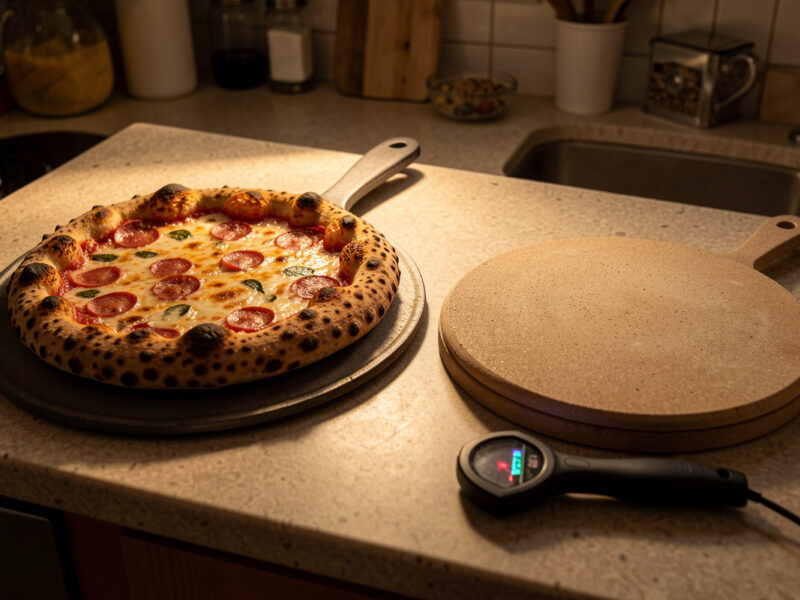
Care is the unglamorous half of the steel vs stone decision, but it’s a real part of the cost of ownership — a steel that’s effectively indestructible if you keep it dry, against a stone that’s more fragile but rewards gentle handling. Here’s how to keep both alive.
Caring for a pizza steel
Treat a steel exactly like cast iron, because the failure mode is the same: rust. Steel rusts when it sits wet, so the whole care philosophy is “keep it dry and lightly oiled.”
Cleaning: after it cools, scrape off any stuck bits with a metal scraper or stiff spatula, then wipe it down. For stubborn residue, a damp cloth is fine — just dry it thoroughly afterward. You can use a little soap on a steel if you really need to (unlike a stone, it’s not porous), but dry it immediately and completely the moment you do.
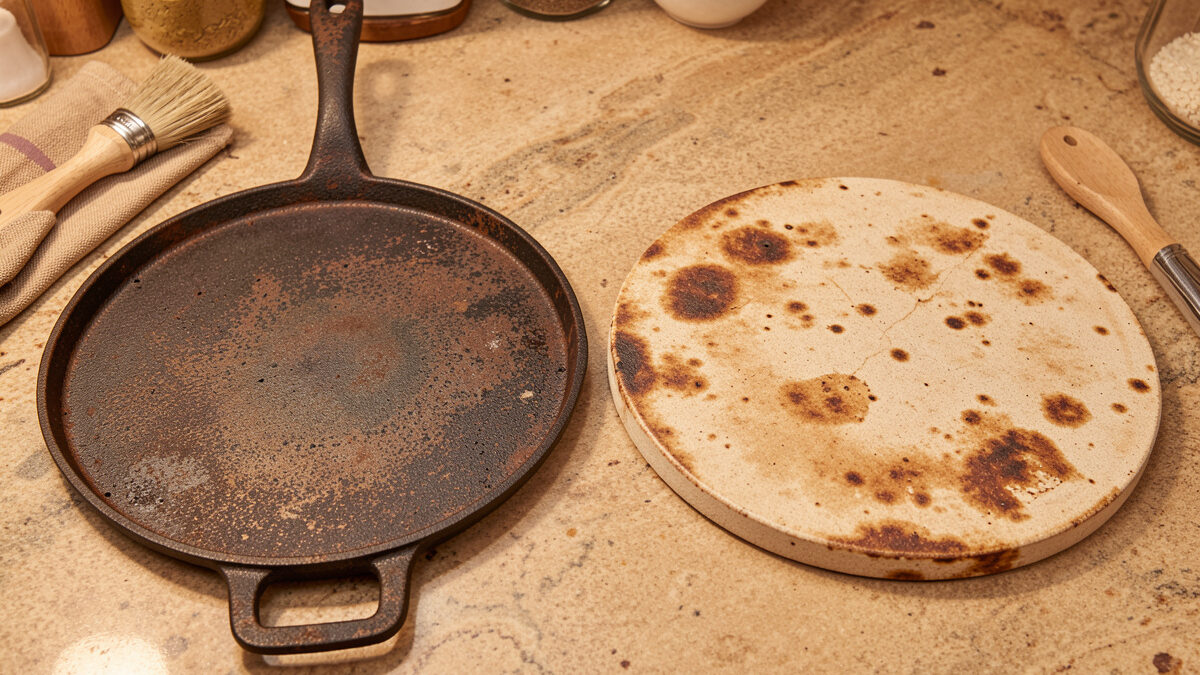
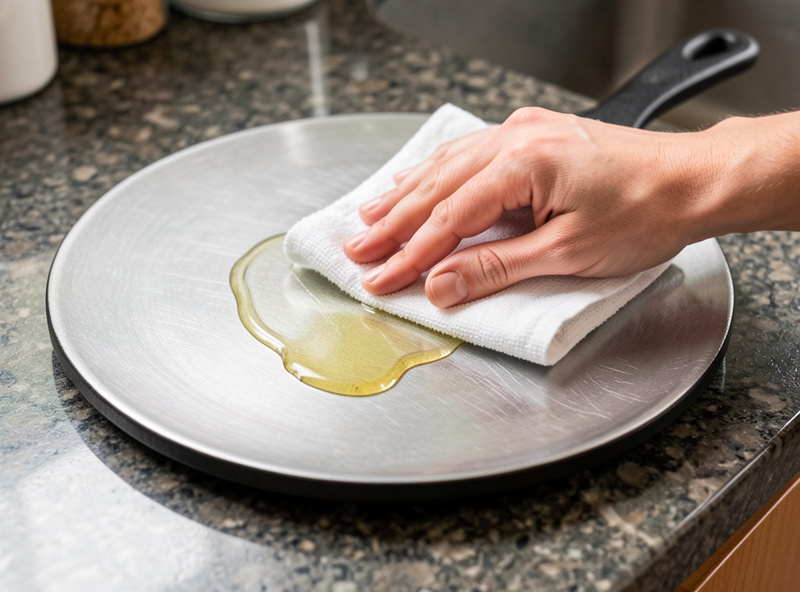
Seasoning: like cast iron, a steel builds a darkened, semi-non-stick patina over time, and you maintain it by keeping a thin film of oil on the surface. After cleaning and drying, wipe on a very light coat of a high-smoke-point oil. Too much oil goes sticky and gummy; you want barely-there. Over many bakes the surface darkens and gets better.
Dealing with rust: if a steel does rust from being stored damp, it’s not ruined — scrub the rust off with steel wool or an abrasive pad, wash, dry completely, and re-season with that thin oil film. Steel is genuinely hard to kill; rust is a cosmetic and surface problem, not a death sentence. The real lesson is storage: keep your steel somewhere dry, or just leave it in the oven where it stays warm and dry.
Which oil: use a neutral, high-smoke-point oil for seasoning — the kind you’d use on cast iron. Avoid heavy or strongly flavored oils, which can go rancid or sticky. The goal is a thin polymerized layer that builds over time, not a greasy coat, so always wipe more off than you think you should. If your steel ever feels tacky, you used too much — wipe it back hard and heat it to set what’s left.
The burnoff trick: if a steel gets genuinely crusted with baked-on residue, you can run it through a hot oven cycle to carbonize the gunk to ash, then scrape and wipe it clean and re-season. This is the steel equivalent of a self-clean and it resets a neglected steel back to a smooth surface without chemicals. Stones can take a long hot cycle to burn off surface grease too, though they’ll never come fully clean — and remember, a stone doesn’t need to.
Caring for a pizza stone
A stone is the opposite animal: porous, brittle, and unforgiving of two things — soap and thermal shock.
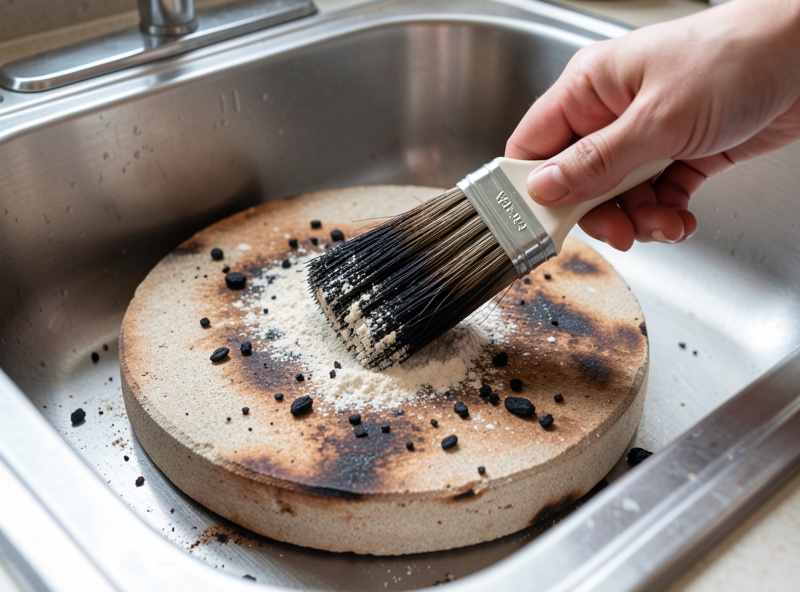
Never use soap. A stone is porous and will absorb soapy water like a sponge, then release soap flavor and smell into your next several pizzas. This is the number-one stone mistake. Clean a stone dry: let it cool completely, then scrape and dry-brush the char and stuck flour off with a stiff brush or a bench scraper. Stubborn spots can take a barely-damp cloth, but never submerge a stone and never soap it.
Stains are fine. A stone is supposed to look terrible. Dark scorch marks, grease stains, discoloration — all cosmetic, all harmless, all a sign of a stone that’s been used. Don’t try to scrub a stone back to white; you’ll only damage it chasing a look that doesn’t matter. A well-used stone is a stained stone.
Never thermal-shock it. Thermal shock — a sudden temperature change — is what cracks stones. Don’t put a cold stone into a hot oven (preheat it from cold, with the oven). Don’t put anything cold or wet onto a hot stone (a frozen pizza, a wet base, a splash of water). Don’t run cold water over a hot stone. And let a stone cool fully in the oven or on a rack before you handle or clean it. Most cracked stones died from one of these.
Rescuing a soapy stone: if you already made the soap mistake (we’ve all done it once), don’t panic and don’t try to “rinse it out” with more water — that just drives the soap deeper. The fix is heat: run the stone through several long, hot, empty oven cycles to bake out the absorbed soap and moisture, brushing between cycles. It may take a few rounds, and the stone may never be perfect again, but you can usually get it back to bakeable. The better answer is to never soap it in the first place.
Smoke on the first few bakes: a new stone, or one you’ve just burned off, may smoke a little as residual moisture and manufacturing residue cook off. That’s normal and passes after a bake or two — run a high empty cycle to season a new stone before its first pizza so the smoking happens without food on it.
What to do about a cracked stone
A cracked stone isn’t automatically dead. A hairline crack from thermal stress, if the stone still sits flat and doesn’t rock, will keep baking pizza fine — pizza doesn’t care about a cosmetic crack underneath it. What ends a stone is a crack that lets it rock or wobble (uneven baking, and a hot wobbling stone is a hazard), or a stone that’s snapped into pieces. If yours has a stable hairline crack, keep using it until it gives you a reason not to. If it rocks, retire it. This forgiving reality is one reason I don’t get precious about stones — they’re cheap enough and crack-tolerant enough to treat as a long-term consumable.
Storage: the part that determines lifespan
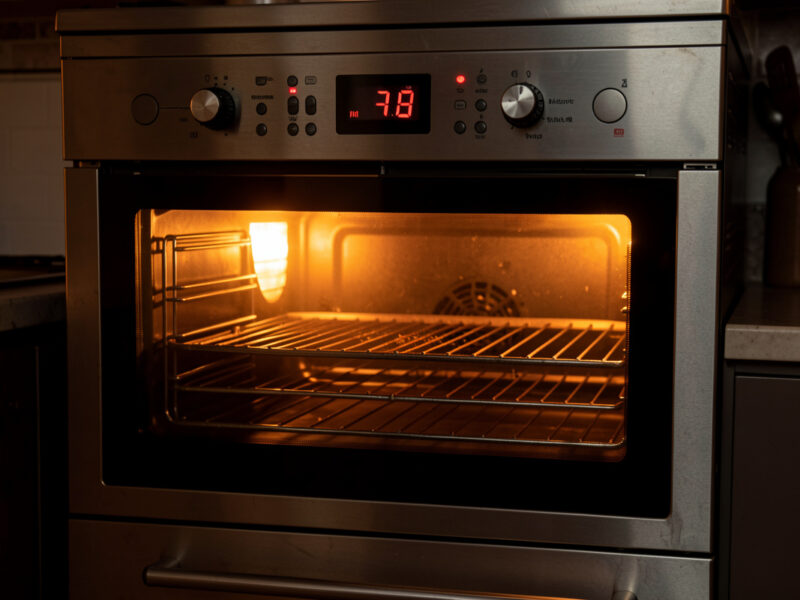
How you store both surfaces between bakes matters more than any single cleaning. A steel wants to be dry — rust is the only thing that kills it, and rust needs moisture, so store it somewhere dry or leave it in the oven. A stone wants to be dry too, but for a different reason: a stone that absorbs moisture in storage has to cook that moisture off on the next preheat, and trapped moisture turning to steam inside the stone makes it more crack-prone. So both surfaces share one storage rule — keep them dry — even though their failure modes differ. Many people just leave whichever surface they use in the oven permanently, which solves storage entirely at the cost of a slightly longer general oven preheat.
The five mistakes that kill baking surfaces
- Soaping a stone. The porous surface drinks it and flavors your pizza. Dry-brush only.
- Thermal-shocking a stone. Cold-into-hot or wet-onto-hot cracks it. Always heat from cold, with the oven.
- Storing a steel wet. Rust needs moisture; dry it completely and keep it somewhere dry.
- Over-oiling a steel. Too much oil goes gummy and tacky. Wipe on barely-there, then wipe most of it back off.
- Chasing a clean look. A stone is meant to look stained; scrubbing it to white only damages it. Cosmetic mess is fine on both surfaces.
Avoid those five and there’s almost nothing else to get wrong. Both surfaces are far more durable than people fear — the failures are nearly always one of these avoidable habits, not the surface wearing out.
The maintenance reality, surface by surface
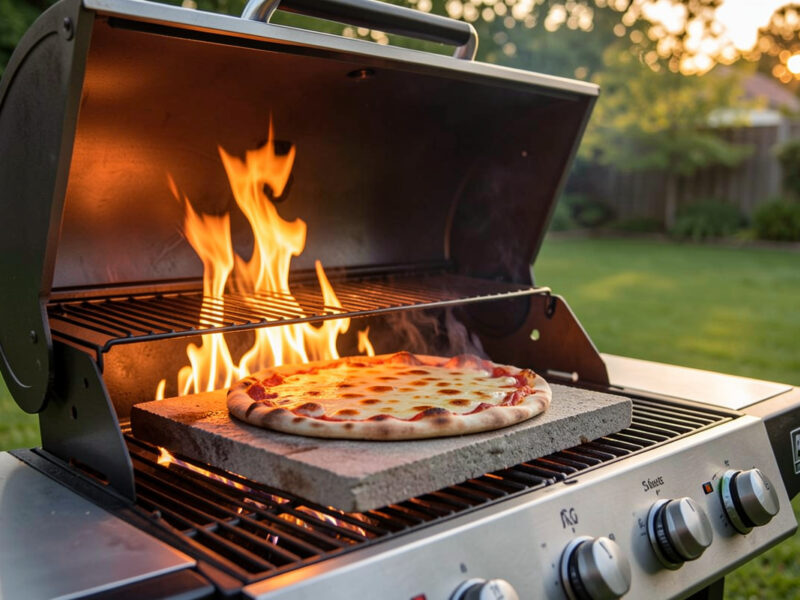
If you want the lowest-maintenance surface, steel wins on durability but loses on attention — it needs the occasional oil and a watchful eye on moisture, exactly like cast iron, but it’s essentially impossible to permanently destroy. A stone needs almost no active maintenance (no oiling, no seasoning) but is one careless thermal shock away from a crack. Neither is high-effort; they just ask for different small habits. Keep a steel dry and oiled, keep a stone dry and unshocked, and the surface you chose in the steel vs stone verdict will serve you for years of bakes. And if you take your stone outdoors to the grill, the same rules apply but harder — grill stones live a rougher life and the thermal-shock risk is always closer.
Related reading
- Pizza steel vs stone: the home-oven verdict
- Pizza on the grill with a stone
- Preheat time: steel vs stone
- Pizza steel thickness: how thick is worth it?
More from This Cluster
- “Home Oven Max Temp Workarounds for Better Pizza”
- “Pizza on the Grill With a Stone: What Actually Works”
- “Preheat Time: Steel vs Stone (and Why the Gap Matters)”
- “The Broiler Method: Real Neapolitan-ish Pizza in a Home Oven”
- “Pizza Steel Thickness: How Thick Is Worth It?”
- “Pizza Steel vs Stone: The Honest Home-Oven Verdict”

About Kenny Nyhus Fadil
A home pizza maker documenting deck temps, dough logs, and the occasional wrecked launch.