Pizza Oven Covers and Carts: A Buying Guide

Covers and carts won’t change a single slice of pizza, but they change how long your oven lasts and how safely you bake. A good cover keeps water out of the burner and rust off the steel; a stable cart gives you a counter-height surface so you’re not launching pizzas off a wobbly camping table. Both sit firmly in the buy-last tier — useful, even important over years, but never a substitute for the peel and thermometer that actually decide your bakes.
I store ovens outdoors through Swedish winters, so I’ve learned exactly which of this gear earns its money and which is branded markup. Here’s how to choose a cover and a cart without overspending on a logo.
Why a Cover Matters (and When It Doesn’t)
A cover protects against the two things that kill outdoor ovens: water in the burner and rust on the steel. If your oven lives outside or in an unheated space, a cover is genuinely worth it — trapped moisture corrodes burners, seizes igniters, and stains stainless. If your oven lives in a garage or comes indoors after every bake, a cover is optional and you can skip it.
The detail that matters most is breathability. A fully waterproof cover that seals like a bag traps condensation underneath, which can rust the oven from the inside while keeping the rain off the outside — the worst of both worlds. The better designs shed rain from above while letting trapped moisture escape, often with vents. I learned this the hard way storing a gas oven under a cheap sealed cover and finding surface rust beneath it after a damp month. The stone and steel care guide covers what that moisture does to the baking surface specifically.
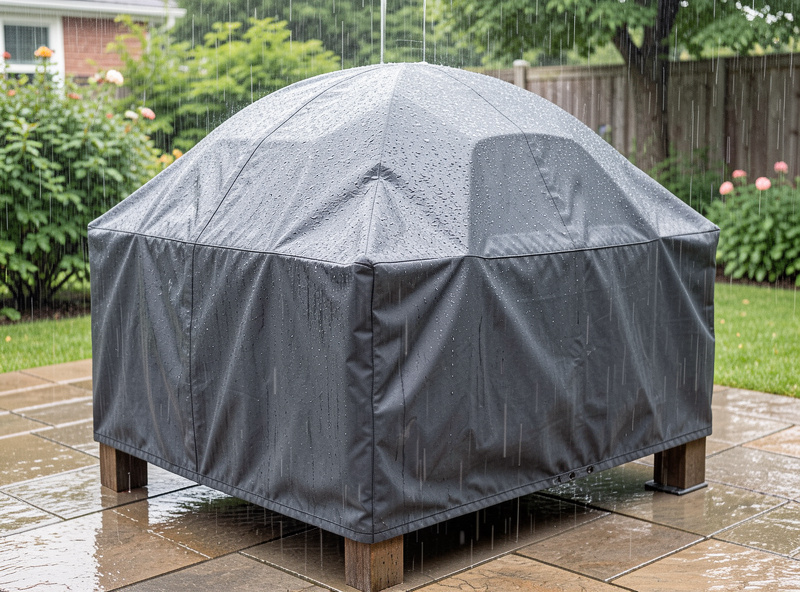
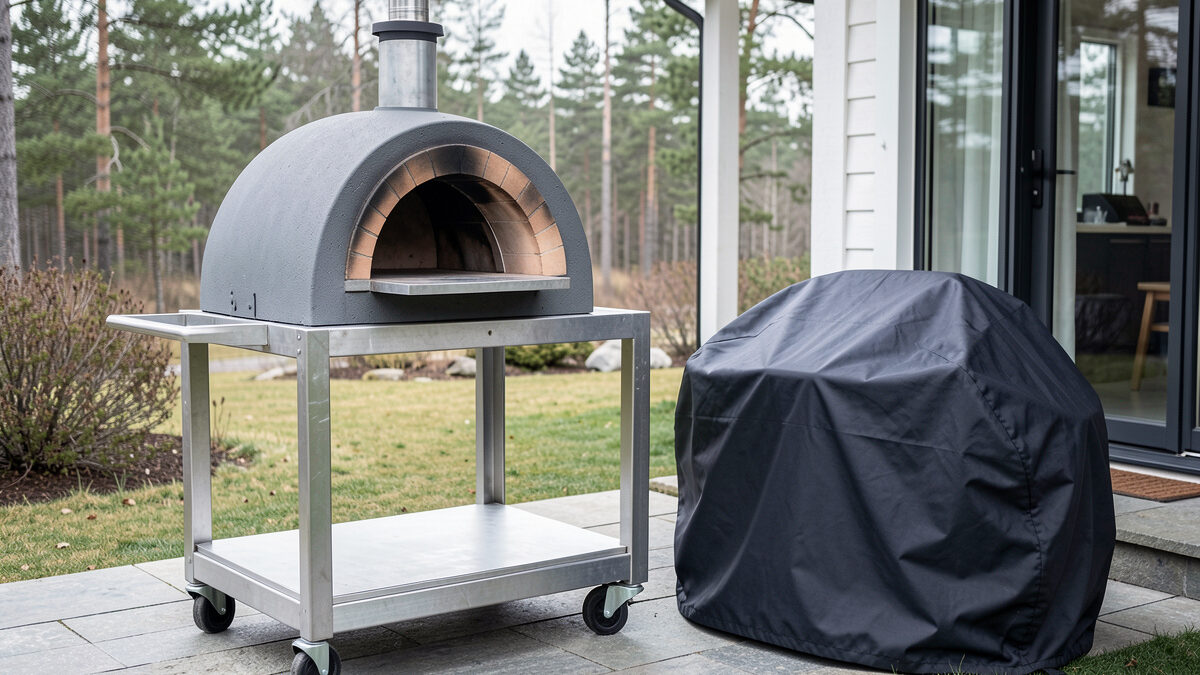
Fit is the other half. A cover that’s too loose flaps in wind and lets driving rain underneath; too tight and it won’t clear the chimney or handles. Buy the cover made for your oven model where you can — generic covers in roughly the right size work, but the fitted ones seal better at the openings where water actually gets in. As an Amazon Associate I earn from qualifying purchases. A breathable waterproof pizza oven cover sized to your model is the safe buy.
Carts and Tables: Stability and Height
A cart or stand does one critical job — it gives you a stable surface at the right height to launch from. Launch confidence is mostly about a steady base under the oven and a steady surface beside it for your peel; a wobbling table turns a clean launch into a dropped pizza. Height should put the oven mouth at a comfortable working level so you’re not stooping or reaching up to launch.
Stability beats everything else here. I’d take a heavy, rock-solid stand over a lightweight branded cart every time — the moment of launching and turning is when any wobble bites, and a fast oven gives you no time to recover a slipped pizza. Look for a wide base, locking castors if it’s a rolling cart, and a top rated to hold the oven’s weight plus the lean you put on it while you work. The cold-weather and wind guide makes the same point about wind: a tall, light stand in a gust is a hazard, where a low heavy one stays put.
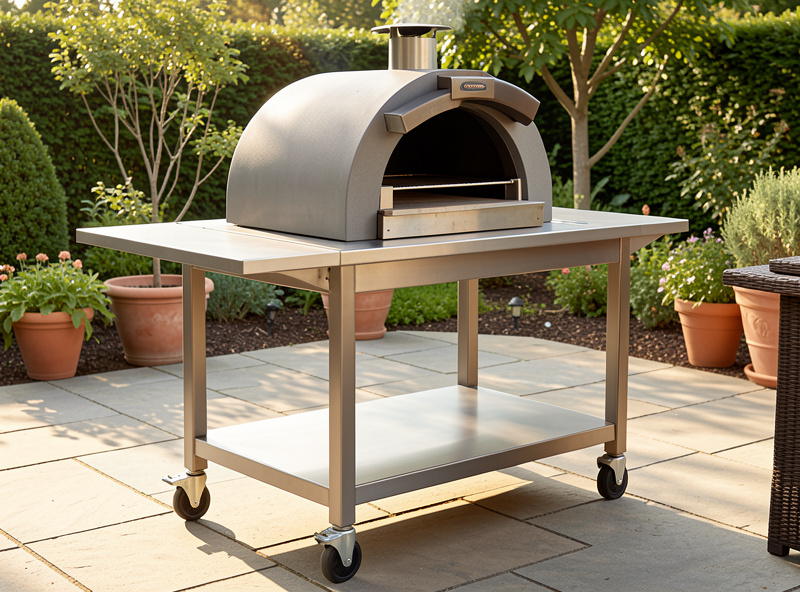
Mobility is a real convenience if you store the oven away between bakes. A rolling cart with locking wheels lets you trundle a heavy oven out of the shed and lock it in place to bake — just make sure the locks actually hold. If your oven lives in one spot, a fixed stand or even a solid masonry counter is more stable and cheaper than a wheeled cart you’ll never roll.
Worth It vs Markup
Here’s how the realistic options compare. The pattern is consistent: pay for fit, breathability, and stability; don’t pay for a logo stamped on the same generic product.
| Item | Worth paying for | Not worth paying for | Rough cost |
|---|---|---|---|
| Cover | Breathable, model-fitted | Branded sealed bag | $30–$70 |
| Rolling cart | Wide base, locking castors | Logo, flimsy shelf | $120–$300 |
| Fixed stand | Heavy, correct height | Tall, light, wobbly | $80–$200 |
| Masonry counter | Stability, permanence | — | DIY / existing |
The branded markup is real on both. A model-name cover can cost triple a breathable generic equivalent of the same size, and a “pizza oven cart” is often a basic kitchen trolley with a logo. Sturdy and correctly sized beats branded every time — the oven doesn’t bake better because the cart matches it.
Storing Through a Hard Winter
Cold-climate storage is where covers and carts stop being optional and start being maintenance. Through a Swedish winter, an exposed gas oven faces freeze-thaw cycles, wind-driven snow, and weeks of damp — exactly the conditions that find their way into a burner and seize it. A breathable cover plus getting the oven up off the wet ground on a stand is the difference between an oven that fires first try in spring and one that needs the burner stripped and dried.
My routine is simple: dry the oven fully after the last autumn bake, let the stone cool completely so no warm moisture gets trapped, fit a breathable cover, and keep the whole thing on a stand rather than the cold flagstones where damp wicks up. If you run gas, bring the propane tank somewhere sheltered for the winter too — cold tanks and cold regulators are their own problem, which I get into in the gas regulator guide. A cart with locking wheels makes this whole routine easier, because you can roll a heavy oven into a sheltered corner without lifting it.
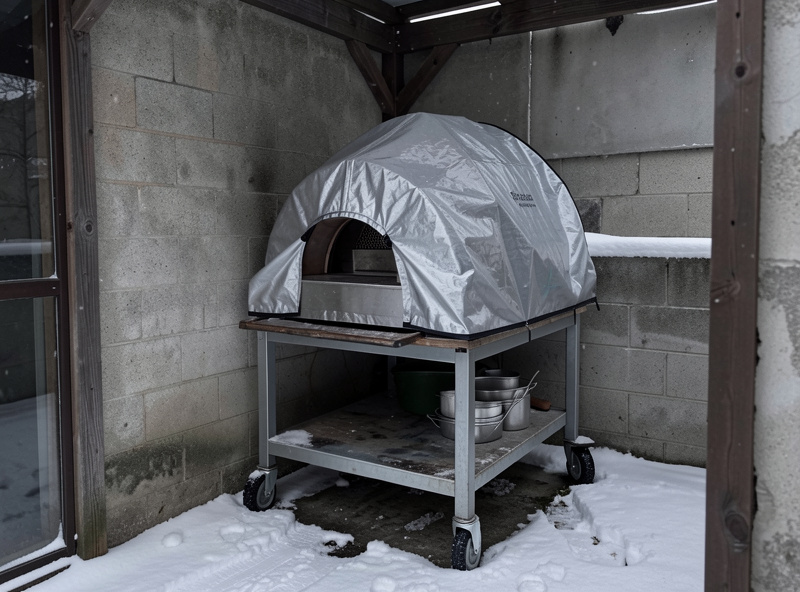
None of this affects a single bake — but it affects whether you get to bake at all next season. In a mild climate you can be casual about storage; in a cold one, the cover and the stand are the gear that keeps the oven alive through the months you can’t use it. That’s the honest case for spending on silhouette gear: not better pizza, but a working oven when the weather finally turns.
Where These Sit in the Accessory Hierarchy
Covers and carts are silhouette gear: they change what your patio looks like and how long the oven survives, not what comes off the deck. That’s exactly why they belong at the bottom of the buying order in the accessories guide — buy the launch peel, the IR thermometer, and a way to handle dough first, then protect and steady the oven once the bakes themselves are dialed in.
None of this is wasted money, though. An oven that’s covered against a wet winter and launched from a steady surface lasts longer and bakes more safely than one left exposed on a wobbly table — and over years, that protection quietly pays for itself. Just keep the order right: the gear that changes the slice first, the gear that protects the oven second. Get the oven choice right, dial in the bakes, then spend on the patio.
One last piece of advice from years of storing ovens outdoors: buy the cover and stand once, properly, rather than cheap twice. A flimsy cover that tears in the first storm or a wobbly stand that you stop trusting both get replaced within a season, and the replacement costs more than buying right the first time would have. Sturdy, breathable, correctly sized, and heavy where it needs to be — those four words cover every good buying decision in this category, and they have nothing to do with which brand made your oven.
Frequently Asked Questions
Do I need a cover for my pizza oven?
Only if it lives outdoors or in an unheated space. A cover keeps water out of the burner and rust off the steel, which matters for ovens left exposed. If yours stays in a garage or comes indoors after each bake, a cover is optional and you can safely skip it.
Should a pizza oven cover be fully waterproof?
It should shed rain but still breathe. A fully sealed cover traps condensation underneath, which can rust the oven from the inside even while keeping rain off the outside. Look for a weatherproof cover with venting that lets trapped moisture escape, and a model-specific fit at the openings.
What should I look for in a pizza oven cart?
Stability first: a wide base, a top rated for the oven’s weight, and locking castors if it rolls. Height should put the oven mouth at a comfortable working level. A heavy, rock-solid stand beats a light branded cart, because any wobble bites exactly when you launch or turn a pizza.
Is a branded pizza oven cover worth the extra cost?
Usually not. A model-name cover can cost triple a breathable generic of the same size, and the generic often protects just as well. Pay for fit and breathability, not the logo. The same applies to carts, where a branded one is often a basic trolley at a premium.
Can I just use my existing outdoor table for the oven?
If it is heavy, stable, and the right height, yes. The cart’s only job is a steady surface at a comfortable launch height, and a solid table or masonry counter does that for free. Avoid tall, lightweight tables that wobble, because a fast oven gives no time to recover a slipped pizza.
Related Guides
- Pizza Oven Accessories: The Complete Guide
- Pizza Stone and Steel Care
- Baking in Cold Weather and Wind
- How to Choose a Pizza Oven
- Is an IR Thermometer Worth It?

About Kenny Nyhus Fadil
A home pizza maker documenting deck temps, dough logs, and the occasional wrecked launch.