Pizza Oven Heat Recovery: Keeping the Deck Hot

Heat recovery is how long your pizza oven needs to climb back to its launch temperature after each pizza pulls heat out of the deck. A portable gas oven typically recovers a Neapolitan deck in 3–4 minutes; a thin home-oven stone can need 8 minutes or more. Recovery, not peak temperature, is what decides whether pizza number five is as good as pizza number one.
Anyone can bake one good pizza. The test of an oven — and of the baker — is the third, fourth, and fifth pie when people are waiting. Every launch craters the deck, and if you launch the next dough before the stone has recovered, you bake on a cold surface and the quality collapses. This guide is how recovery actually works, how long each oven class needs, and how I manage a whole pizza night without the slump. It sits under my pizza oven temperature guide.
What Happens to the Deck When You Launch
The moment a cold, wet pizza lands, it sucks heat out of the top few millimetres of stone by conduction. The surface reading can drop 60–100°C instantly, and that is the heat doing its job — cooking your base. The problem is the next pizza: until the bulk heat in the stone conducts back up to the surface, the deck is below your target and a fresh launch will stall.
This is why a deeply soaked stone recovers better than a surface-hot one. A stone with a fully saturated core has a reservoir of heat to feed back to the surface, so it bounces back fast; a stone that was only surface-hot has nothing in reserve and stays cold. Recovery and heat soak are two sides of the same coin — get the soak right first, which I cover in heat soak explained, and recovery takes care of much of itself.
Recovery Time by Oven Class
Recovery is the spec ovens never advertise, so here is what I see in practice across the classes I run. These are rough times to climb back to a Neapolitan launch target after a single 90-second pizza, on a well-soaked oven in mild conditions. Cold weather, a heavier pizza, or a poorly soaked stone all lengthen them.
| Oven Class | Recovery Time | How It Recovers | Multi-Pizza Verdict |
|---|---|---|---|
| Portable gas (e.g. Koda class) | 3–4 min | Flame-driven, fast | Good if you wait on the gun |
| Dual-fuel dome | 2–3 min | Large soaked mass + flame | Excellent, holds well |
| Indoor electric (thick stone) | 3–6 min | Element + deep stored heat | Steady, slower element response |
| Home oven + steel | 4–6 min | Steel reabsorbs fast, broiler helps | Surprisingly good with broiler |
| Home oven + thin stone | 8+ min | Slow, little reserve | The night staller |
The Single Rule That Fixes Most Recovery Problems
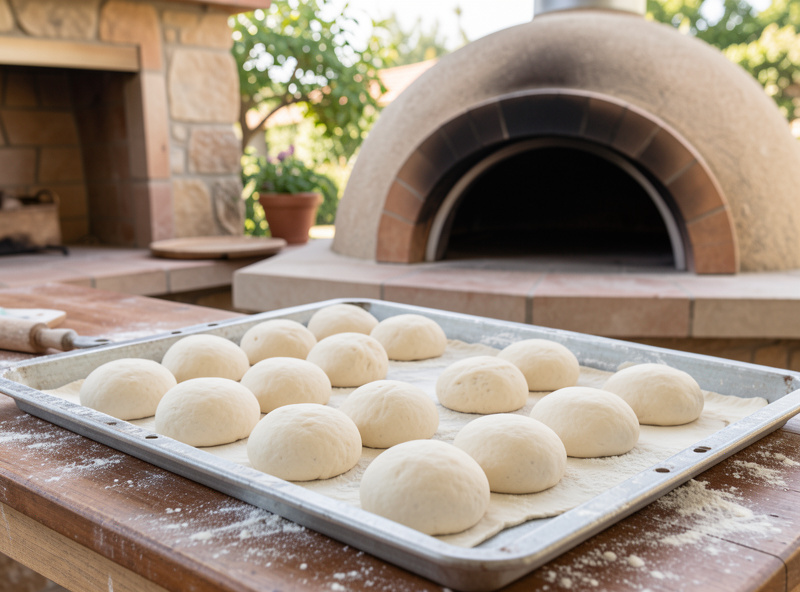
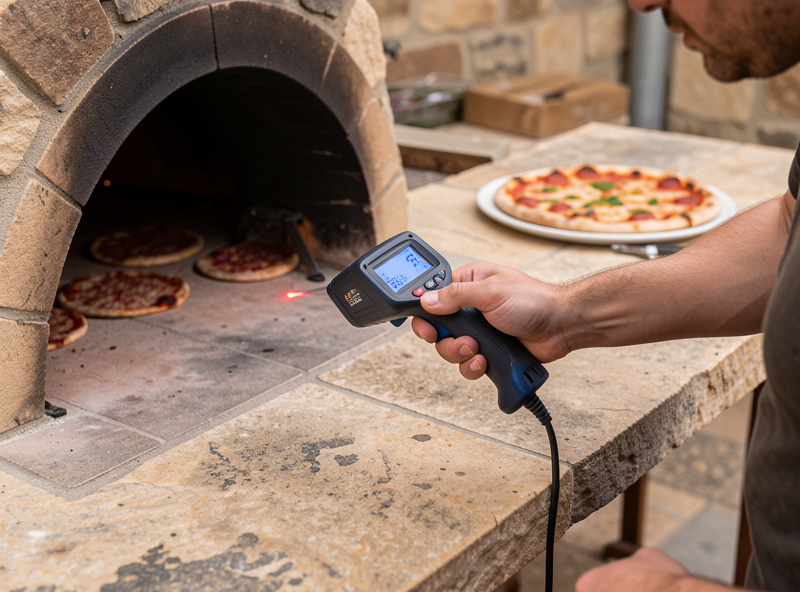
Never launch below your target stone reading. That one habit — gun, not clock — solves the slump for almost everyone. The temptation when a hungry table is waiting is to launch on a rhythm, every two minutes regardless, but the deck does not care about your rhythm. Check the landing spot with the infrared gun, and only launch when it has recovered to target.
I stretch the next dough ball only after the gun confirms recovery, never before, so the dough is never sitting and over-proofing while the stone catches up and I am never launching onto a cold deck. It feels slower in the moment, but it is faster overall because you stop producing the pale, gummy pizzas that get sent back to the oven. The gun that makes this possible is covered in my IR thermometer guide, and the target numbers to recover to are in stone temperature by style.
How to Shorten Recovery Between Pizzas
Beyond patience, several things genuinely speed recovery. Run the flame high between pizzas and drop it for the launch, so you are pushing heat back into the deck during the gap rather than scorching the crown during the bake. Keep the lid or door closed while recovering to stop heat escaping. And soak deeper before you ever start, because a stone with more stored heat recovers faster all night.
The biggest lever, though, is the pizza itself: a lighter, drier, better-launched pizza pulls less heat out in the first place. Over-floured, over-sauced, or slow-to-launch pizzas sit on the deck longer and strip more heat, lengthening recovery for the next one. Tightening your launch technique pays off twice — better pizza now, faster recovery next. That technique is in my launch and bake guide. And if you bake outdoors in the cold, recovery is the first thing winter wrecks, which is the whole subject of cold-weather and wind baking.
Planning a Pizza Night Around Recovery
Once you know your oven’s recovery time, you can plan a night instead of fighting it. If your oven recovers in four minutes and each pizza bakes in 90 seconds, you are realistically producing a pizza roughly every five to six minutes — not the back-to-back fantasy the marketing implies. Knowing that number lets you stage dough, time toppings, and tell hungry people the truth.
For a crowd I bake in waves with a deliberate pause to let the oven fully recover and re-soak every few pizzas, rather than grinding it down to a cold deck and never getting it back. I learned that the hard way at a family party on my Ooni Koda 16: I chased the queue, launched on a clock instead of the gun, and by the sixth pizza the deck was so far behind that I had to stop for ten minutes and re-soak while everyone stood around waiting. A dome oven with a big soaked mass forgives a faster pace; a portable gas oven rewards the wave approach. This is exactly the recovery lens I bring to oven reviews like my Ooni Koda 16 long-term review, because it predicts real-world results far better than the headline peak temperature.
Stone Thickness and Material Change Recovery
Not all decks recover the same, and the difference comes down to mass, specific heat capacity, and conductivity. A thick stone stores more heat and recovers from a deeper reservoir, which is exactly why my indoor electric with its heavy biscotto deck holds so steadily once it is soaked. A thin stone has little stored heat, craters hard on launch, and crawls back to temperature — the classic home-oven staller.
Material matters as much as thickness. Steel conducts heat far more aggressively than stone — its higher thermal diffusivity moves stored heat back to the surface quickly — so a steel deck dumps heat into the base fast but also reabsorbs and recovers faster than a thin stone, especially with a broiler driving it from above. That conduction trade-off is why I push home-oven bakers toward a thick steel over a thin stone for multi-pizza nights — the full reasoning, including how thick is worth buying, is in my pizza steel thickness guide.
Frequently Asked Questions
How long does a pizza oven take to recover between pizzas?
A portable gas oven typically recovers a Neapolitan deck in three to four minutes, a soaked dome oven in two to three, and a thin home-oven stone in eight minutes or more. Recovery lengthens in cold weather, with heavier pizzas, or when the stone was not deeply soaked.
Why is my second pizza worse than my first?
Each launch pulls heat out of the deck, and you launched the second pizza before the stone recovered to target. Baking on a cold deck gives a pale, gummy base. Check the landing spot with an infrared gun and only launch when it has climbed back to your target temperature.
How can I make my pizza oven recover faster?
Run the flame high between pizzas and drop it for the launch, keep the lid closed while recovering, and soak the stone deeply before you start so it has more stored heat. Lighter, drier, well-launched pizzas also pull less heat out, shortening recovery for the next pie.
Should I launch pizzas on a timer or a thermometer?
Always the thermometer. The deck does not care about your rhythm, so launching every two minutes regardless puts a pizza on a cold stone. Read the landing spot with an infrared gun and launch only when it has recovered to target. Gun, not clock, is the rule.
Related Guides
- Pizza Oven Temperature Discipline: The Complete Guide
- Heat Soak Explained for Pizza Ovens
- IR Thermometer Guide for Pizza Ovens
- Stone Temperature by Pizza Style
- Wind and Cold Affecting Outdoor Baking

About Kenny Nyhus Fadil
A home pizza maker documenting deck temps, dough logs, and the occasional wrecked launch.