Ooni Koda 16 Review: A Long-Term Verdict

After hundreds of bakes, the Ooni Koda 16 earns its reputation as the workhorse portable gas oven, but it has two real quirks: the left side of the chamber runs hotter than the right, and the L-shaped flame means you must turn every pizza. Live with those, dial your dough, and it bakes a 90-second Neapolitan as reliably as anything in its class.
This is not a launch-day review. The Koda 16 has been my reference gas oven for years — the one I keep coming back to as the control when I judge other ovens against the same dough. I have logged its stone temps off the IR gun across summer and Swedish winter, burned through the learning curve on its launch angle, and worked out exactly where it shines and where it asks you to adapt. Here is the honest long-term picture.
As an Amazon Associate I earn from qualifying purchases.
What Is the Ooni Koda 16 Like to Live With?
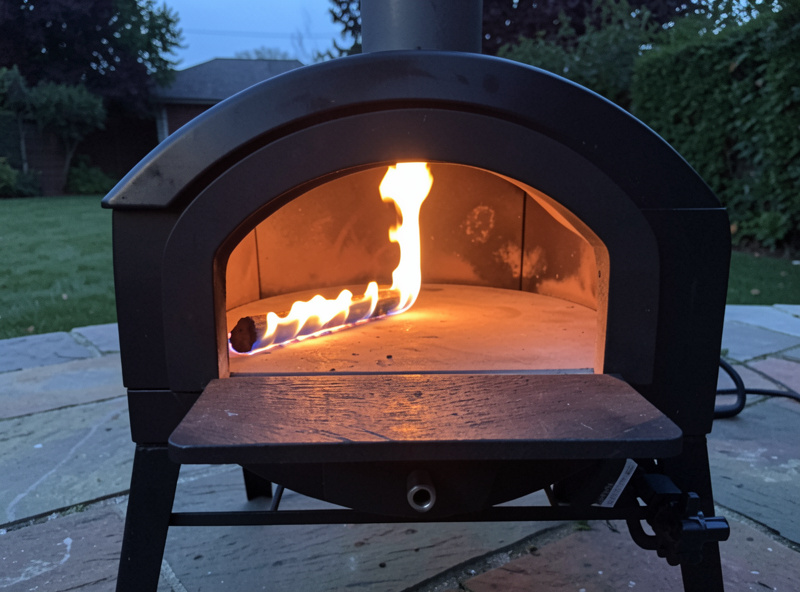
The Koda 16 is a propane-only, 16-inch portable oven that heat-soaks to launch-ready in about 20 minutes and holds a stone temperature in the 430-470°C range when dialed in. There is no fire-tending, no assembly ritual, just a gas dial and an IR gun. For a few bakes a month, it is the lowest-friction path to real Neapolitan heat.
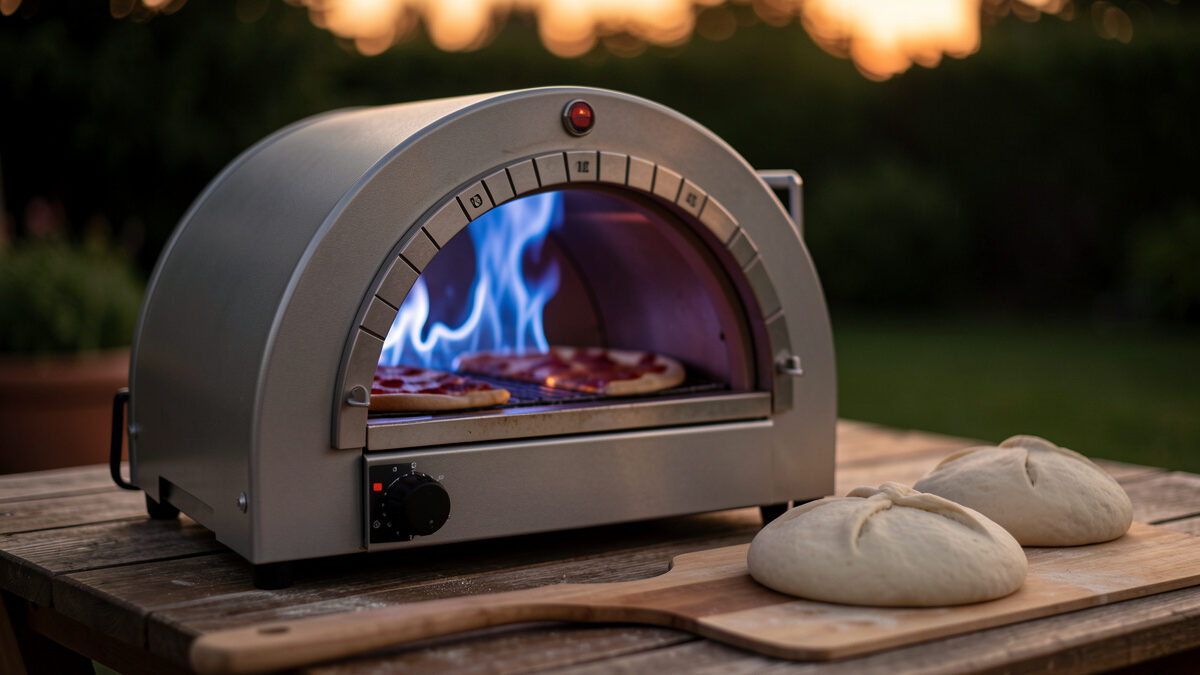
Day to day, the appeal is how little it asks of you. You roll it out, connect the propane, turn the dial to full, and 20 minutes later the stone is in range. The flame is an L-shape running along the back and up the left side, which is the source of both its strength (a lot of radiant heat on the cornicione) and its main quirk (uneven heat you manage with turning). It is light enough to move and store, and the gas behavior is predictable until the weather turns cold. After hundreds of sessions I still reach for it first when I just want pizza without a project, which is the highest compliment I can pay an oven.
Build quality has held up. The stone is a single cordierite-style slab that has survived years of thermal cycling without cracking, because I never shock it — no frozen dough balls onto a hot stone, no water on it while hot. The body shows some discoloration around the flame outlet, which is cosmetic and expected. The gas dial is the one control, and it is coarse rather than precise, so I run it at full and manage temperature with heat-soak time and recovery pauses rather than by feathering the flame. That coarseness is the honest limit of a single-burner portable; you do not get the fine control of a dual-burner dome, but at this price and weight you are not paying for it either.
How Hot Does the Ooni Koda 16 Actually Get?
In real use, the Koda 16 holds a usable stone temperature of about 430-470°C across the launch zone once fully heat-soaked, with the left rear corner reading noticeably hotter than the front right. That spread is enough for a true 60-90 second bake, but you must read the stone with an IR gun rather than trust the clock.
The number that matters is not the peak the burner can reach — it is the temperature where you actually launch, and the recovery after a cold pizza hits the stone. I check the stone in two or three spots before every launch, because the gradient across a 16-inch deck is real. After a pizza comes off, the launch zone drops and needs a minute or two to climb back; on a long session of six or eight pizzas, I give it that recovery rather than launching onto a cooled patch. Treat the stone temperature as the launch decision, learn its hot corner, and the Koda bakes consistently. Ignore the gradient and you get one scorched edge and one pale one on the same pie.
The Two Quirks You Have to Manage
The Koda 16’s two real quirks are the heat gradient (left rear hottest) and the mandatory turn. Neither is a defect — they are how an L-flame portable works — but both will burn a pizza if you ignore them. A turning peel and a deliberate rotation cadence solve both in the first session.
The first time I launched without turning, the back edge leoparded beautifully while the front stayed pale and soft — a one-sided pizza. The fix is a rhythm: launch with the leading edge toward the cooler front, then rotate the pizza 90 degrees every 20 seconds or so with a turning peel until it is evenly colored. The second quirk, the gradient, means I launch into the cooler zone and let the hot rear do the lifting as I turn. Once that cadence is muscle memory, the quirks disappear into routine. A good turning peel is the accessory that makes this oven click, far more than any dough change.
How Does the Koda 16 Handle Cold Weather?
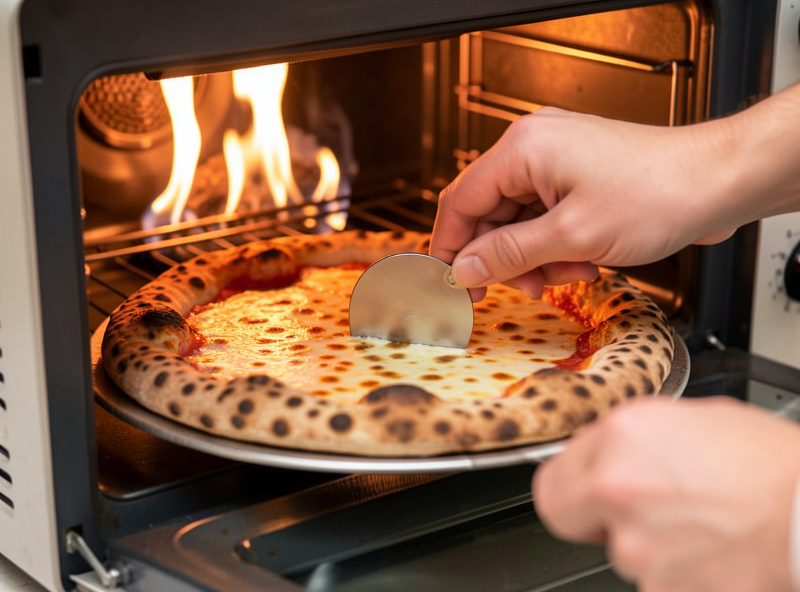
In cold weather the Koda 16’s biggest weakness shows: propane vapor pressure drops as the tank chills, so below about 0°C the burner runs lean and the stone stalls 50-80°C below its summer number. It still bakes, but you need a full tank, wind shielding, and a longer heat soak to compensate. Cold also stiffens your dough on the bench, so I let dough balls come up toward room temperature before launching — the same logic as in the cold-ferment dough method.
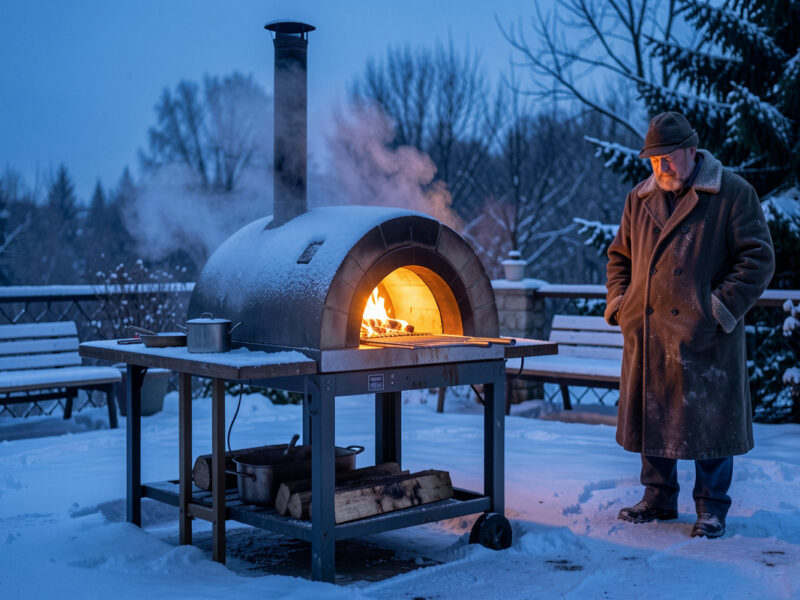
Baking with it through Swedish winters taught me the limits no spec sheet lists. At -5°C with any wind, the thin body sheds heat fast and the open door dumps the stone temperature you worked to build. I keep the tank as full as possible and out of the wind, point the mouth away from the breeze, and accept that the recovery I get in July is simply not there. It is still usable down to freezing if you are patient, but if your baking season is mostly cold, this is the oven’s honest ceiling — and the case for an indoor electric instead.
Is the Ooni Koda 16 the Right First Oven?
For most home bakers, yes — the Koda 16 is the best first dedicated oven because it is fast, forgiving, and makes your dough the limiting factor instead of the machine. It is the workhorse I recommend before any dome or dual-fuel oven, provided you bake mostly in milder weather and have an IR gun and a turning peel.
What you trade away is the wood option and the deep heat reservoir of a heavy dome. If you dream of tending a fire, the Koda is not your oven — it is gas and only gas. And on a marathon session of ten or more pizzas, a thin portable will ask for recovery pauses that a massive dome would not. For the way most home bakers actually cook — a handful of pizzas for family on a weekend — neither limit matters. They only start to bite if you are catering a party off a single small oven, which is not what this class is built for.
The caveat is the same one I give for the whole category: do not buy it to fix bad pizza. If your home-oven steel pizzas already taste good and you just want speed and char, the Koda will delight you. If they disappoint, the oven will not save them — sort your dough first, starting with the dough fundamentals and the right hydration for your style. For the full decision across all oven classes, the pizza oven buying guide lays out who each class is for.
Frequently Asked Questions
Is the Ooni Koda 16 worth it?
For bakers who run it a few times a month in mild weather, yes. It heat-soaks in about 20 minutes, holds a 430 to 470C stone temperature, and needs no fire-tending. Pair it with an IR gun and a turning peel and it bakes Neapolitan reliably.
Why does the Ooni Koda 16 burn pizza on one side?
The L-shaped flame runs hotter at the left rear of the chamber. Without turning, that side leopards while the front stays pale. Rotate the pizza 90 degrees every 20 seconds with a turning peel to even out the bake.
Does the Ooni Koda 16 work in cold weather?
It works down to about freezing but struggles below. Propane vapor pressure drops as the tank chills, so the burner runs lean and the stone stalls 50 to 80C below its summer temperature. Use a full tank and wind shielding.
What stone temperature should I bake at on the Koda 16?
Aim for 430 to 470C in the launch zone for a 60 to 90 second Neapolitan bake. Check the stone with an infrared thermometer in two or three spots before launching, because the deck has a real hot-to-cool gradient.
Do I need any accessories for the Ooni Koda 16?
Two matter most: an infrared thermometer to read stone temperature before launch, and a small turning peel to rotate the pizza mid-bake. A perforated launch peel also helps the dough release cleanly. These change your success rate more than the oven itself.
Related Guides
- How to Choose a Pizza Oven: The Complete Buying Guide
- How to Make Pizza Dough: The Complete Guide
- Cold Ferment Pizza Dough: The 48-Hour Method
- Pizza Dough Hydration Explained
More from This Cluster
- “What Size Pizza Oven Should You Actually Buy?”
- “Used Pizza Oven Checklist: What to Inspect”
- “Pizza Oven for Cold Climate: The Nordic Reality”
- “Is an Indoor Electric Pizza Oven Worth It?”
- “Gas vs Wood Pizza Oven: The Honest Difference”
- “How to Choose a Pizza Oven: The Complete Buying Guide”

About Kenny Nyhus Fadil
A home pizza maker documenting deck temps, dough logs, and the occasional wrecked launch.