Pizza Oven Heat Soak Explained: The Hidden Wait

Heat soak is the time a pizza oven’s stone needs to come to full temperature all the way through, not just on the surface. A stone can read 450°C on top while its core is still cold — and that cold core is what craters your deck the instant a pizza lands. Soak time runs from about 15–20 minutes past surface temperature for a gas oven to 40–45 minutes for a thick-stone indoor electric.
This is the most misunderstood number in pizza, because the infrared gun cannot see it. The gun reads the surface, the surface hits your target, and you think you are ready — but the mass underneath is still climbing. Launch then and the first pizza disappoints for no obvious reason. This guide explains what heat soak is, why the surface lies, and how long each oven genuinely needs. It sits under my pizza oven temperature guide.
Why the Surface Reads Hot Before the Stone Is Ready
Heat moves into a stone from the surface inward, and stone conducts heat slowly. So the top face reaches your target temperature long before that heat has worked its way down through the full thickness. At that moment the surface reads correctly but there is no stored heat underneath to back it up — the reservoir is empty even though the gauge is full.
The proof is in what happens when you launch too early: the surface reading collapses far harder and recovers far slower than it should, because there is no bulk heat feeding back up. A properly soaked stone barely flinches by comparison. This is exactly why heat soak and heat recovery are the same problem viewed from two angles — soak builds the reservoir, recovery spends it.
How Long Each Oven Needs to Soak
Soak time scales with the mass and thickness of the stone, not with how fast the oven hits surface temperature. A thin-stone portable gas oven reaches surface temperature in minutes but still needs extra soak time; a heavy biscotto deck in an indoor electric — my Effeuno runs one — can take three-quarters of an hour, because soak time tracks the stone’s thermal mass, not how fast the burner climbs. The table below is the soak time I add after the surface reaches my launch target, from years of logged bakes.
| Oven / Stone | Time to Surface Temp | Extra Soak Needed | Total Before First Launch |
|---|---|---|---|
| Portable gas, thin stone | 15–20 min | 15–20 min | ~30–40 min |
| Dual-fuel dome | 20–30 min | 20–30 min | ~45–60 min |
| Indoor electric, biscotto | 20–25 min | 40–45 min | ~60–70 min |
| Home oven + 6mm steel | 20–30 min | 15–20 min | ~45 min |
| Home oven + thin stone | 30–45 min | 20–30 min | ~60+ min |
How to Tell Soak From a Surface Reading
You cannot read soak directly, but you can read it indirectly. The simplest test is the launch-and-watch: if the surface temperature plummets and is slow to recover when the first pizza lands, the stone was not soaked. If it dips modestly and bounces back fast, it was. After a few bakes you learn your oven’s soak time and just run the clock.
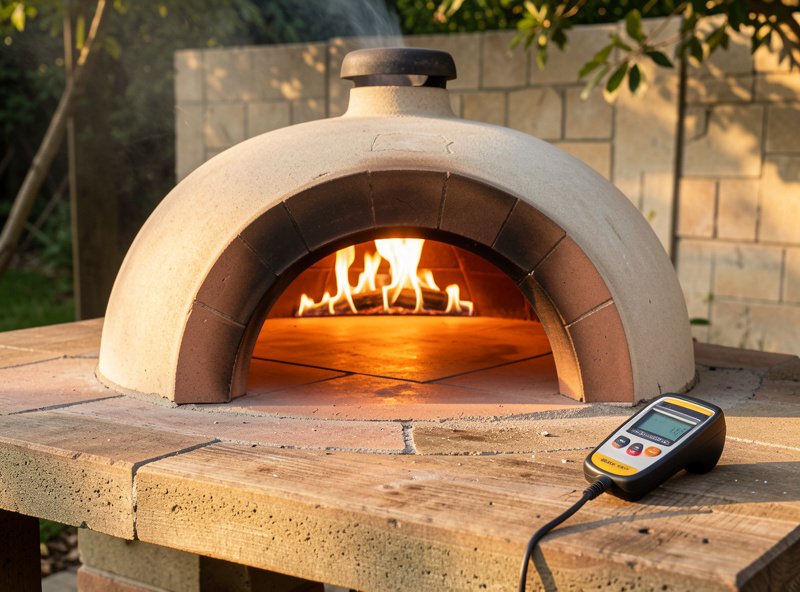
A second tell is the air-versus-surface gap closing. Early in the heat-up the air is far hotter than the surface; as the stone soaks, the surface catches up and the gap narrows and stabilises. When my IR reading on the stone stops climbing and holds steady for several minutes while the flame is unchanged, the stone has reached equilibrium and is soaked. The gun that lets you watch this is in my IR thermometer guide.
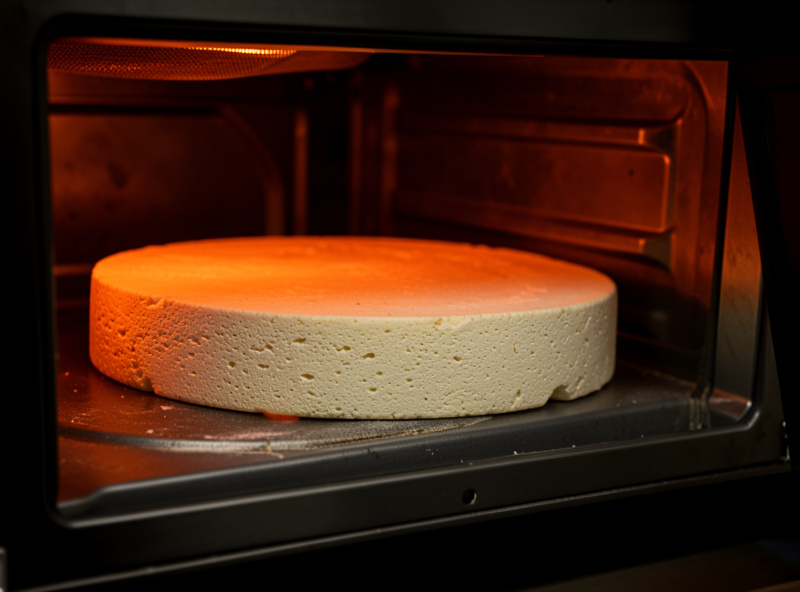
The Cost of Skipping the Soak
Skipping soak is the single most common reason a first pizza disappoints when every reading looked right. The base comes out pale and gummy, the leoparding never develops because the deck gave up its heat instantly, and the whole pie bakes unevenly as the cold core pulls heat from one spot faster than another. None of it shows on the gun before you launch. I wasted more than one opening pizza on my Ooni Koda 16 in the early days — the surface pegged at target, the gun said go, and the base still came out pale, because I had not yet learned that a thin stone needs soak time the gun simply cannot show you.
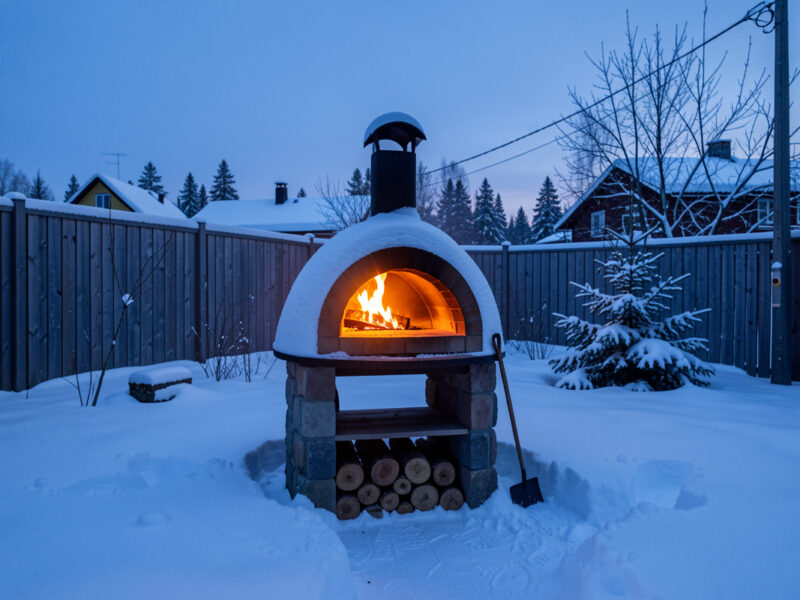
The fix costs nothing but patience: light the oven earlier than you think you need to, and add the soak time for your stone after the surface hits target. In my Swedish winters I add even more, because a cold ambient steals heat from the stone faster than it can soak — a problem I cover in cold-weather and wind baking. The target temperatures you are soaking toward, by style, are in stone temperature by style, and if your oven simply will not hold heat well, the buying guide covers what to look for in retention.
A Faster Soak Without Cutting Corners
You cannot cheat the physics, but you can help the stone soak more evenly. Running the flame steadily rather than blasting it full and then cutting it lets heat conduct downward at a pace the stone can actually absorb, instead of overheating the surface while the core lags even further behind. A blast-then-cut cycle often leaves a stone that looks ready on top and is anything but underneath.
On my indoor electric I let it hold at its set temperature for a long, uninterrupted stretch precisely because the heavy biscotto deck rewards patience over peak power. The lesson generalises: a moderate, steady heat-up that you start early beats a frantic high-flame rush every time, because soak is about time and conduction, not raw intensity.
Soak Once, Then Protect It
Once a stone is soaked, your job changes from building heat to protecting it. Keep the lid or door closed, avoid long gaps with the flame low, and do not leave the mouth open to the wind between pizzas — every one of those bleeds the reservoir you spent an hour building. A soaked, protected stone is what makes a multi-pizza night possible.
This is the discipline that ties the whole temperature series together: soak deep, protect the heat, launch on the gun, and let the deck recover before the next pie. Get those four right and the dough does the rest — because, as I keep saying, the oven is just the last 90 seconds of a 48-hour process. The dough that deserves a properly soaked deck starts with a good cold ferment.
Frequently Asked Questions
What is heat soak in a pizza oven?
Heat soak is the time a stone needs to reach full temperature all the way through, not just on the surface. Stone conducts heat slowly, so the top face hits your target long before the core does. Soaking builds the stored heat reservoir that keeps the deck stable when a pizza lands.
How long should I heat soak a pizza oven?
Add soak time after the surface reaches target: about 15 to 20 minutes for a thin-stone gas oven, 20 to 30 for a dome, and 40 to 45 minutes for a thick biscotto indoor electric. Total preheat before the first launch runs from roughly 30 minutes to over an hour depending on the stone.
Why does my first pizza turn out bad even though the stone reads hot?
The surface read your target but the core was still cold, so the deck cratered the instant the pizza landed. The base comes out pale and gummy with no leoparding. The infrared gun only reads the surface, so you have to add soak time after it hits temperature.
How can I tell if my pizza stone is fully soaked?
Watch the surface reading: when it stops climbing and holds steady for several minutes with the flame unchanged, the stone has reached equilibrium. The other tell is the launch test, where a soaked stone dips modestly and recovers fast instead of plummeting and crawling back.
Does heat soak take longer in cold weather?
Yes. A cold ambient and any wind pull heat out of the stone faster than it can soak in, so you need to light the oven earlier and add extra soak time. In hard winters the difference is significant, which is one reason an indoor electric becomes the reliable cold-season option.
Further Reading
- Pizza Oven Temperature Discipline: The Complete Guide
- Heat Recovery Between Pizzas
- IR Thermometer Guide for Pizza Ovens
- Stone Temperature by Pizza Style
- Cold-Weather and Wind Baking

About Kenny Nyhus Fadil
A home pizza maker documenting deck temps, dough logs, and the occasional wrecked launch.