Pizza Oven Temperature Discipline: The Complete Guide

The number that decides your pizza is the stone temperature, not the air temperature. For a Neapolitan-style bake you want a deck reading of roughly 430–480°C (800–900°F); for a New York-style pie you want it far cooler, around 290–340°C (550–650°F). Get the stone right and almost everything else forgives you.
I have spent years running the same dough across different ovens on the same evening — gas against a dome oven, both against an indoor electric, all of them against a plain steel in my kitchen oven — and the single biggest lesson is that pizza is a thermal problem before it is anything else. Hydration, ferment length, flour strength: those set the ceiling. But the floor of every bad bake I have ever logged was a stone that was too cold, too hot, or not recovered from the last pie. This guide is the temperature discipline that ties the whole cluster together.
Stone Temperature Is the Decision, Not Oven Temperature
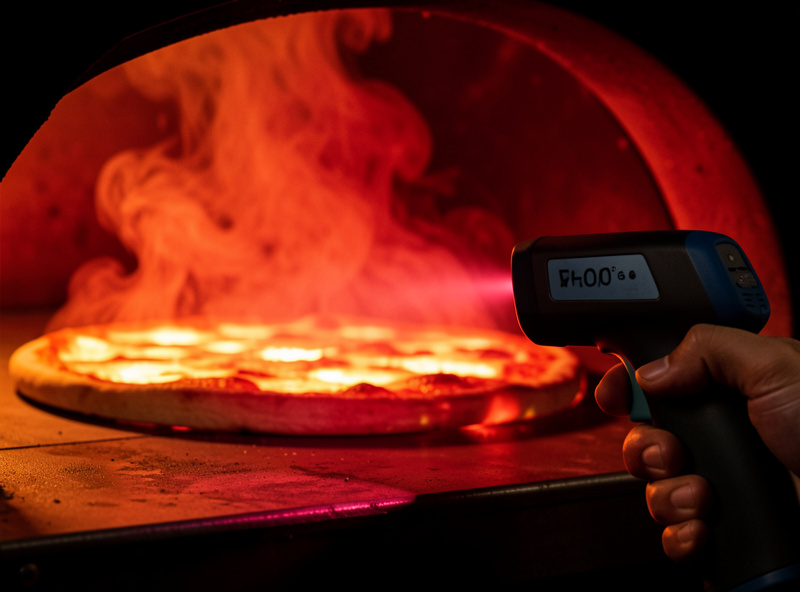
Air temperature inside the chamber tells you the oven is hot. Stone temperature tells you whether this pizza will work. The base cooks by conduction off the deck; the top cooks by radiation from the crown and the flame. When I check the stone with the IR gun and it reads 60°C below the air probe, that gap is the whole story — launch now and you get a pale, gummy base under a browning top.
This is why I treat the infrared reading as the launch-decision number on every oven I own. The air can sit at 500°C while the deck has been chilled by the last pizza’s moisture and dough mass. My standing rule: the stone reading, taken at the spot where the pizza will actually land, is the only temperature I trust enough to commit dough to. Everything downstream — the launch, the turn, the bake time — is set by that one number. For how I take that reading reliably, see my IR thermometer guide for pizza ovens.
Target Stone Temperatures by Pizza Style
Different styles are not just different doughs — they are different deck temperatures. A 62% hydration Neapolitan dough wants a screaming stone and the 70-90 second bake the AVPN disciplinare codifies; a 65% New York dough wants a moderate stone and four to six minutes so the interior sets without the bottom carbonising. Matching the deck to the style is the difference between leoparding and a black underside.
The table below is the working map from my dough log — the stone targets I actually launch at, paired with the hydration range and the bake window each one expects. It is condensed here; the full per-style breakdown with crumb notes lives in my stone temperature by pizza style guide.
| Pizza Style | Stone Temp (target) | Typical Hydration | Bake Time | Best Oven Class |
|---|---|---|---|---|
| Neapolitan | 430–480°C / 800–900°F | 60–65% | 70–90 sec | Gas dome / wood / 450°C electric |
| Contemporary “Neo” | 370–420°C / 700–790°F | 65–70% | 2–3 min | Gas portable / electric |
| New York | 290–340°C / 550–650°F | 62–65% | 4–6 min | Steel in home oven / electric |
| Pan / Detroit | 230–290°C / 450–550°F | 70–80% | 10–15 min | Home oven (in pan) |
| New York reheat / leftover | 180–230°C / 350–450°F | n/a | 3–4 min | Steel or stone, home oven |
Notice the pattern: the hotter the deck, the wetter and faster the bake, and the more the oven class matters. You cannot reach Neapolitan deck temperatures in a standard kitchen oven, which is exactly why the home-oven crowd should aim at New York or pan styles rather than chasing a 90-second bake their gear cannot deliver. My broiler method for home ovens is the honest workaround there.
Heat Soak: Why the Stone Lies When You Rush It
A stone can read your target temperature on the surface and still be cold three millimetres down. That is heat soak — the time the mass of the stone needs to come to equilibrium after the surface hits temperature. Launch into a surface-hot, core-cold stone and the deck gives up its heat in seconds, the reading craters, and your base stalls. I have watched a stone read 450°C, then drop to 360°C the instant a cold pizza lands, simply because the bulk underneath was never soaked.
The fix is patience that the IR gun cannot see. After the surface hits temperature I give a gas oven another 15-20 minutes and an indoor electric closer to 40-45 minutes before the first launch, because the thicker biscotto stone in my electric holds — and demands — far more soak. The full explanation, including how to tell soak from a simple surface reading, is in heat soak explained for pizza ovens.
Recovery Time: The Number That Decides Pizza Number Two
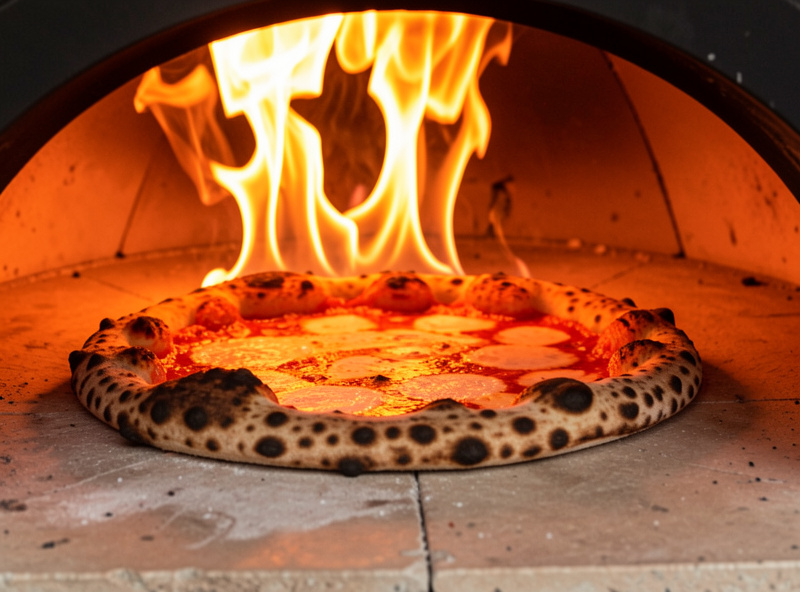
The first pizza is easy. The fifth, when friends are over, is where ovens are won or lost. Every launch pulls heat out of the deck, and recovery time is how long the oven needs to climb back to your launch temperature before the next pie. A portable gas oven might recover a Neapolitan deck in three to four minutes; a fully soaked dome holds far better; a thin home-oven stone can need eight minutes or more, which is why home-oven pizza nights stall.
I manage recovery three ways: I never launch below my target stone reading, I rotate two stones or pre-position the next dough only once the gun confirms recovery, and I run the flame higher between bakes rather than during them. The recovery behaviour of each oven class — and how to shorten it — is the whole subject of my heat recovery between pizzas guide. Recovery, not peak temperature, is the spec I now care about most when I evaluate an oven.
Cold Weather and Wind: Where Heat Retention Actually Breaks
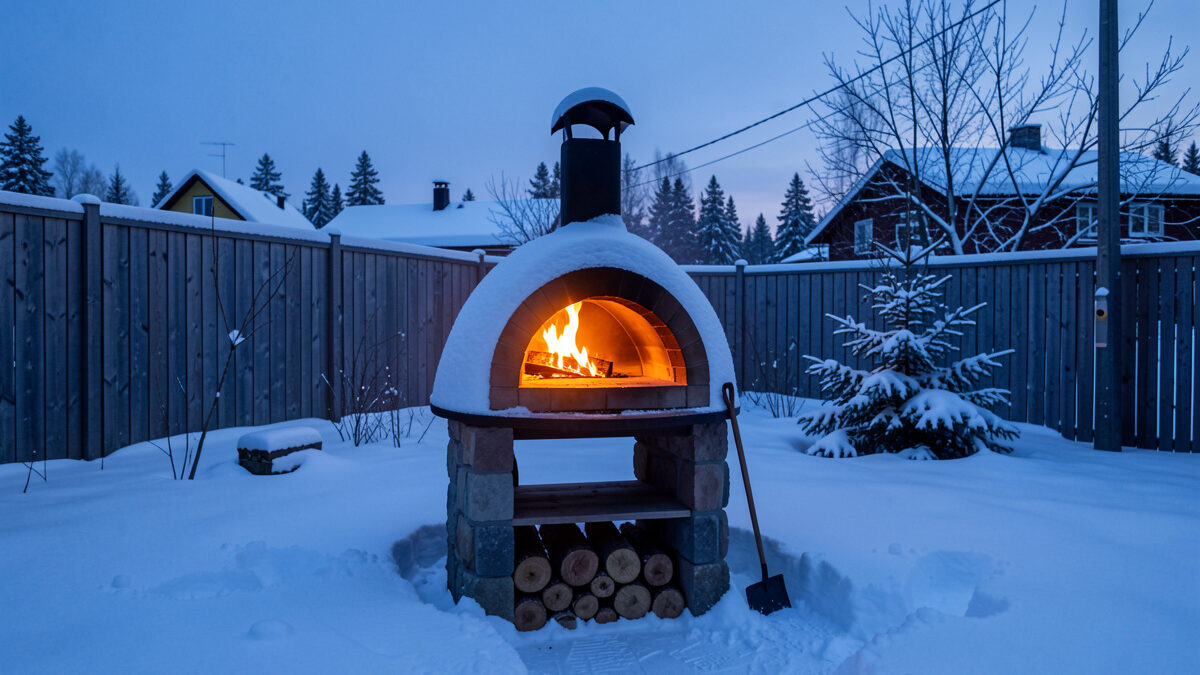
This is where baking in Sweden taught me things a summer reviewer never learns. At -5°C with a breeze, an outdoor oven is fighting two heat thieves at once: ambient cold pulling through the shell and wind stripping the boundary layer of hot air off the surfaces. The same gas oven that holds a rock-steady deck on a still summer evening will see its recovery time double and its reading wobble in a winter gust. Retention claims that look great in a catalogue get audited fast at -5°C.
The practical adjustments — longer soak, wind positioning, the mouth-facing-away trick, and why an indoor electric becomes the Nordic winter weapon — are covered in wind and cold affecting outdoor baking. If you live somewhere with real winters, also read my pizza oven for cold climate buying take, because the right oven choice solves half the problem before you ever light it.
How Each Oven Class Handles Temperature
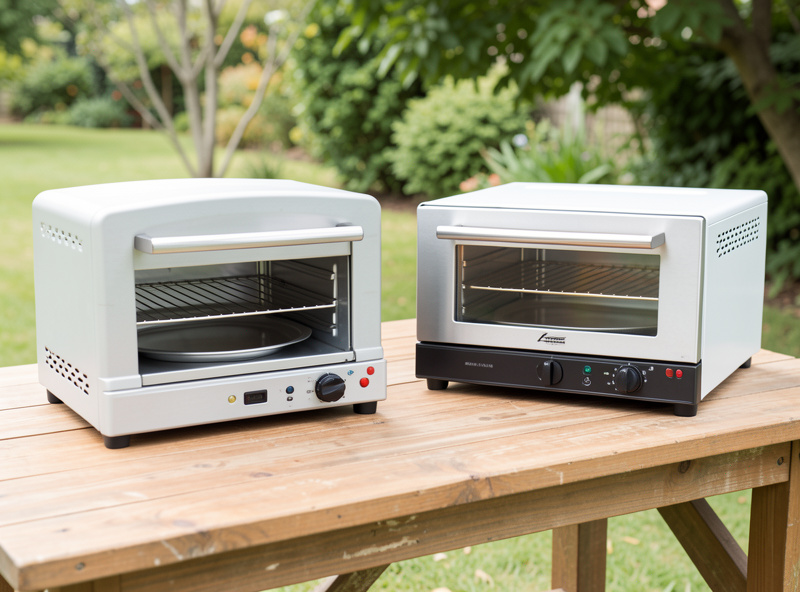
Temperature discipline looks different on each machine, and the oven you own changes the rules you follow. A portable gas oven heats fast and recovers with flame but has a hot left wall and a deck that cools quickly between pies. An indoor electric is slow to soak but then holds with a steadiness nothing else matches. A steel in a home oven cannot reach Neapolitan temperatures but conducts so aggressively it beats a home-oven stone for everything below 340°C.
Here is the short version of how I run each: on the portable gas I lean on the IR gun and turn aggressively to beat the wall hot spot; on the electric I front-load a long soak and then barely touch it; on the home-oven steel I run the broiler to push the top because the deck does the bottom for free. The steel-versus-stone conduction story, which is really a temperature story, is in my pizza steel vs stone verdict and the preheat time comparison. For choosing the machine itself, start at my pizza oven buying guide and the gas vs wood breakdown.
Dough Temperature Is the Forgotten Half
Stone temperature gets all the attention, but the dough’s own temperature at launch matters more than most people think. A cold dough ball straight from a 4°C fridge will fight oven spring and drink heat out of the deck; a dough that has come up to room temperature launches faster and leoparding develops cleaner. My standing rule from the dough log is to pull cold-fermented balls 1-2 hours before baking so they sit somewhere around 18-20°C at launch — warmer in winter, where my kitchen runs cold.
This is the polymath crossover I keep coming back to: a pizza oven is a kiln you eat from, and the dough is the workpiece. The same starter that runs my fermentation bench raises every pizza on this site, and the oven is just the last 90 seconds of a 48-hour process. If your stone discipline is dialled in but your pizzas still disappoint, the problem has usually moved back to the dough — start with hydration, the 48-hour cold ferment, and 00 flour vs bread flour.
A Temperature Routine for a Full Pizza Night
Temperature discipline is not a single reading — it is a routine you run from cold oven to last slice. The sequence below is what I actually follow when I am baking for a table of people, and it exists to solve the one problem that ruins home pizza nights: the deck drifting out of range while you are distracted by toppings and conversation.
I light the oven and bring the surface up to roughly 20°C above my launch target, because the first launch will pull it back down. Then I hold for the heat soak — flame low, lid down, no peeking — until I am confident the core is saturated, not just the skin. Right before each launch I take an IR reading at the exact landing spot, never the centre or the back where it runs hotter. Between pizzas I crank the flame to drive recovery, then drop it for the launch so the flame is not scorching the crown while a cold base sits on a recovering deck. I stretch the next ball only once the gun confirms recovery, never on a timer. That last rule — gun, not clock — is the single habit that took my multi-pizza nights from “the third one was sad” to consistent. The launch and turn mechanics that ride on top of this routine are in my launch and bake technique guide.
Why Peak Temperature Is the Wrong Spec to Shop On
Oven marketing sells peak temperature because it is a single big number that looks like performance. In practice, peak temperature is the least important thermal spec, because almost any oven in its class will hit a high enough peak. What separates a good oven from a frustrating one is heat soak behaviour, recovery time, and evenness across the deck — the specs nobody prints on the box.
I have baked beautiful Neapolitan pizzas on an oven that tops out at 450°C and fought ugly ones on a machine that claims 500°C, purely because the first one soaked deep and recovered fast while the second ran a fierce hot spot and a deck that cooled the moment a pizza landed. When I evaluate an oven now, I time how long it takes to recover its deck after a launch and how evenly the stone reads corner to corner. Those two numbers predict real-world results far better than the headline peak. This is exactly the lens I bring to my Ooni Koda 16 long-term review and the broader indoor electric question — and it is why peak temperature never tops my buying advice.
Matching Toppings and Cheese to Your Deck Temperature
Deck temperature does not just cook the base — it dictates what you can put on top. A 90-second Neapolitan bake at 460°C will not render a thick pile of raw vegetables or a dense layer of low-moisture cheese; the crust is done long before the toppings are. A four-minute New York bake at 320°C will. Matching your toppings to your deck temperature is the quiet half of temperature discipline that most guides skip entirely.
At Neapolitan deck temperatures I keep toppings minimal and pre-cook anything watery, use fresh mozzarella torn and drained, and accept that the pizza is about dough and fire, not a loaded pie. As the deck drops toward New York range, I can layer more, use low-moisture mozzarella that browns instead of weeping, and trust the longer bake to cook ingredients through. Get this backwards — a heavy, wet pile on a screaming deck — and you get a charred rim around a swimming, undercooked centre, which is the most common “my oven is too hot” complaint that is really a topping-versus-temperature mismatch. If your centre stays raw despite a good deck reading, the diagnosis tree in my work on fixing a raw pizza center walks through every cause.
Building Your Own Oven’s Temperature Map
Every oven I run has its own personality at the deck, and the only way to tame it is to write the numbers down. For years I have kept a dough log that records, for each bake, the stone reading at launch, the soak time, the ambient temperature, the dough’s hydration and ferment, and a one-line verdict on the result. After a dozen entries per oven, the guesswork disappears: I stop asking “is it hot enough?” and start reading a setting I have already proven works.
The numbers are not transferable between machines, which is the point. My Ooni Koda 16 launches its best Neapolitan with the gun reading about 450°C at the front-right landing spot, because its left wall runs hot and I turn away from it; my Effeuno electric wants a longer soak and a slightly lower deck reading to hit the same crust, because its biscotto stone radiates more evenly and holds longer; a Gozney-class dome forgives a faster pace than either because its soaked mass simply has more heat in reserve. Same dough, three different deck numbers — and only a log tells you which is which.
I learned to log the hard way. Early on I trusted my memory and a vague sense that the oven “felt ready,” and I produced a string of inconsistent bakes I could not explain — one night’s pizza brilliant, the next night’s pale, with no idea what changed. It turned out the variable was ambient cold quietly stealing soak depth, something I would have spotted instantly if I had been writing the numbers down. Now the first thing I do on any new oven is bake five deliberate test pizzas and log every one before I trust it for guests.
You do not need years of records to start — you need the next five bakes. Note the deck reading you launched at and whether the base came out pale, perfect, or scorched, and adjust the next launch by 10-20°C toward the result you want. Within a week you will have your own oven’s real numbers, which beats any table I can print, including the ones above. The discipline is the same one that runs every other bench I keep: measure, log, repeat, and let the data replace the guessing.
The Common Temperature Mistakes I See Most
Almost every disappointing home pizza traces back to one of five temperature errors, and none of them require new gear to fix. Reading the air instead of the stone is the most common; launching before heat soak is second; ignoring recovery between pies is third; running a deck far too hot for the chosen style is fourth; and baking outdoors in cold and wind without adjusting expectations is fifth. Each one is cheaper to fix than to buy your way around.
The single highest-value tool you can add is not a hotter oven — it is an infrared thermometer, so you stop guessing the only number that matters. Beyond that, the fixes are technique: soak longer, turn faster, wait for recovery, and match deck temperature to the dough you actually made. Maintenance matters too; a cracked or fouled stone holds and transfers heat unevenly, so keep up with stone and steel care. And if your oven simply cannot reach the temperature your style needs, my home oven max temp workarounds close some of the gap.
Frequently Asked Questions
What temperature should a pizza oven be for Neapolitan pizza?
Aim for a stone deck temperature of 430 to 480C (800 to 900F), not the air temperature. At that deck reading a 60 to 65 percent hydration dough bakes in 70 to 90 seconds with proper leoparding. Always measure the stone with an infrared thermometer, not the air probe.
Why is stone temperature more important than air temperature?
The pizza base cooks by conduction off the deck, so the stone reading determines whether the bottom cooks before the top. Air can sit at 500C while the deck is 60C cooler after the last pizza chilled it. The stone temperature at the launch spot is the only number worth trusting.
How long should I let a pizza oven heat soak before the first pizza?
After the surface hits target temperature, give a gas oven another 15 to 20 minutes and a thick-stone indoor electric 40 to 45 minutes. The stone surface can read hot while the core is still cold, and that cold core craters your deck temperature the moment a pizza lands.
Why does my second or third pizza turn out worse than the first?
Each launch pulls heat out of the deck, and the stone needs recovery time to climb back to target before the next pie. A portable gas oven may recover in three to four minutes; a thin home stone can need eight or more. Never launch below your target stone reading.
Do I really need an infrared thermometer for pizza?
It is the single most useful tool you can add. It reads the stone deck directly, which is the launch-decision number every other variable depends on. Without it you are guessing the only temperature that determines whether your base cooks before your top burns.
How does cold weather affect an outdoor pizza oven?
Cold ambient air and wind both pull heat out, doubling recovery time and making the deck reading wobble in gusts. You need a longer heat soak, smart wind positioning with the mouth facing away from the wind, and realistic expectations. In hard winters an indoor electric oven becomes the reliable option.
Related Guides
- IR Thermometer Guide for Pizza Ovens
- Stone Temperature by Pizza Style
- Heat Recovery Between Pizzas
- Heat Soak Explained for Pizza Ovens
- Wind and Cold Affecting Outdoor Baking
- How to Choose a Pizza Oven

About Kenny Nyhus Fadil
A home pizza maker documenting deck temps, dough logs, and the occasional wrecked launch.