Sourdough Starter to Pizza Dough Conversion

Starter to pizza dough conversion is simply the act of using a portion of your active sourdough culture in place of commercial yeast, then building, fermenting, and balling the dough as normal. The starter does the leavening; the flour, water, and salt are the same as any pizza dough. The only real decisions are how much starter to use and how to time it.
I have been running this conversion off one fridge-kept culture for years — the same starter that raises my bread and feeds my fermentation bench. The oven is just the last 90 seconds of a process that begins three days earlier with a feeding. This guide walks the exact path from a ripe jar of starter to a tray of dough balls ready to launch, with the numbers from my dough log and the failure points that catch people. For the full picture of where this dough fits, start at the sourdough pizza guide.
Get the Starter Ripe First
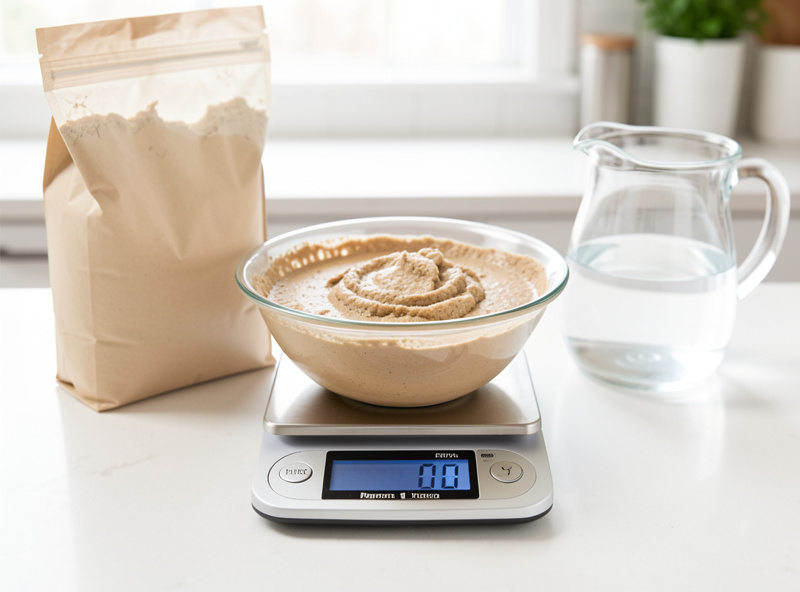
The conversion starts before the dough does, with the starter itself. You want to add the starter at or just before its peak — domed, bubbly, webbed through, and only just beginning to recede. At that moment the yeast population is highest, which is exactly what you need to leaven a pizza dough cleanly.
A starter pulled cold from the fridge is not ready. I feed mine once or twice at room temperature in the day or two before a build, and I watch for it to double on a predictable schedule — usually four to eight hours after feeding at a Swedish room temperature of around 20°C. If it is slow to rise or smells sharply of acetone and vinegar, it is hungry and over-acidic, and a dough built on it will be sour and slack. The fix is feeding, not patience. The culture-keeping side of this — ratios, reviving a neglected jar, reading the smell — I keep on the fermentation bench: the sourdough starter feeding schedule at Ferment Foundry covers it in full, and it is the same starter and the same rules whether the destination is bread or pizza.
How Much Starter to Add
The amount of starter you add sets the pace of fermentation, not the flavor. A higher percentage ferments fast and is good for same-day baking; a lower percentage ferments slowly and cold, which builds more flavor and better texture. For pizza I work between 5% and 20% of the flour weight, leaning low for the long cold ferments I prefer.
This is the single most useful number in the whole conversion, and it is the one beginners get wrong by copying bread recipes that call for 20% or more. Bread can absorb that pace; a pizza dough I want to cold-ferment for two or three days cannot, because it will overproof and turn to soup before I bake it. The table below is the working map from my dough log — pick the row that matches the day you want to bake.
| Starter (% of flour) | Bulk at room temp | Cold ferment (fridge) | When to bake |
|---|---|---|---|
| 15–20% | 2–4 h until risen | Optional short chill | Same day |
| 10–15% | ~2 h | 18–24 h | Next day |
| 5–10% | ~2 h | 24–48 h | Two days out |
| 3–5% | ~2 h | 48–72 h | Three days out |
The full reasoning behind matching the percentage to a timeline lives in the sourdough pizza ferment schedule. For the conversion itself, just pick a row and weigh accordingly.
A Worked Conversion: Four Dough Balls
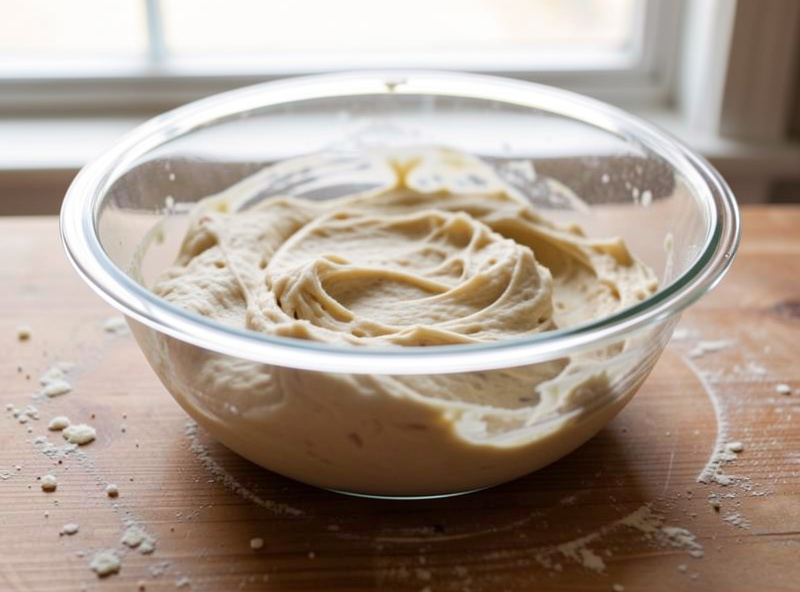
Here is the build I make most often, scaled to four 250 g dough balls for roughly four 30 cm pizzas. It is a 65% hydration dough at 8% starter, aimed at a two-day cold ferment. Translating percentages to grams is the whole job, and a 0.1 g scale makes it trivial.
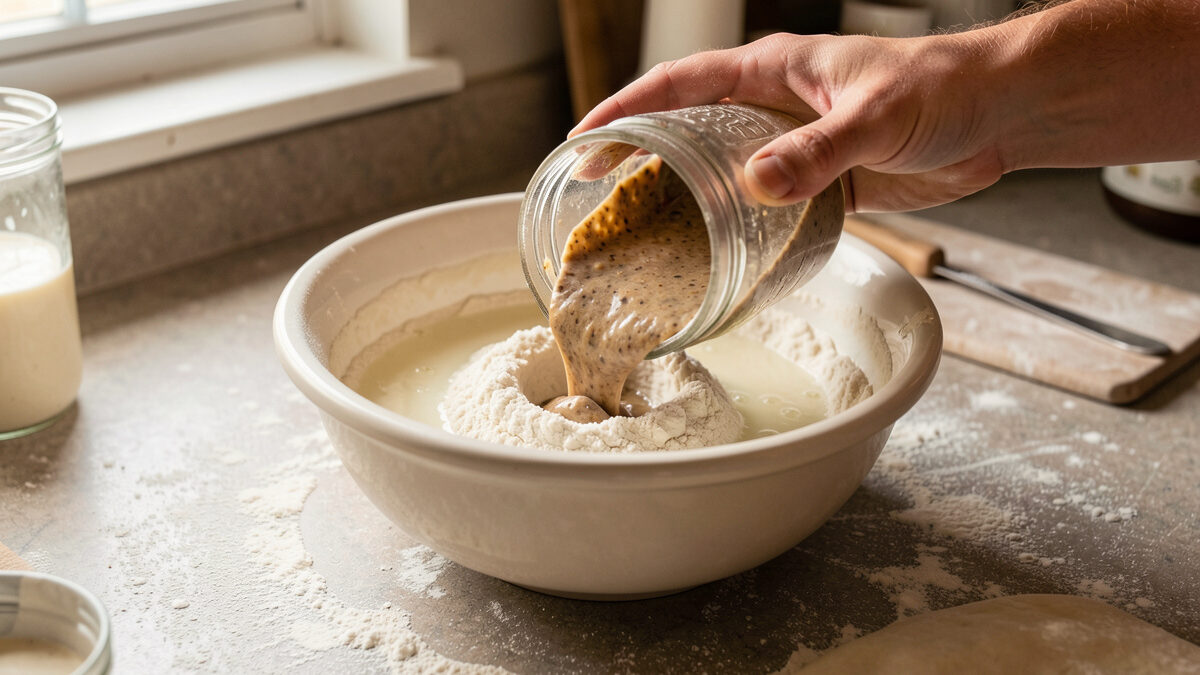
For the flour at 100%, use 600 g of strong bread flour or high-W 00. Water at 65% is 390 g. Salt at 2.8% is about 17 g. Starter at 8% is 48 g. That totals a shade over 1,050 g of dough, which divides cleanly into four balls. Dissolve the starter into the water first so it disperses evenly, add the flour and mix to a shaggy mass, rest 20–30 minutes, then add the salt and work the dough until it is smooth and passes a rough windowpane. The salt going in after the autolyse rest is a small thing that makes the dough easier to bring together. If the dough feels punishingly sticky at this stage, resist dumping in flour — the sticky dough fix covers why time and technique beat extra flour, especially with a slack sourdough.
Bulk, Then Cold
After mixing, the dough needs a short warm bulk to wake the wild yeast before it goes cold. I give it about two hours at room temperature, with a set of stretch-and-folds in the first hour, until it shows the first signs of life — a little puff, a few bubbles at the surface. Then it goes straight into the fridge.
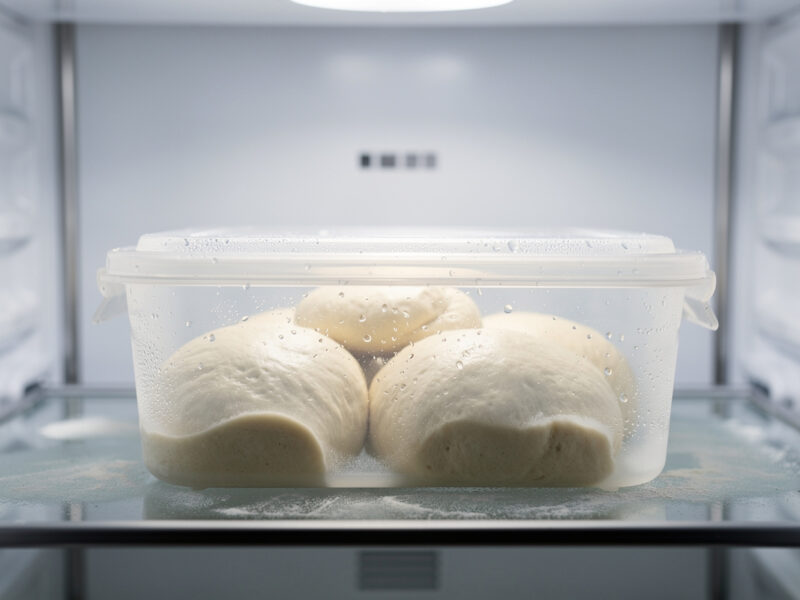
This warm bulk is the step most yeasted-dough bakers skip, and skipping it is why a sourdough sometimes seems to do nothing for the first day in the cold. Commercial yeast hits the ground running; wild yeast needs a moment to get going. The cold ferment that follows is where the flavor and the extensibility develop, and it works exactly like my yeasted 48-hour cold ferment — the cold slows the yeast while the bacteria keep building the mild lactic acids that make a good sourdough crust taste of something. Keep the dough covered and airtight so it does not skin over.
Balling and the Bake Window
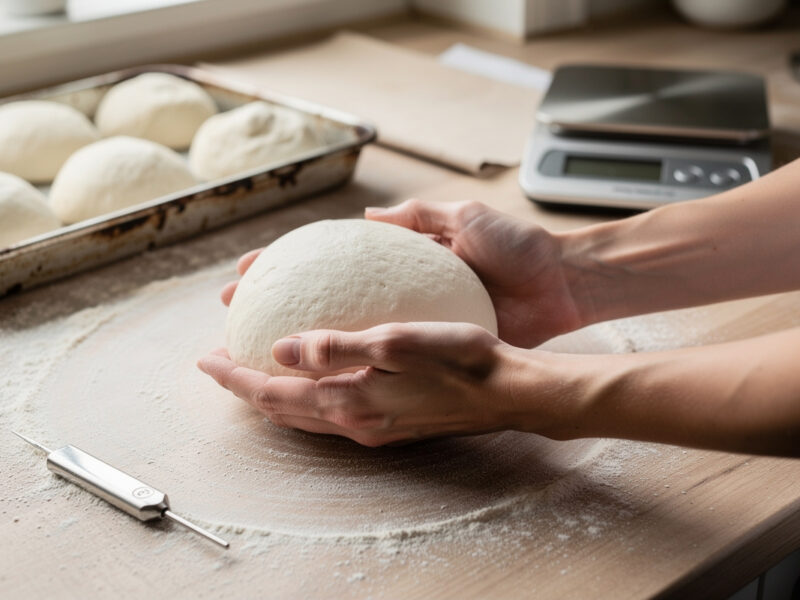
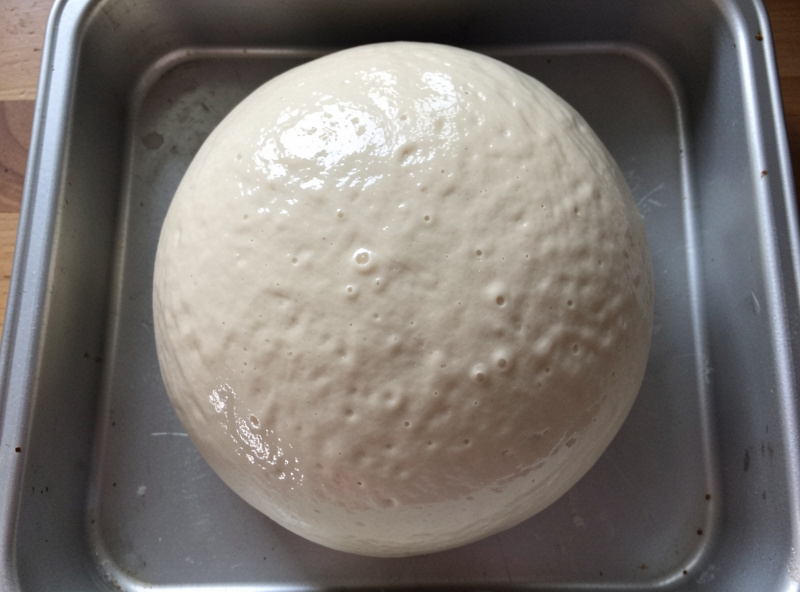
Divide and ball the dough straight from the fridge, then let the balls warm and relax at room temperature before baking. I give them two to four hours, depending on kitchen temperature, until they go from tight cold domes to soft, jiggly, slightly spread rounds. That relaxed state is the bake window — a cold, tight ball fights the stretch and springs unevenly.
Sourdough balls are a touch more forgiving on the back end than heavily-yeasted ones because the slow culture does not race to overproof at room temperature, but they are not infinitely patient; once they spread flat and start to look fragile, bake them. Storage, freezing, and the balling motion carry straight over from yeasted dough — see pizza dough balls storage for the handling, and pizza dough hydration explained if you want to push the water content of your conversion higher or lower. The hydration you choose interacts with your oven, which is its own piece: the sourdough pizza hydration guide.
Read Temperature, Not the Clock
Every timeline in this guide assumes a room around 20°C and a fridge around 4°C. Wild yeast is far more temperature-sensitive than commercial yeast, so the same dough ferments noticeably faster in a warm summer kitchen and slower in a cold one. Treat the hours as a starting point and adjust to what the dough is actually doing.
In my Swedish winter, a kitchen sitting at 18°C will stretch the warm bulk well past two hours, and a fridge packed full and running warm will let a dough creep along faster than an empty one. Two practical adjustments cover most of it: in a warm kitchen, drop the starter percentage by a few points or shorten the bulk; in a cold kitchen, nudge the starter up or extend the bulk until you see real activity before chilling. The dough log is what makes this manageable — I note the starter condition, the room temperature, the bulk time, and the result, so the next build is a correction rather than a fresh guess. After a handful of bakes you will know your own kitchen’s pace better than any recipe could tell you.
What Changes Versus Your Yeasted Dough
If you already make a good yeasted pizza dough, the conversion changes three things: the leavening agent, the clock, and the flour you should reach for. Everything else — hydration, salt, shaping, launch, bake — is unchanged. The mental shift is from following a timer to reading the dough.
The flour change matters more than people expect. A multi-day sourdough ferment slowly degrades gluten through enzyme and acid activity, so a flour that holds up fine for a same-day yeasted dough can go slack and tear-prone by day two of a sourdough. Reach for a strong bread flour above about 12.5% protein or a high-W 00; the trade-off between them is laid out in 00 flour vs bread flour. And if you are weighing whether the whole conversion is worth it, the honest comparison — what sourdough actually buys you over a good poolish — is in sourdough vs commercial yeast pizza flavor. My short answer: convert if you already keep a starter; if you do not, a poolish gets you most of the way with far less commitment.
Frequently Asked Questions
How much starter replaces a packet of yeast in pizza dough?
There is no fixed swap because timing differs, but 5 to 20 percent starter as a percentage of flour weight covers most builds. Use 15 to 20 percent for same-day dough and 5 to 10 percent for a two-day cold ferment.
Do I have to feed my starter before making pizza dough?
Yes. Feed it once or twice at room temperature and use it at or near its peak, when it has doubled and is bubbly. A cold, unfed starter straight from the fridge will leaven slowly and produce a flat, sour dough.
Should I add salt at the same time as the starter?
Add the starter and water first, mix in the flour, rest 20 to 30 minutes, then add the salt. This short autolyse makes the dough easier to bring together and does not harm the ferment. Salt going in slightly later is a convenience, not a rule.
Why does my converted dough do nothing in the fridge?
Wild yeast needs a warm bulk to wake up before it goes cold. Give the dough about two hours at room temperature with a fold or two until it shows the first bubbles, then refrigerate. Skip that and a sourdough can stall for a day in the cold.
Can I convert any pizza recipe to sourdough?
Yes. Keep the same hydration, salt, and flour weight, remove the commercial yeast, and add 5 to 20 percent starter, then adjust the timeline to the slower wild ferment. Use a strong flour, since the longer ferment degrades weaker gluten.
Related Articles
- Sourdough Pizza: The Complete Guide
- Sourdough Pizza Ferment Schedule
- Sourdough Pizza Hydration Guide
- Cold Ferment Pizza Dough: The 48-Hour Method
- 00 Flour vs Bread Flour for Pizza

About Kenny Nyhus Fadil
A home pizza maker documenting deck temps, dough logs, and the occasional wrecked launch.