Poolish Pizza Dough: The Preferment Method

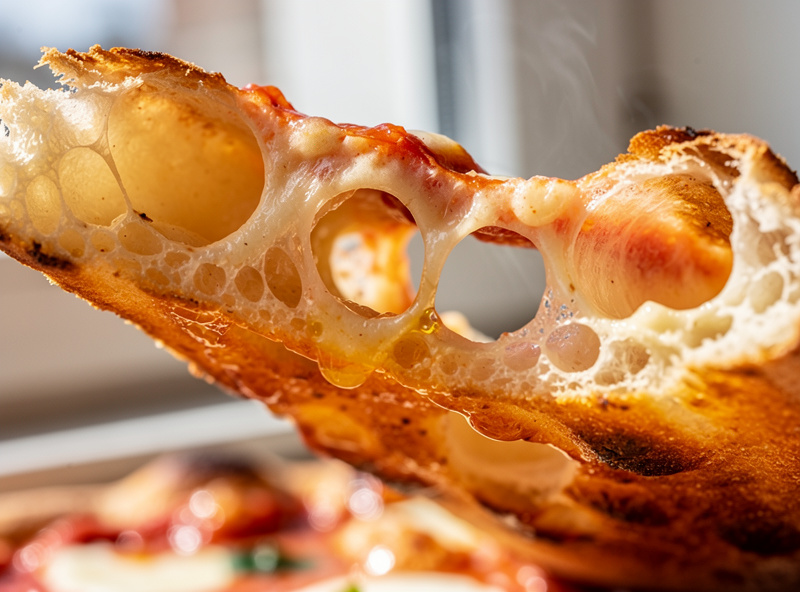
A poolish is the preferment that turns good pizza dough into great pizza dough. It’s a simple thing — equal parts flour and water by weight, plus a tiny amount of yeast, mixed ahead and left to ferment on its own before you build the final dough. That overnight head start does something a direct dough can’t quite manage: it builds a deep, aromatic complexity and a tender, open crumb before you’ve even started the main mix. If you’ve already got a reliable cold-ferment dough and want to push the flavor further, the poolish is your next move.
I reach for a poolish when I want the dough itself to be the star of the pizza rather than a vehicle for toppings. It’s not something a beginner needs on day one — master a direct dough first — but once the basics are repeatable, this is the technique that adds a genuine layer of depth. Here’s exactly how I run one, what it does, and how to fold it into the rest of the process from the complete pizza dough guide.
What a Poolish Is
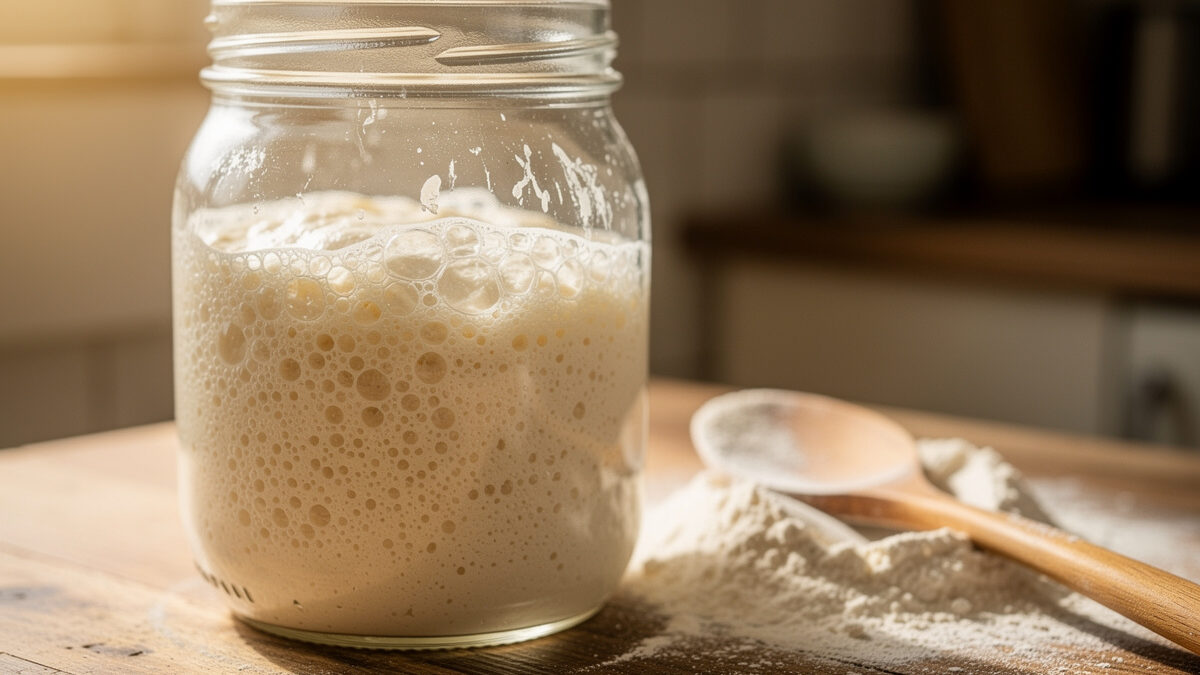
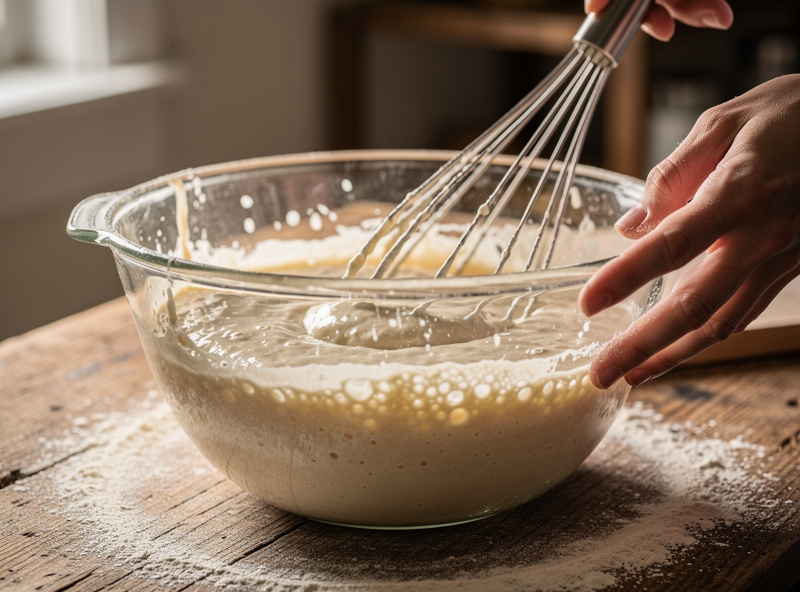
A poolish is a wet, 100%-hydration preferment: equal weights of flour and water with a very small amount of yeast, mixed and left to ferment for 8–16 hours before being added to the final dough. It’s loose and batter-like, and when it’s ready it’s bubbly, domed, and smells pleasantly sour and yeasty.
The name comes from a Polish baking technique adopted by French bakers, but for our purposes what matters is the ratio and the job it does. Because it’s equal parts flour and water, a poolish is very wet — pourable, almost like a thick pancake batter. That high hydration and long, gentle ferment let the yeast and enzymes work on a portion of your flour ahead of time, developing acids and aromatic compounds that flavor the entire final dough. You’re essentially pre-fermenting part of your recipe to bank flavor and extensibility before the main event. The first time you smell a ripe poolish you’ll understand why people bother — it’s deeply aromatic in a way a same-day dough never gets.
How to Make a Poolish
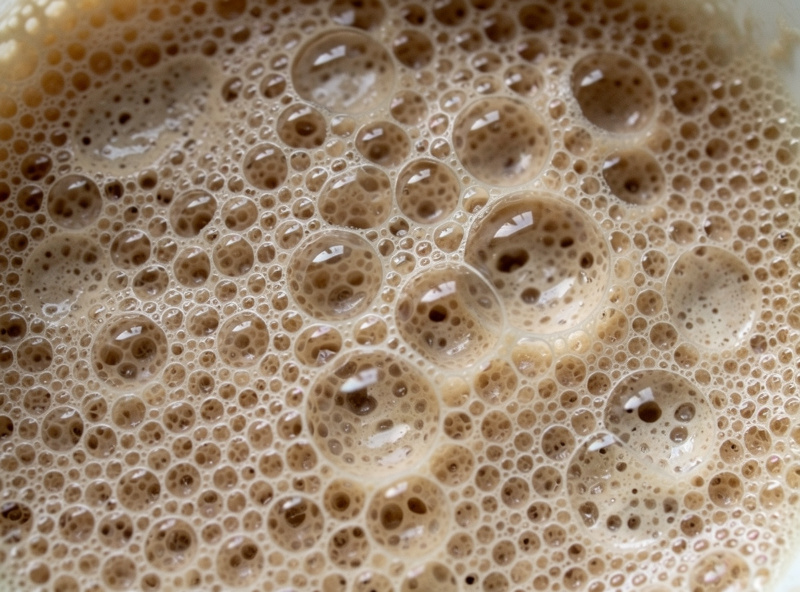
To make a poolish, mix equal weights of flour and water with a pinch of yeast, cover, and leave at room temperature until bubbly and domed — usually 8–16 hours depending on temperature and yeast amount. It’s ready when the surface is covered in bubbles and it’s just starting to recede in the center.
Here’s a concrete version for a batch of pizza. Say your final dough uses 600g of flour total. For a poolish making up about a third of the flour, mix 200g flour with 200g water and a very small pinch of instant yeast — around 0.2g, less than you think. Whisk it smooth, cover, and leave it out overnight. Timing is temperature-dependent: in a warm kitchen it’ll be ready in 8–10 hours; in a cool one it might take 14–16. Don’t go by the clock alone — go by the look. A ready poolish is full of bubbles across the surface and has risen and just begun to sink back in the middle. That slight collapse is the signal it’s at peak activity and ready to use. Catch it too early and you lose flavor; too late and it goes flat and overly sour. A 0.1g scale matters here because the yeast quantities are so tiny that guessing throws the timing way off.
Building the Final Dough
Once the poolish is ripe, mix it with the rest of your flour, the remaining water, salt, and a little more yeast (or none, depending on schedule) to form the final dough. Then proceed as you would with any dough — bulk rest, ball, and either bake the same day or give it a cold ferment for even more depth. If you’re going the cold-ferment route, getting the balling and storage right matters — I cover the full timing, container setup, and how to tell when a ball has over-proofed in the dough ball storage guide.
The poolish already contains some of your total flour and water, so you account for it in your overall recipe: subtract the poolish’s flour and water from your totals, then add the rest in the final mix. Salt goes in the final dough, never the poolish (salt would slow the preferment’s fermentation). I usually add a small amount of fresh yeast to the final mix to drive the bulk rise, then either bake that evening or — my preference — give the balled dough a cold ferment in the fridge to stack the poolish’s flavor on top of a long cold rest. That combination, poolish plus cold ferment, is about as much flavor as you can build into a yeasted pizza dough. If you want the cold-ferment half of that equation, it’s all in the 48-hour cold ferment guide.
Poolish vs Biga vs Direct Dough
A direct dough mixes everything at once; a poolish is a wet (100% hydration) preferment; a biga is a stiff (around 50% hydration) preferment. The wet poolish gives extensibility and a tender, open crumb, while the stiff biga gives more strength and a slightly chewier result. Both build flavor a direct dough can’t.
| Method | Hydration of preferment | Flavor | Crumb / Texture | Best for |
|---|---|---|---|---|
| Direct dough | — | Mild to good (with cold ferment) | Even, reliable | Everyday, beginners |
| Poolish | 100% (wet) | Deep, aromatic | Tender, open | When dough is the star |
| Biga | ~50% (stiff) | Complex, nutty | Stronger, chewier | Structured Italian styles |
I default to poolish over biga at home because the extensibility makes the dough a pleasure to stretch, and the tender crumb suits the styles I bake most. Biga is excellent and traditional for certain Italian doughs, but it’s stiffer and a bit fussier to incorporate. Neither is “better” — they’re different tools, and a direct cold-ferment dough is still genuinely all most people ever need.
Is a Poolish Worth the Effort?
A poolish adds real flavor and a better crumb, but it also adds a step, a timing dependency, and another variable to manage — so it’s worth it once your basics are solid, not before. If your direct dough already isn’t coming out well, fix that first; a poolish won’t rescue bad fundamentals.
I’m honest with people about this because it’s easy to chase complexity as a substitute for skill. The biggest flavor lever in pizza is fermentation time, and you get most of that from a simple cold ferment with zero extra technique. The poolish is the next increment — a noticeable step up in aromatic depth and crumb tenderness, but a smaller jump than going from same-day to cold-fermented in the first place. So the honest sequence is: nail a direct cold-ferment dough, log it until it’s repeatable, then add a poolish to your rotation when you want to take the dough from very good to exceptional. Adding it before you’ve mastered the basics just gives you more ways for the evening to go sideways.
Common Poolish Mistakes
The usual errors are using too much yeast (the poolish over-ferments and goes flat and sour before you’re ready), adding salt to the poolish (which slows fermentation), and using the poolish past its peak. Watch the look, not just the clock, and use a tiny amount of yeast so the window is forgiving.
If your poolish smells like nail polish or strongly of alcohol and has fully collapsed, it over-fermented — use less yeast or catch it earlier next time. If it’s barely bubbling after 16 hours, your kitchen is cold or you used too little yeast; give it more time or a slightly warmer spot. And resist the urge to “fix” a loose poolish by adding flour — it’s supposed to be wet and pourable. Treat it like the living thing it is: smell it, look at it, and learn its rhythm in your kitchen over a few batches. Like everything else in dough, it rewards a logbook and punishes guesswork.
Frequently Asked Questions
What is a poolish in pizza dough?
A poolish is a wet preferment of equal parts flour and water by weight plus a pinch of yeast, fermented 8 to 16 hours before mixing the final dough. It builds deep aromatic flavor and a tender, open crumb that a direct same-day dough cannot achieve.
How long should a poolish ferment?
A poolish ferments 8 to 16 hours at room temperature, depending on temperature and yeast amount. It is ready when the surface is covered in bubbles and just starting to dip in the center. Judge by that look rather than the clock alone.
How much yeast goes in a poolish?
Very little, around 0.2g of instant yeast for a poolish using 200g flour. Too much yeast makes the poolish over-ferment and go flat and sour before you are ready. A small amount gives a wide, forgiving window. Use a 0.1g scale to measure it.
Do you add salt to a poolish?
No. Salt slows fermentation, so keep it out of the poolish and add it to the final dough instead. The poolish is just flour, water, and a tiny bit of yeast, left to ferment freely before becoming part of the final mix.
Is a poolish better than a direct dough?
A poolish adds more flavor and a more tender crumb, but a well-cold-fermented direct dough is excellent and simpler. Master a direct dough first, then add a poolish when you want to push flavor further. It is a refinement, not a fix for weak fundamentals.
As an Amazon Associate I earn from qualifying purchases. The tools I link are ones I use; buying through these links supports the site at no extra cost to you.
Related Guides
- How to Make Pizza Dough: The Complete Guide — the full process the poolish fits into.
- Cold Ferment Pizza Dough — stack a cold ferment on top of your poolish for maximum flavor.
- 00 Flour vs Bread Flour — choosing the flour for your preferment and final dough.
More from This Cluster
- “Same-Day vs Overnight Pizza Dough: Which to Make”
- “Pizza Dough Balls: Storage
- “Pizza Dough Too Sticky? Fix It Without Adding Flour”
- “00 Flour vs Bread Flour for Pizza: What Actually Matters”
- “Cold Ferment Pizza Dough: The 48-Hour Method”
- “Pizza Dough Hydration Explained (and How to Pick Yours)”
- “How to Make Pizza Dough: The Complete Guide”

About Kenny Nyhus Fadil
A home pizza maker documenting deck temps, dough logs, and the occasional wrecked launch.