Pesto as a Pizza Base

Pesto makes a brilliant pizza base with one hard rule attached: it is heat-fragile, so on a fast oven it goes on after the bake, not under it. Basil pesto blasted at 450°C for 90 seconds turns from bright green to a dull, bitter olive-drab in the time it takes the cheese to melt. The fix is simple once you accept it — par-bake the pizza with cheese and toppings, then spoon or swirl the pesto on as it comes out of the oven, where the residual heat warms it without cooking it. Treat pesto as a finishing sauce and it rewards you; treat it as tomato sauce and it punishes you.
This is the same instinct I apply to anything delicate on a pizza: the oven is the last 90 seconds of a long process, and not everything belongs in those 90 seconds. Pesto is concentrated fresh basil and good olive oil — the two things heat damages fastest — so the technique is really about keeping it away from the worst of the heat while still getting it warm and melded into the cheese. Here is how I use it across fast and slow ovens, and how to keep the green alive.
Why pesto and high heat fight
Fresh basil is full of volatile aromatic oils and chlorophyll, both of which break down quickly under direct high heat. That is why basil leaves on a Neapolitan pizza are tucked under the cheese or added late — exposed on top at full temperature they blacken and crisp. Pesto concentrates all of that fragile basil into a paste and adds raw garlic and good olive oil, which also turn harsh and bitter when scorched. So a pesto base on a 90-second oven gets a triple hit: the basil dulls, the garlic sharpens, and the oil takes on a burnt note.
On a slower home oven at 250 to 270°C you have a little more room, because the heat is gentler even if the bake is longer — but it is still not the ideal home for a layer of pesto under the cheese. The reliable move on any oven is to keep pesto as a post-bake finish or, at most, a thin base on a slow oven that you protect with cheese on top. The hotter and faster the bake, the more strictly pesto belongs on after, which is the same heat-honest logic that runs through the pizza sauce styles guide.
The method: pesto as a finishing sauce
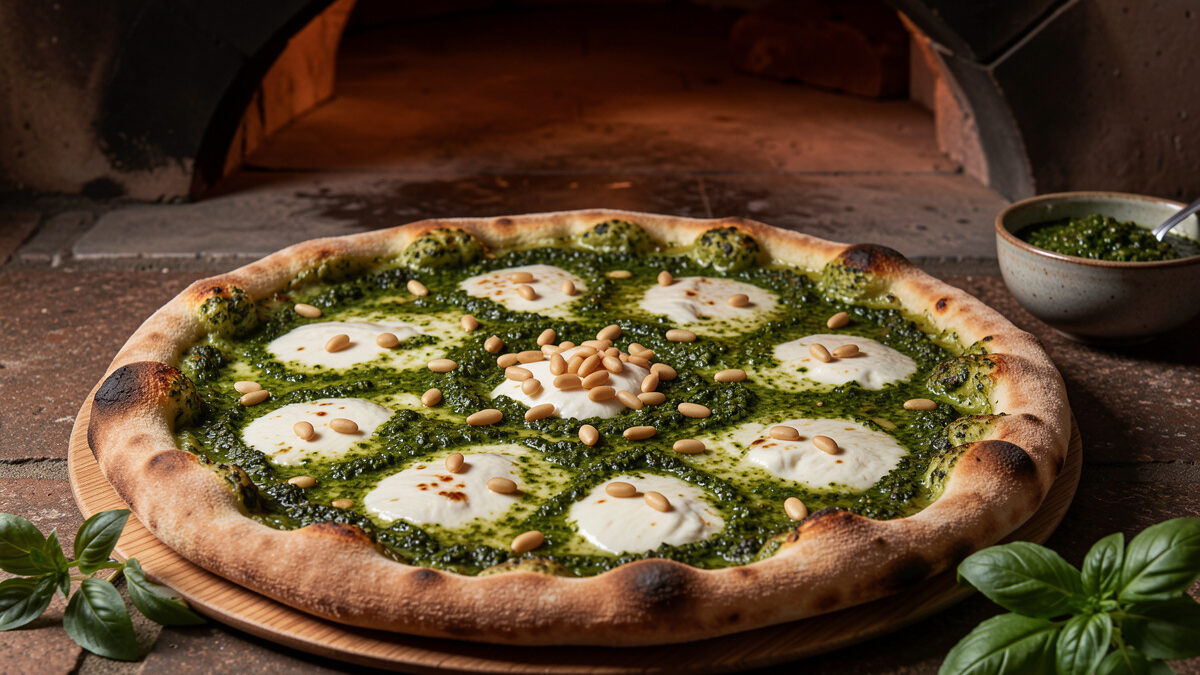
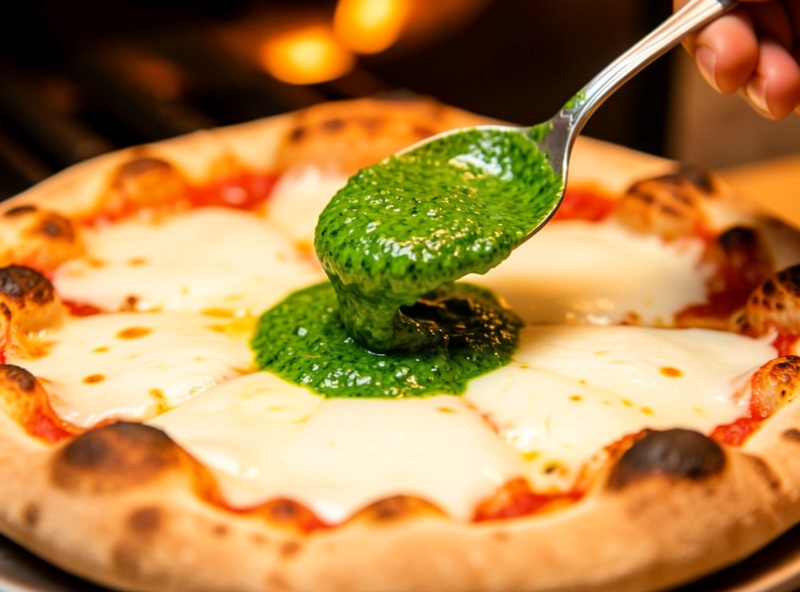
My default pesto pizza is built like a white pizza and finished green. Stretch the dough, brush it with a little olive oil, add fresh mozzarella and whatever toppings you are using, and bake it as normal. The moment it comes out, spoon over the pesto in loose swirls or dots — not a solid sheet — so the heat off the pizza warms it and lets it melt into the cheese without cooking. The colour stays vivid, the basil stays fragrant, and the raw garlic mellows just enough from the residual warmth.
If you want pesto more integrated, the safest base approach is to spread a very thin layer on the dough, cover it completely with mozzarella so the cheese shields it from direct heat, and still add a fresh swirl of pesto after the bake for colour and lift. The shielded base gives a background pesto note; the finishing swirl gives the bright hit. This finish-after-heat habit is exactly what makes a white bianca base work too — fragile, flavour-forward ingredients go on after the oven, not under it.
Good pesto makes or breaks it
With no long bake to hide behind, pesto quality is the whole game. A classic basil pesto is basil, pine nuts, parmesan or pecorino, garlic, salt, and a good olive oil — and the olive oil matters more than people expect, because you taste it raw. Loosen the pesto with a little extra oil or a spoon of the pasta-style trick of a touch of water so it swirls rather than sits in stiff clumps. Jarred pesto works in a pinch but tends to be duller and more oxidised; if you make pizza often, a fresh batch is a noticeable upgrade.
Do not drown the pizza. Pesto is rich and intense, so a few well-placed swirls do more than a heavy coat, which turns greasy and overwhelming. Pair it with things that like basil and garlic — fresh mozzarella, cherry tomatoes added after the bake, grilled chicken, potato, or a scatter of pine nuts — and keep the rest of the build restrained. As with a white base, a pesto pizza has no tomato acidity to cut the richness, so a squeeze of lemon or a few fresh tomatoes brighten it nicely.
Beyond basil: other pesto bases
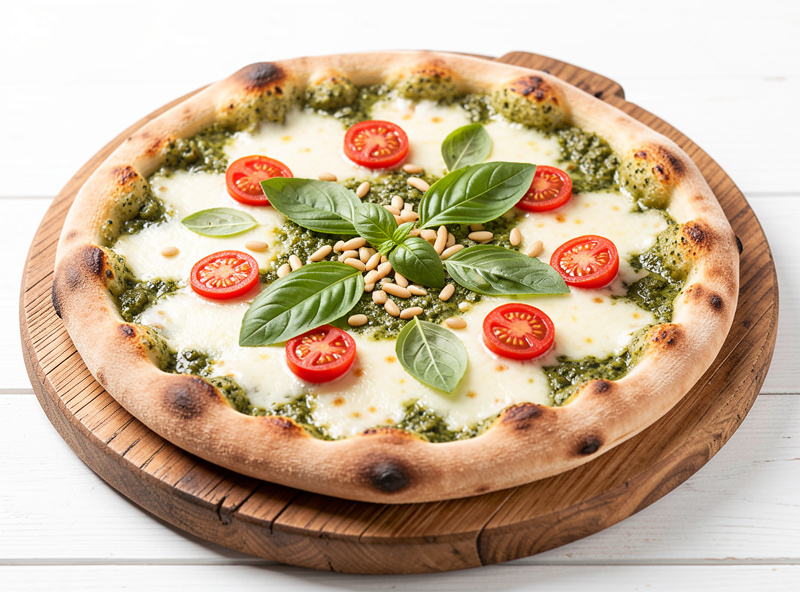
Basil is the classic but not the only option, and some alternatives are more heat-tolerant. A pesto rosso built on sun-dried tomatoes is far more forgiving of heat than fresh basil and can go on as a genuine base layer even on a faster oven — it behaves more like a concentrated tomato paste than a fresh herb sauce. A pistachio pesto, rich and nutty, also holds up better than basil because nuts and cheese take heat well. Arugula or kale pestos sit somewhere in between. The greener and more herb-forward the pesto, the more it wants to be a finish; the more it leans on nuts, cheese, or sun-dried tomato, the more it can take being a base.
Whatever the pesto, the cheese underneath still does the structural work of a pizza, so it pays to get that right — the toppings and cheese guide covers melt behaviour and blends that pair well with a green sauce, and the underlying dough and bake are unchanged from the Neapolitan technique guide.
Common pesto pizza mistakes
The faults are consistent and easy to avoid once you know them. The big one is using pesto as a base layer on a fast, hot oven and then wondering why the pizza tastes bitter and looks grey — that is scorched basil and burnt garlic, and no topping will rescue it. The fix is always the same: finish, do not bury. The second mistake is overloading; pesto is intense and oily, and a heavy coat turns the slice greasy and one-note, where a few swirls would have been bright and balanced.
A subtler error is treating all pesto as equally heat-fragile. A stiff, oxidised jarred basil pesto that has been sitting open in the fridge is already dull before it touches the pizza, and warming it does not bring it back; start from something fresh and vivid if the pesto is going to be the headline. And finally, people forget the acid problem — like a white pizza, a pesto pizza has no tomato to cut the richness, so without a squeeze of lemon, a few fresh tomatoes, or a sharp cheese it can read as flat and heavy even when everything else is right.
A pesto pizza worth keeping in rotation
The build I come back to most is deliberately simple. Stretch the dough thin, brush with olive oil, lay down fresh mozzarella and a handful of halved cherry tomatoes, and bake it as a normal pizza so the cheese melts and the base crisps. Out of the oven, swirl over a loose basil pesto, scatter a few toasted pine nuts, add a little more fresh basil, and finish with a thread of good olive oil and a small grating of parmesan. The contrast does the work — hot, crisp, cheesy base against cool, bright, raw-tasting pesto on top.
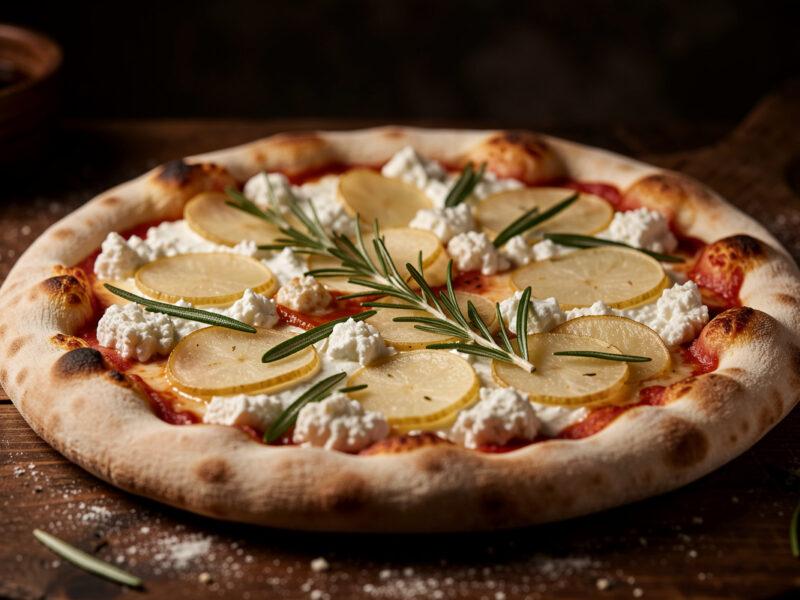
From there it varies endlessly: swap the cherry tomatoes for thin potato and rosemary, add prosciutto after the bake, or move to a sun-dried tomato pesto rosso when you want something you can actually spread as a base. The constant is the order of operations — sturdy, heat-loving things go in the oven; fragile, green, fragrant things go on after. Once that becomes automatic, pesto stops being a risky novelty and becomes one of the most reliable non-tomato pizzas in the repertoire.
Keep building
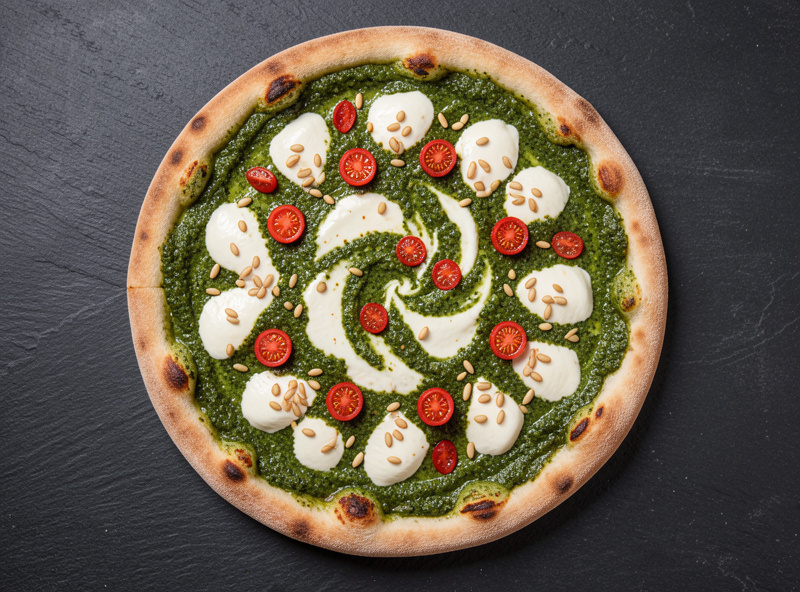
Pesto is the clearest example of a principle that runs through this whole site: match the ingredient to the heat, and put the fragile things on after the fire. Once you stop fighting that, a pesto pizza becomes one of the easiest and most striking pies you can make. If you want to round out your sauce repertoire, the sauce styles hub ties red, white, and green together, the white bianca guide is the natural companion to this one, and the no-cook versus cooked piece explains the same heat logic for tomato. Build the dough first, read the oven, and let the last 90 seconds do only what they should.
Related Guides
- Pizza Sauce Styles and Technique: The Complete Guide
- White Pizza Sauce (Bianca), Homemade
- No-Cook vs Cooked Pizza Sauce, Compared
- Passata vs Crushed Tomatoes for Pizza
- Pizza Sauce Consistency Guide

About Kenny Nyhus Fadil
A home pizza maker documenting deck temps, dough logs, and the occasional wrecked launch.