Understanding Gluten Development in Pizza Flour

Gluten development is the process where two flour proteins, glutenin and gliadin, hydrate and link into an elastic network that traps gas and gives pizza its rise, chew, and structure. It is driven by four levers — water, mixing, time, and the flour’s own protein quality. Get those right and an ordinary flour outperforms a premium one handled badly, because gluten is built, not bought.
Most flour advice stops at “buy higher protein,” but protein is only the raw material. What you do with it in the bowl decides whether you get a springy, extensible dough or a torn, slack one. Understanding the mechanism is what lets you diagnose your own dough instead of guessing — and it is the thread that connects every other choice in the flour selection guide. This article walks through how the network actually forms, what each lever does, and how to read whether your dough is under- or over-developed.
What gluten actually is
Wheat flour contains two relevant proteins that do nothing useful while dry. Glutenin is a large, coiled protein that provides strength and elasticity — the springy “snap back” you feel when you stretch a dough and it pulls in. Gliadin is a smaller, more fluid protein that provides extensibility — the ability to stretch and flow without tearing. Neither alone makes good dough. When flour meets water and is agitated, glutenin and gliadin bond together into gluten, a continuous viscoelastic network that is simultaneously strong and stretchy.
That balance is everything. Too much elasticity and not enough extensibility gives a dough that fights every stretch and snaps back into a small thick disc. Too much extensibility and not enough elasticity gives a slack dough that stretches but cannot hold a rim or trap gas. A good pizza dough sits in the middle — strong enough to hold shape, extensible enough to open into a thin round by hand. Flour’s protein content predicts the ceiling of how much gluten can form, but the network only reaches that ceiling if you develop it properly.
Lever one: water hydrates the proteins
Nothing happens until the proteins absorb water. Hydration unfolds the coiled glutenin and lets the proteins move and bond, which is why a dry, under-hydrated dough develops gluten poorly and stays tight and crumbly. Within a workable range, wetter doughs develop a more extensible, open network — this is why high-hydration pizza has that airy, blistered crumb. The trade-off is handling: too much water for the flour’s strength and the network cannot support itself, giving a slack, sticky mass.
This is the direct link between hydration and flour choice. A stronger flour can hold more water in a coherent dough, which is why long-ferment and high-hydration recipes call for strong flour. Match them and the dough develops beautifully; mismatch them and no amount of kneading saves it. I weigh both flour and water to 0.1 g on a kitchen scale and log the percentage with every bake, because a development result you cannot reproduce is just luck. The hydration guide covers how to pick a percentage, and the practical fix when a dough goes too wet is in the sticky dough guide.
Lever two: mixing and kneading align the network
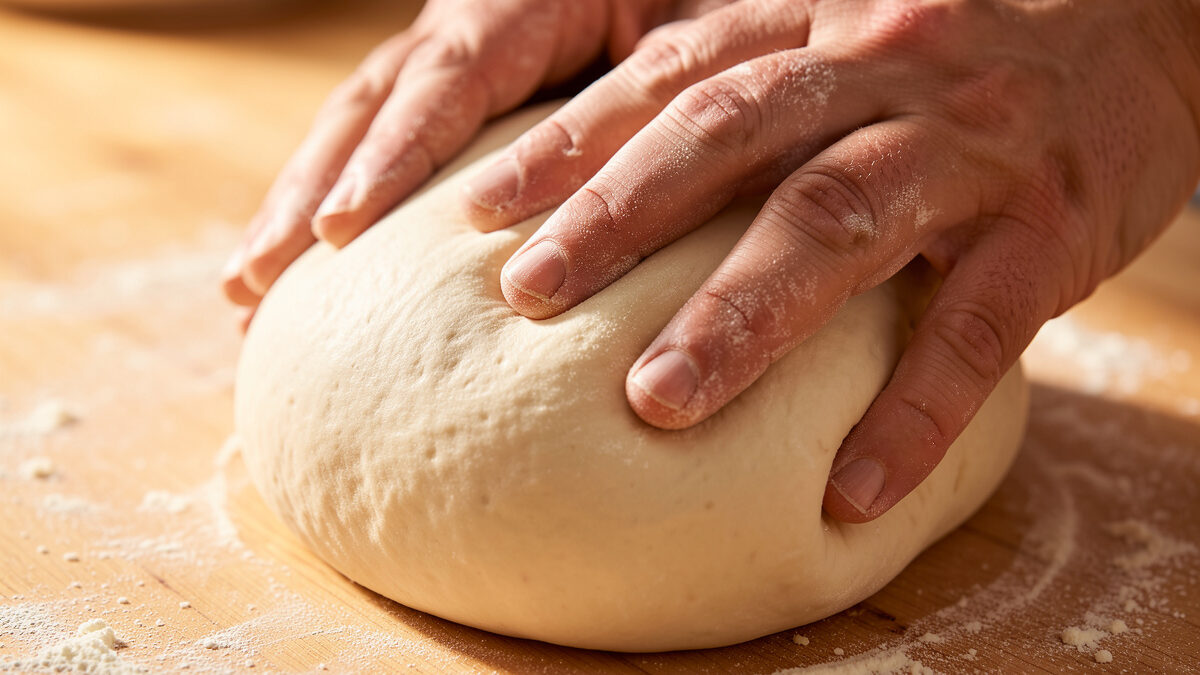
Mechanical work — kneading by hand or with a mixer — speeds gluten development by physically dragging the proteins past each other so they bond and align into organized sheets. A well-kneaded dough transforms from a shaggy, lumpy mass into a smooth, cohesive, slightly tacky ball that holds its shape. That visible change is the network organizing. Under-kneading leaves the gluten disorganized and weak; the dough tears and will not hold gas.
But more kneading is not infinitely better. It is possible, mostly with a powerful machine, to over-knead — to break the network down faster than it builds, leaving a slack, gummy, almost soupy dough that has lost its structure. By hand this is hard to reach; with a strong stand mixer it is real — the first time I walked away from my mixer on a high-hydration batch I came back to a gummy, soupy ball that never recovered, and the time stamp is still in my dough log as a warning. The goal is a developed, elastic dough, not the maximum possible mixing time. And mixing is not the only path to development — time can do much of the work for you, which is the next lever.
Lever three: time develops gluten without kneading
Gluten forms on its own, slowly, whenever flour and water sit together — no kneading required. This is the principle behind the autolyse: mix just flour and water, rest 30–60 minutes, and the gluten begins organizing passively while the flour fully hydrates. A dough given a good autolyse needs far less kneading to reach the same development and ends up more extensible. The “no-knead” approach takes this further, using many hours of fermentation to do all the structural work that kneading would otherwise do.
Fermentation time is a double-edged lever, though. Early on, time builds and strengthens the network. But a long ferment eventually begins to degrade it, as enzymes and the acids from fermentation slowly cut the gluten — which is exactly why a long cold ferment needs a strong flour with reserves to spare. This is the mechanism behind the whole strength-versus-time relationship in the high-protein flour guide and my standard 48-hour cold ferment. Develop with time and you get flavor as a bonus; push time too far on a weak flour and the network collapses.
| Development stage | How the dough behaves | Windowpane test |
|---|---|---|
| Under-developed | Shaggy, tears easily, lumpy | Rips immediately, no stretch |
| Developing | Smoothing out, some elasticity | Stretches then tears with a thick edge |
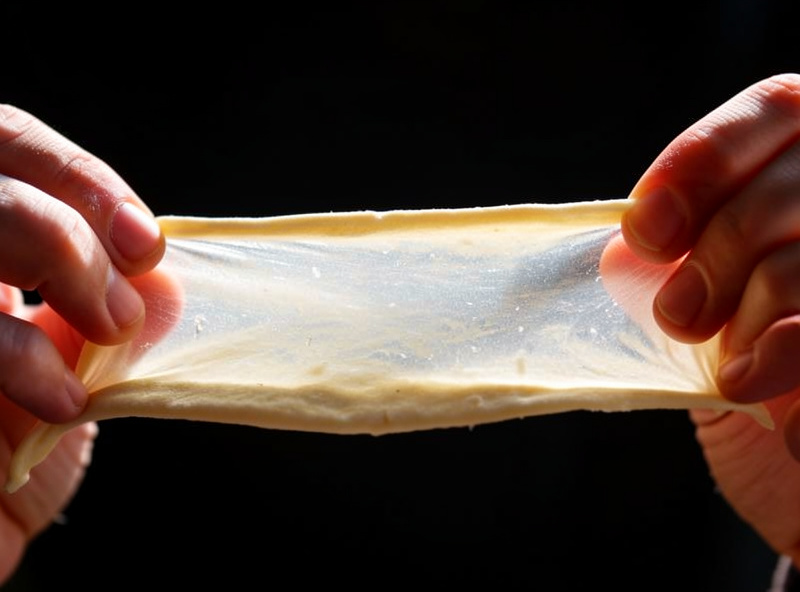
| Well developed | Smooth, elastic, holds a ball | Stretches to a thin translucent sheet |
| Over-developed | Slack, gummy, loses shape | Will not hold a sheet, sticky tears |
Lever four: the flour’s protein quality
The flour sets the ceiling. Higher-protein flour can form more gluten, but the quality and balance of that protein matter as much as the quantity — which is why two flours at the same protein percentage can handle very differently. A well-bred bread or pizza wheat gives a glutenin-gliadin balance that develops into a strong yet extensible network; a poorer wheat at the same protein can be stubbornly tight or weakly slack. In my own side-by-sides a 12.5% Caputo Cuoco and a 12.5% supermarket bread flour are not the same dough — the Caputo stays extensible and opens by hand where the cheaper wheat tightens and snaps back. This is the gap between the printed number and real dough behavior, and the reason W-strength is a better predictor than protein alone for serious bakers.
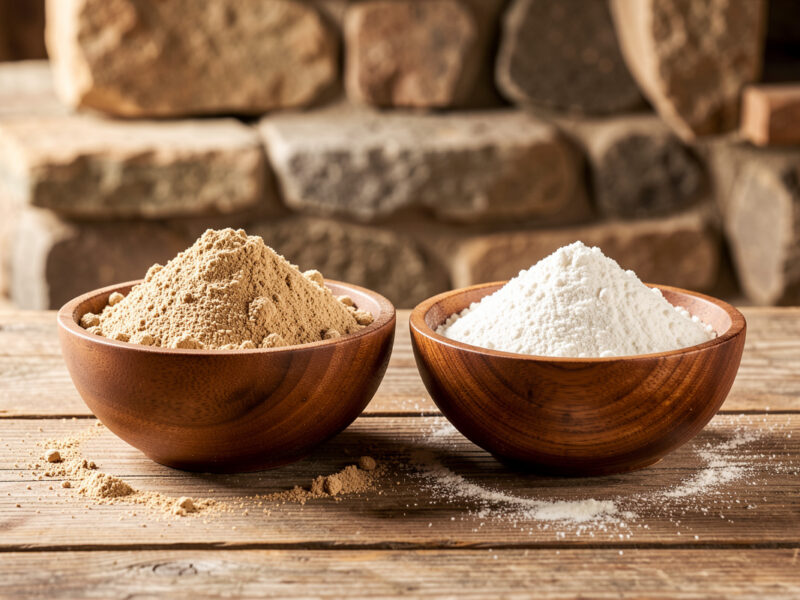
It also explains why milling and grain choice change development. Whole wheat and stone-ground flours contain bran fragments that physically interrupt the network, capping how much gluten can form regardless of protein — covered in the whole wheat guide and the stone-ground vs refined comparison. Refined flours develop cleaner, stronger networks because nothing interrupts the strands. None of this makes one flour universally better; it means the development you can achieve is bounded by what is in the bag, and your job is to take it as far as that flour allows.
How salt and fat fit in
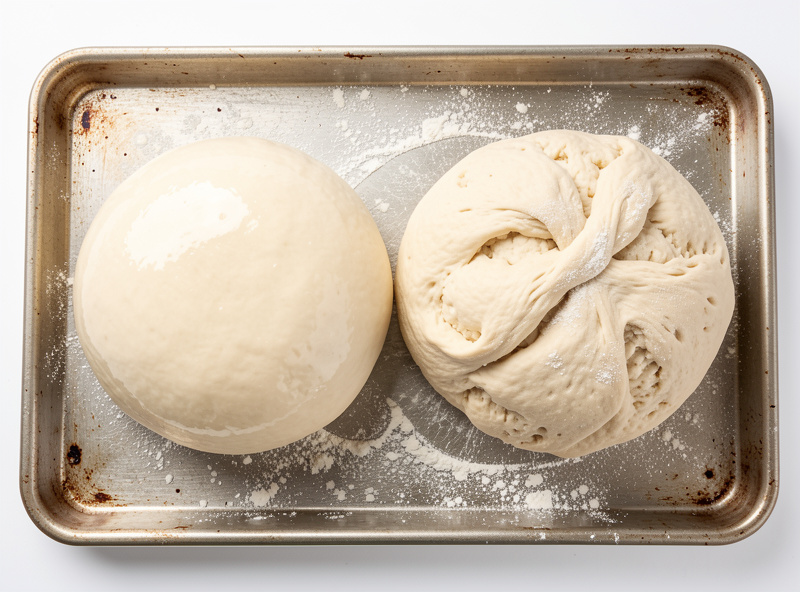
Two minor ingredients quietly shape development. Salt tightens and strengthens the gluten network — it makes the dough firmer, more elastic, and slower to over-ferment, which is why a salted dough handles better than an unsalted one and why salt is sometimes held back during an autolyse so the gluten can first form freely. Add it too early in very high quantity and the dough can feel tight; leave it out entirely and the dough is slack and ferments out of control.
Fat, where a recipe uses it (more common in pan and American styles than Neapolitan), coats the gluten strands and “shortens” them, tenderizing the crumb and reducing chew. A little oil gives a softer, more pliable dough and a more tender bite; too much weakens structure noticeably. Neither salt nor fat builds gluten the way water, work, and time do, but both adjust how the finished network feels in the mouth, which is why they are part of the development conversation even though they are not the main levers.
The development mistakes that ruin good flour
Most disappointing doughs come from a handful of repeatable errors, and none of them are the flour’s fault. The most common is under-hydration: a dough mixed too dry never gives the proteins enough water to organize, so it stays tight and tears no matter how long you knead. The fix is more water, not more work. Close behind is rushing — skipping the rest or autolyse and trying to force development by brute kneading, which works but takes far longer and tires you out when time would have done it for free.
Another is mismatching strength to schedule: pushing a weak flour through a 72-hour ferment so the network degrades to slop, or fighting a very strong flour on a same-day dough that never relaxes. Salt errors show up too — forgetting it entirely gives a slack, fast-fermenting dough with weak structure. And finally, misreading the dough: pulling it to shape before the gluten has set, then blaming the flour when the rim will not hold. Every one of these is a process fault you can diagnose with the windowpane test and a hand on the dough, which is exactly why learning to read development matters more than upgrading your flour.
Reading your dough: the windowpane test
The single most useful diagnostic is the windowpane test, and it costs nothing. Tear off a small piece of dough and gently stretch it between your fingers into a thin sheet. A well-developed dough stretches into a translucent membrane you can almost see light through before it tears — the “windowpane.” An under-developed dough rips quickly with a ragged, thick edge. This one check tells you whether to knead more, rest longer, or stop.
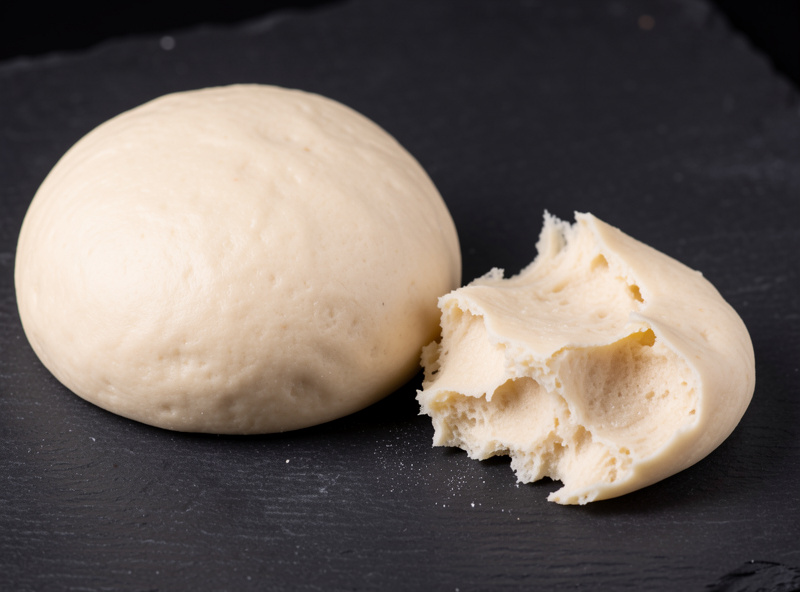
Combine it with feel. Well-developed dough is smooth, springs back slowly and partially when poked, and holds a tight ball on the bench. Under-developed dough is lumpy and slack and spreads. Over-developed dough — rare by hand — is gummy and will not hold a shape at all. Once you can read these signals you stop following kneading times blindly and start developing each dough to where that specific flour, hydration, and schedule want to be. That is the whole point: gluten development is a process you steer by observation, and the flour is only the starting material. To put it all into a full recipe context, the complete dough guide and the 00 vs bread flour comparison are the natural next steps.
Related Guides
- Best Flour for Pizza: The Complete Guide
- High-Protein Flour for Neapolitan Pizza
- Pizza Dough Hydration Explained
- Cold Ferment Pizza Dough: The 48-Hour Method
- Whole Wheat Pizza Dough Tips

About Kenny Nyhus Fadil
A home pizza maker documenting deck temps, dough logs, and the occasional wrecked launch.