Whole Wheat Pizza Dough Tips That Actually Work

The single most useful tip for whole wheat pizza dough is to keep it to 20–30% of your total flour and build the rest on a strong white base. Whole wheat’s sharp bran particles physically cut gluten strands as they form, so a 100% whole wheat crust bakes dense and tears easily. At a quarter of the flour you get the nutty, toasty flavor and deeper color without sacrificing a rim that actually holds.
Whole wheat is one of those ingredients people approach as all-or-nothing — either you “go healthy” with a full wholemeal crust and accept a brick, or you avoid it entirely. Neither is right. Treated as a flavor and texture component layered onto a proper pizza flour, whole wheat earns a permanent place in the rotation, and the handling tweaks that make it work are small and predictable. I run it as a percentage against my standard pizza flour base, and these are the adjustments from the dough log that consistently turn out a whole-grain crust worth eating rather than enduring.
Why 100% whole wheat pizza disappoints
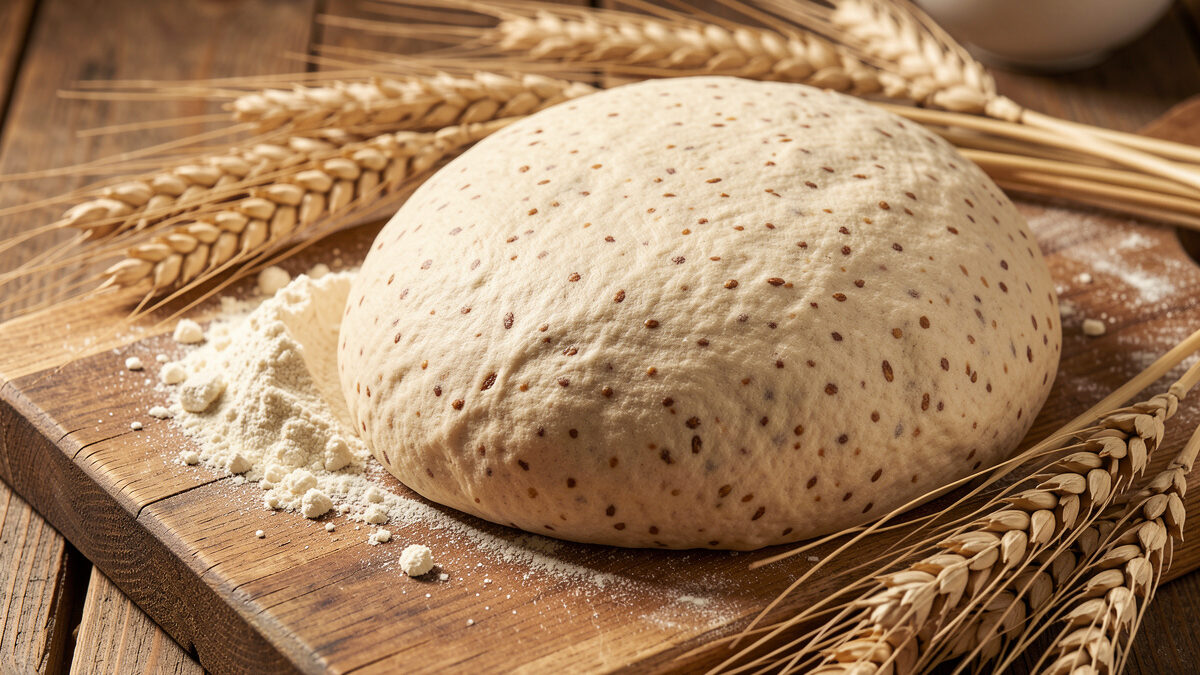
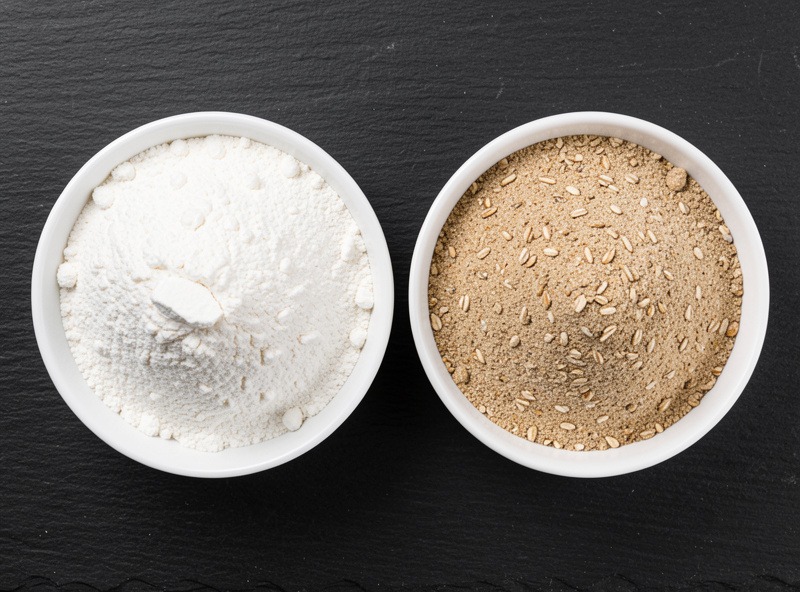
It helps to understand the mechanism before the tips. Whole wheat flour contains the bran and germ that refined white flours have removed. The bran is the fibrous outer husk, and under the microscope its particles have hard, sharp edges. As you mix and the gluten network tries to link into long elastic strands, those bran fragments act like tiny blades, severing the strands and limiting how strong and extensible the network can become. The result at 100% is a dough that will not stretch thin without tearing and bakes into a dense, heavy crust with poor oven spring.
The germ adds its own wrinkle: it is rich in oil, which both shortens gluten (like fat in pastry) and goes rancid faster, so whole wheat flour is also more perishable. None of this means whole wheat is bad — it means it needs a strong gluten-forming partner to carry the structure while it contributes flavor and character. That partnership is the whole strategy, and it is the same logic behind blending any high-character flour, which I cover for the milling side in the stone-ground vs refined comparison.
Tip 1: Keep whole wheat to 20–30% of the flour
This is the master ratio and the one that fixes most whole-wheat complaints. At 20–30%, a strong white base provides the gluten backbone for a light, stretchable crust while the whole wheat delivers a clear toasty, nutty, slightly earthy flavor and a warmer brown color. Below 15% the effect is subtle; above about 35% the structure starts to suffer and the rim gets dense. I default to 25% for an everyday whole-grain pizza on my home-oven steel, dropping to 15–20% if I want a delicate Neapolitan-leaning rim and only a hint of whole-grain character.
If you specifically want a more wholemeal-forward loafy crust — closer to a pan or grandma style than a Neapolitan — you can push to 40% as long as you lean on a very strong base flour and accept a denser, chewier result. The point is to choose the ratio deliberately for the style you want rather than dumping in whole wheat and hoping.
| Whole wheat ratio | Character | Best style |
|---|---|---|
| 15–20% | Subtle nuttiness, light rim, easy to stretch | Neapolitan-leaning, hot oven |
| 25–30% | Clear whole-grain flavor, good color, still flexible | Everyday home-oven pizza |
| 35–40% | Hearty, dense, chewy, distinctly wholemeal | Pan, grandma, focaccia-style |
Tip 2: Add more water — bran is thirsty
Bran absorbs significantly more water than refined flour, so a whole wheat blend mixed at your usual hydration will feel dry and tight. As a rule I add roughly 3–5 percentage points of extra water for every 25% whole wheat in the blend. So if my white-flour dough runs at 62% hydration, a 25% whole wheat version goes to about 65–67%. The dough should feel the same under the hands after a rest, not stiffer.
The catch is timing: bran keeps drinking water for a while after mixing, so a dough that felt perfect at the end of mixing can feel dry twenty minutes later. This is exactly why the next tip — a rest — matters so much. If you are new to reading dough feel, the hydration guide will help you calibrate what “right” feels like before you start adjusting for bran.
Tip 3: Let it rest — autolyse softens the bran
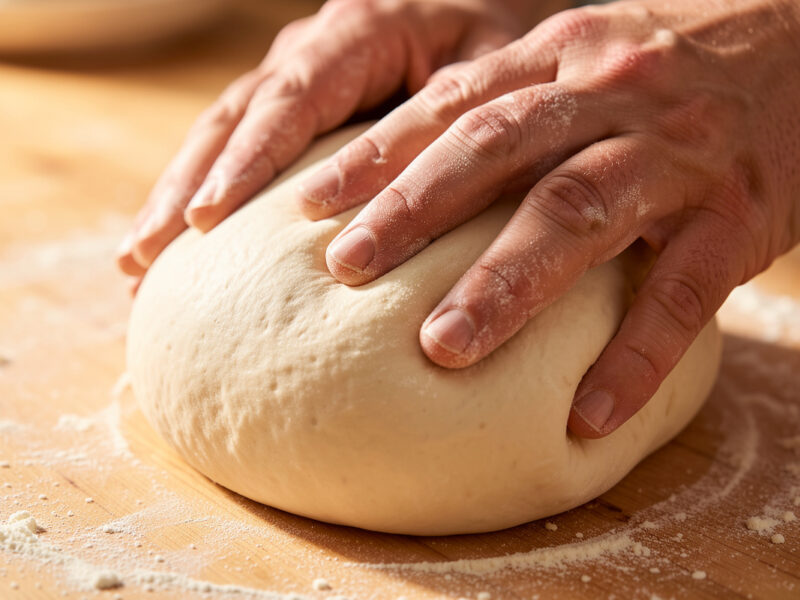
Give a whole wheat dough a longer rest and the bran softens, hydrates fully, and becomes far less damaging to the gluten network. The simplest version is an autolyse: mix just the flours and water, no salt or yeast, and let it sit 30–60 minutes before adding the rest and kneading. During that rest the bran absorbs water and softens its sharp edges, the gluten begins forming on its own, and the final dough comes together stronger and more extensible than if you had mixed everything at once.
For whole wheat I lean toward the longer end — 45 to 60 minutes — because the bran needs the time. A cold ferment afterward helps too, mellowing the slightly bitter edge raw bran can carry and deepening the flavor. The combination of a good autolyse and a 24–48 hour cold rest is what separates a whole wheat crust that tastes sweet and toasty from one that tastes flat and grassy.

Tip 4: Use a strong white base and consider white whole wheat
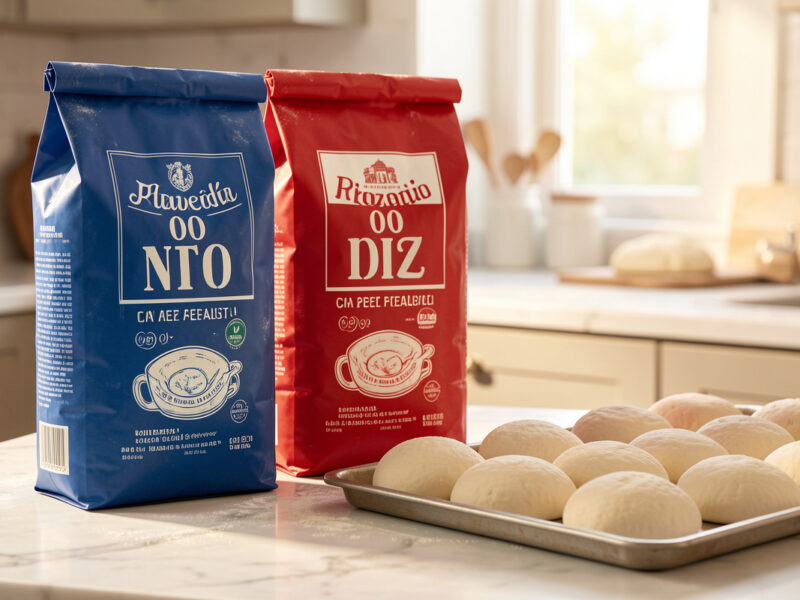
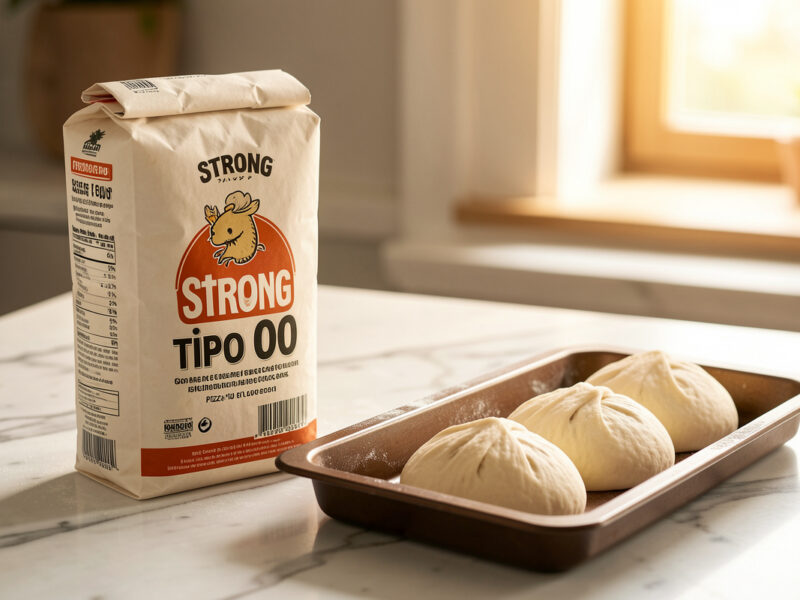
Because whole wheat weakens structure, the flour you blend it with should be strong — a good bread flour or a strong 00 at 12.5–13.5% protein — I reach for King Arthur bread flour or Caputo Cuoco — gives the gluten reserve to carry the bran load. Pairing whole wheat with a weak all-purpose base compounds the structural problem and gives you a sad, dense disc. Strength in the base is what buys you the freedom to add whole-grain flavor.
One more option worth knowing: white whole wheat. It is a true whole-grain flour milled from a paler hard white wheat variety rather than red wheat, so it keeps the bran and germ (and the fiber and nutrition) but carries a milder, sweeter, less tannic flavor and a lighter color. For people who find standard whole wheat too assertive, a blend using white whole wheat is an easy win — same handling rules, gentler taste. I keep both on hand and choose by how forward I want the whole-grain note to be. As an Amazon Associate I earn from qualifying purchases. If your shop is limited, a quick search for white whole wheat flour turns up the milder style.
Tip 5: Store it cold and use it fresh
Because the germ oil in whole wheat goes rancid, freshness matters more than with white flour. Stale whole wheat tastes bitter and flat and behaves more slack, undoing your careful ratios. I store whole wheat flour in a sealed bag in the freezer and bring it to room temperature before mixing — cold flour drags down dough temperature and slows the ferment, which throws off the schedule. Buy it in quantities you will use within a couple of months rather than a giant sack that sits going stale, and date the bag when you open it. Fresh whole wheat is sweet and toasty; old whole wheat is the reason a lot of people think they dislike whole-grain pizza. For the wider dough method around these tips, the complete dough guide and the 00 vs bread flour comparison are the natural next reads.
Troubleshooting a gummy or dense whole wheat crust
When a whole wheat pizza comes out gummy in the center or unpleasantly dense, the cause is almost always one of three things, and they are all fixable. The first is under-baking: a whole-grain crust is darker to begin with, so it is easy to pull it thinking it is done when the center is still raw. Trust time and the underside, not just the top color — a whole wheat base usually wants a slightly longer bake than its white equivalent. The second is too much whole wheat for too weak a base, which gives a crust with no structure to set against; drop the ratio or strengthen the base flour.
The third is skipped hydration and rest. A whole wheat dough that was mixed dry and shaped immediately never gave the bran a chance to soften, so it bakes tight and heavy with a tearing rim. Add the extra water, give it the autolyse and a cold ferment, and the same flour blend transforms. In my experience nearly every “I hate whole wheat pizza” verdict traces back to one of these, not to the grain itself. Fix the bake time, the ratio, and the rest, and a whole-grain crust becomes genuinely good rather than a virtuous compromise. The troubleshooting guide covers the wider set of crust faults if yours has other symptoms.
Frequently Asked Questions
Can you make pizza dough with 100% whole wheat flour?
You can, but it bakes dense and tears easily because the bran cuts the gluten strands and limits structure. For a crust that still stretches and holds a rim, keep whole wheat to 20-30% of the flour over a strong white base. Push to 40% only for hearty pan styles.
How much whole wheat flour should I use in pizza dough?
Use 20-30% of the total flour for an everyday whole-grain pizza with clear flavor and good color but a crust that still stretches. Drop to 15-20% for a lighter Neapolitan-leaning rim, or push to 35-40% for a denser, chewier pan or grandma style with a strong base flour.
Why is my whole wheat pizza dough dry and tight?
Bran absorbs much more water than white flour. Add about 3-5 percentage points of extra water per 25% whole wheat, and give the dough a 45-60 minute autolyse rest so the bran fully hydrates and softens. Dough that felt right at mixing can stiffen as the bran keeps drinking water.
What is white whole wheat flour?
White whole wheat is a true whole-grain flour milled from a pale hard white wheat instead of red wheat. It keeps the bran, germ and fiber but tastes milder and sweeter with a lighter color, making it an easy swap for people who find standard whole wheat too bitter or assertive.
Does whole wheat flour need to be stored differently?
Yes. The germ oil in whole wheat goes rancid, so store it sealed in the freezer and bring it to room temperature before mixing. Buy small amounts you will use within a couple of months. Stale whole wheat tastes bitter and behaves slack, which ruins an otherwise good dough.
Keep Reading
- Best Flour for Pizza: The Complete Guide
- Stone-Ground vs Refined Flour for Pizza
- Understanding Gluten Development in Pizza Flour
- Pizza Dough Hydration Explained
- 00 Flour vs Bread Flour for Pizza

About Kenny Nyhus Fadil
A home pizza maker documenting deck temps, dough logs, and the occasional wrecked launch.