Pizza Steel Thickness: How Thick Is Worth It?

For a home oven, 6mm is the pizza steel thickness that earns its place — thick enough to deliver a fierce first bake and recover for a second, without the brutal weight and long preheat of a 10mm slab. That’s the conclusion I’ve landed on after running steels from 4mm up to 10mm against the same dough on the same evenings, and it’s not a close call once you understand what thickness actually buys you. This guide breaks down the trade-off so you stop overpaying for mass you’ll never use — or underbuying and wondering why your second pizza goes pale.
I judge every baking surface against my 6mm steel in the kitchen oven, because that’s the honest home-oven benchmark before any specialty oven enters the conversation. If you’re still deciding between steel and stone in the first place, start with the steel vs stone verdict — this guide assumes you’ve decided on steel and just need to pick the thickness.
What thickness actually controls
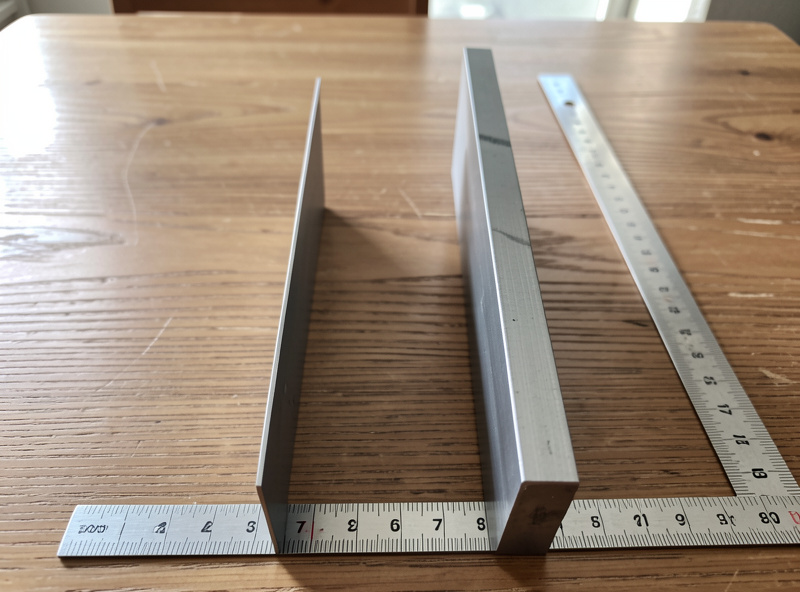
A pizza steel works by storing a reservoir of heat during preheat and dumping it into the base of your pizza on contact. Thickness controls the size of that reservoir. A thicker steel holds more total heat, so when a cold, raw pizza lands and starts pulling heat out of the surface, a thick steel barely flinches — the surface temperature recovers almost instantly because there’s a huge mass behind it feeding the surface. A thin steel has a smaller reservoir, so the same pizza pulls the surface temperature down further and the steel takes longer to climb back.
This shows up most clearly in back-to-back bakes. The first pizza is roughly similar on a 4mm and a 6mm steel because both start fully heat-soaked. The difference appears on pizza two and three: the thinner steel has spent its reservoir and the bases go progressively paler, while the thicker steel keeps delivering. If you bake one pizza at a time with long gaps, thickness matters less. If you’re feeding a table and launching every few minutes, thickness is the whole game.
Steel thickness, tier by tier
Here’s how the common thicknesses shake out in a real home oven, from my own bench.
| Thickness | Heat reservoir | Preheat | Weight | Best for |
|---|---|---|---|---|
| 3–4mm | Small — fades by pizza two | Fast (~30 min) | Manageable | One-pizza-at-a-time, tight budget, weak oven racks |
| 6mm | The sweet spot — recovers for a second and third | Moderate (~45 min) | Heavy but liftable | Most home bakers; the default recommendation |
| 8mm | Large — strong recovery across a session | Long (~60 min) | Very heavy | Frequent multi-pizza sessions, big oven |
| 10mm+ | Huge — overkill for home use | Very long (60–90 min) | Awkwardly heavy | Niche; rarely worth it at home |
The pattern is a clear curve of diminishing returns. Going from 4mm to 6mm is a genuine upgrade you’ll feel on every multi-pizza night. Going from 6mm to 8mm is a real but smaller gain that costs you preheat time and a sore back. Going past 8mm buys you almost nothing a home cook will notice while making the steel a genuine hazard to lift in and out of a hot oven.
The case against going too thin
It’s tempting to buy a 3 or 4mm steel to save money and your wrists. For a single pizza, it genuinely works — fully heat-soaked, a thin steel delivers a great first bake. The problem is recovery. By the second pizza the surface has cooled meaningfully, and by the third you’re getting pale, under-baked bottoms that no broiler can fix because the issue is base heat, not top heat. If the bottoms still go pale on a properly preheated steel, the culprit is often the dough itself — an under-developed cold-fermented dough browns flat no matter how hot the surface. If you only ever make one pizza, thin is fine. If you make pizza for more than yourself, the frustration of watching bakes degrade through the evening is exactly what 6mm solves.
The case against going too thick
The thick-steel temptation is the opposite mistake: “more mass is always better, so buy 10mm.” Three problems. First, preheat — a 10mm slab can want 60–90 minutes to fully heat-soak, and a steel that’s hot on the surface but cold in its core behaves like a much thinner steel until that core catches up, so an impatient launch wastes the mass entirely. Second, weight — you have to lift this thing, hot, every time you clean the oven or store it, and a 10mm full-size steel is a genuine two-hands-and-careful job. Third, cost — you’re paying a steep premium for a recovery benefit you’ll only ever see if you’re baking five-plus pizzas a session. For the overwhelming majority of home cooks, that’s money and effort spent on capability that sits idle.
Material matters less than you’d think
People ask about steel grade and whether to get a “pizza steel” versus a plain mild-steel plate from a metal supplier. Honestly, for thermal performance a plain mild-steel plate of the same thickness behaves the same — it’s the mass and the conductivity of steel doing the work, and the grade barely moves either. What you’re paying for with a branded pizza steel is the finish (deburred edges, sometimes a pre-seasoned coating, food-safe assurance) and not having to source and clean raw stock yourself. If you’re handy and have a metal supplier, a 6mm A36 plate cut to fit your oven is the budget path; just deburr the edges and season it. If you’d rather not deal with that, a finished pizza steel is a reasonable convenience purchase.
As an Amazon Associate I earn from qualifying purchases. The links below are search links to the gear category, not specific listings.
If you’re buying finished rather than sourcing raw plate, a 6mm pizza steel baking plate is the size and thickness I’d point most people to. And whatever thickness you choose, the single tool that tells you whether it’s actually ready to bake is an infrared thermometer gun — because a steel that’s hot on top but cold in the core is the most common reason a “good” steel disappoints.
Thickness and preheat are a package deal
Here’s the trap I see ruin thick-steel purchases: people buy 8 or 10mm for the recovery benefit, then preheat it for the same 30 minutes they used to give a thin steel, and conclude the expensive slab “isn’t any better.” It isn’t better — yet — because thickness and preheat time scale together. The whole advantage of a thick steel is the heat stored in its core, and that core takes proportionally longer to come up to temperature. A thick steel run on a short preheat is functionally a thin steel with a hot skin and a cold heart; the first pizza pulls the surface temperature down and the cold core can’t feed it back fast enough because the core never got hot in the first place.
So if you do go thicker, commit to the longer preheat or you’ve wasted the money. This is exactly why I lean people toward 6mm: it’s the thickest steel most people will actually preheat properly. A 6mm slab is fully soaked in about 45 minutes, which is a wait people will tolerate; a 10mm slab wants an hour-plus, which is a wait people skip — and a skipped preheat turns the thickest steel into a disappointment.
The handling and storage reality
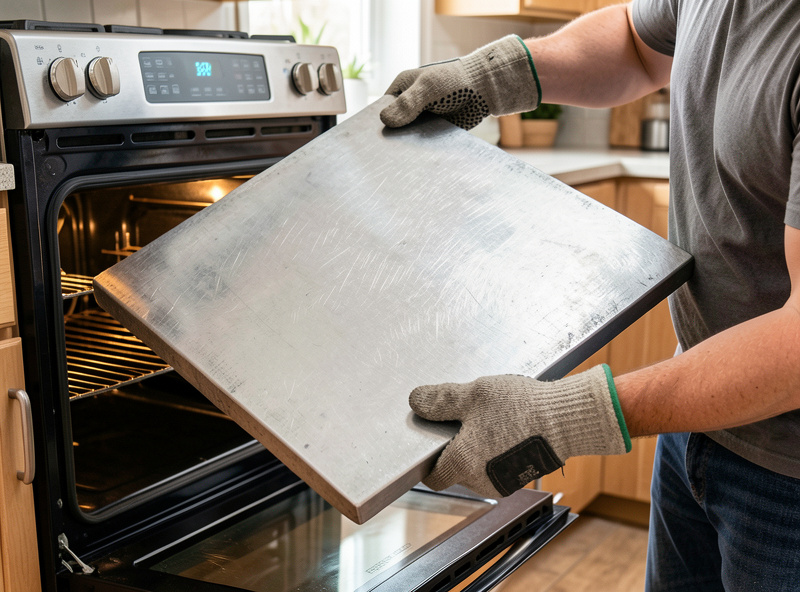
Thickness isn’t only a thermal decision — it’s an ergonomics decision you’ll live with for years. Every time you clean your oven, you have to get the steel out, and a full-size 8–10mm steel is genuinely heavy and often still warm. Storage is the other piece: a thick steel takes up real space and is awkward to slot anywhere, so most people just leave it in the oven permanently, which means it’s heat-soaking dead weight every time you bake anything else and slowing your oven’s general preheat. A 6mm steel left in the oven full-time is a milder version of the same compromise; a 4mm is the easiest to pull out and store between pizza nights. Factor in how you’ll actually store and handle it, because that’s the part the spec sheets never mention.
How to size it to your oven
Thickness aside, get the largest footprint that leaves a few centimeters of air gap around the edges for convection — you want the biggest baking surface your oven can take without blocking airflow completely. A steel that’s too small limits your pizza size; one that’s wall-to-wall chokes the oven’s circulation. Measure your rack, subtract a couple of centimeters per side, and buy to that. The thickness conversation only matters once the footprint fits.
Frequently asked questions
Is 6mm or 10mm pizza steel better?
For home use, 6mm. A 10mm steel stores more heat but needs a 60-90 minute preheat, weighs enough to be a hazard to lift hot, and only pays off if you bake five or more pizzas per session. 6mm recovers well for two or three pizzas and is far easier to live with.
Is a thin pizza steel worth it?
For a single pizza, yes – a 4mm steel fully heat-soaked delivers a great first bake. The limitation is recovery: by the second or third pizza the surface cools and bases go pale. If you only ever make one pizza at a time, thin is fine and saves weight.
Can I use a plain steel plate instead of a pizza steel?
Yes. A mild-steel plate of the same thickness performs the same thermally – the mass does the work, not the grade. You pay a branded pizza steel for deburred edges, finish, and convenience. If you source raw plate, deburr the edges and season it like cast iron.
How long does a 6mm pizza steel take to preheat?
Around 45 minutes to fully heat-soak in a home oven, not just the 20 minutes people often give it. The surface gets hot quickly, but the core needs longer – check the surface with an IR thermometer rather than trusting the oven dial.
Does a thicker steel make better pizza?
Not for the first pizza – a fully heat-soaked 4mm and 6mm steel bake nearly identically. Thickness only helps recovery for back-to-back bakes. Beyond about 8mm the returns vanish for home use while the weight and preheat penalties grow.
Keep building
- Pizza steel vs stone: the home-oven verdict
- The complete pizza dough guide
- My 48-hour cold ferment schedule
More from This Cluster
- “Home Oven Max Temp Workarounds for Better Pizza”
- “Pizza Stone and Steel Care: Cleaning
- “Pizza on the Grill With a Stone: What Actually Works”
- “Preheat Time: Steel vs Stone (and Why the Gap Matters)”
- “The Broiler Method: Real Neapolitan-ish Pizza in a Home Oven”
- “Pizza Steel vs Stone: The Honest Home-Oven Verdict”

About Kenny Nyhus Fadil
A home pizza maker documenting deck temps, dough logs, and the occasional wrecked launch.
Keep Baking
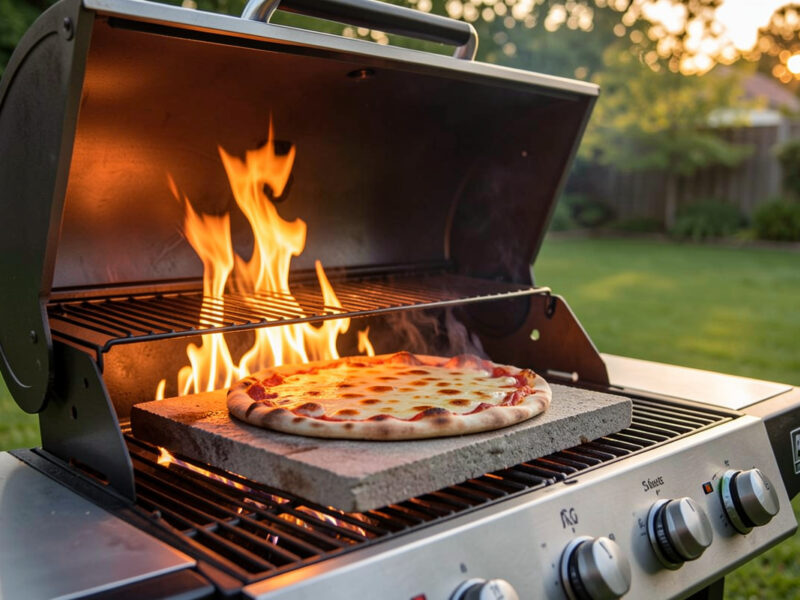
Pizza on the Grill With a Stone: What Actually Works
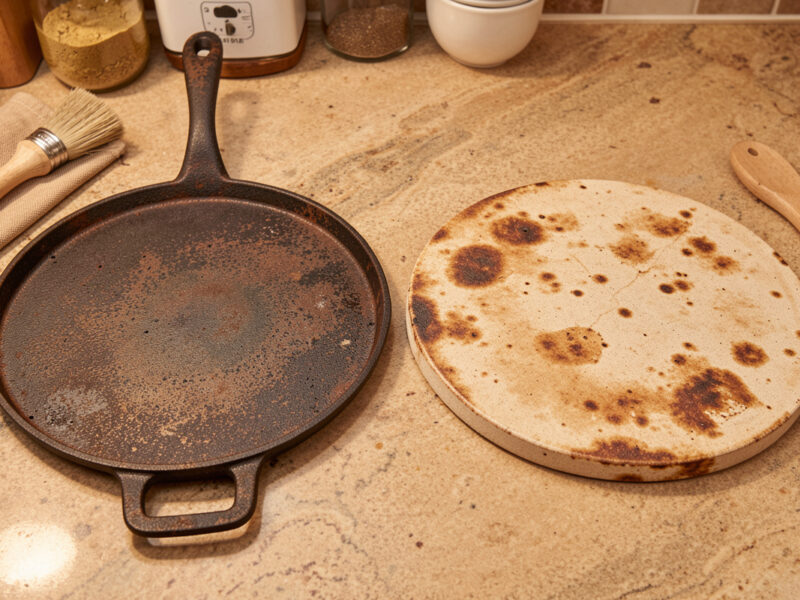
Pizza Stone and Steel Care: Cleaning, Seasoning, and Cracks