Pizza Oven for Cold Climate: The Nordic Reality

For a pizza oven in a cold climate, heat retention and recovery matter far more than peak temperature. A thin portable that hits 450°C in summer can stall 50-80°C lower in a -5°C wind, because the body sheds heat fast and propane vapor pressure drops as the tank chills. Mass, a small door, and wind shielding beat raw output once the temperature falls — and an indoor electric sidesteps the problem entirely.
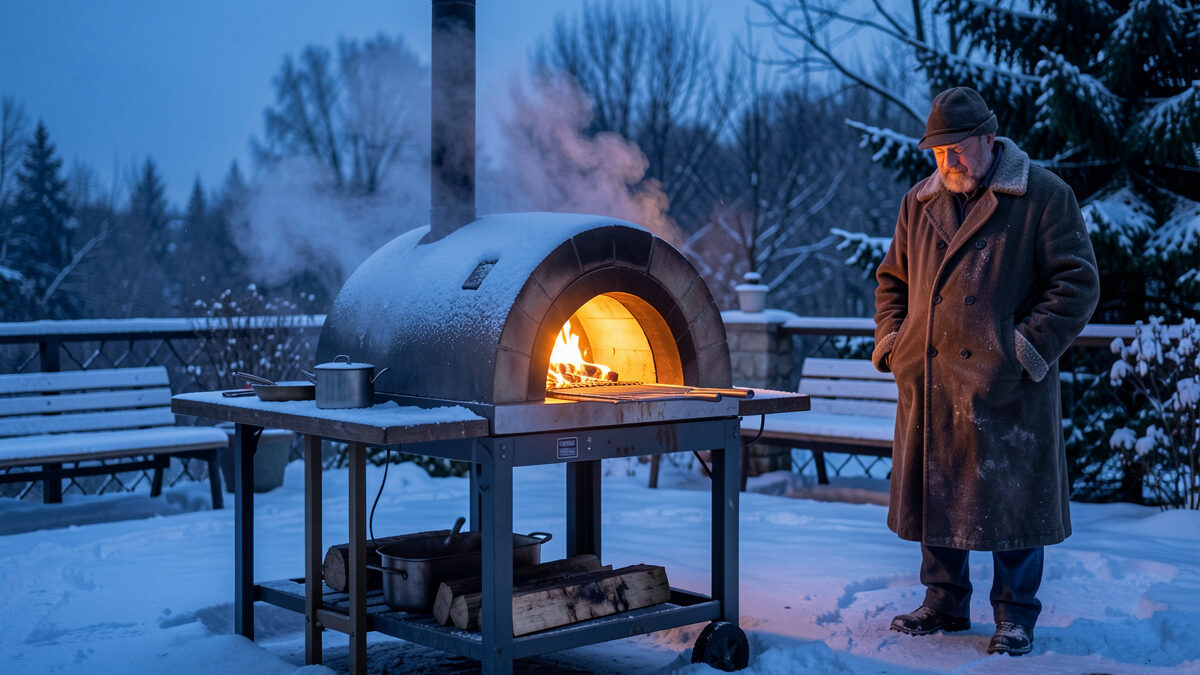
I bake outdoors through Swedish winters, which is where the spec sheets fall apart and you learn what an oven’s heat retention is actually made of. A number printed on a box in a warm warehouse means nothing when there is a breeze at -5°C and an open door dumping your stone temperature. Here is what cold-climate baking actually demands, and how to choose an oven that survives it.
What Makes a Pizza Oven Good for Cold Weather?
A cold-weather pizza oven needs thermal mass to store heat, a small door to limit heat loss on launch, and good recovery so the stone climbs back fast after a cold pizza drops on it. Insulation and wind protection matter more than the headline temperature, because in the cold the oven is fighting to hold heat, not to reach a peak.
The physics is unforgiving outdoors in winter. Every time you open the door to launch, cold air rushes in and the stone surface temperature plummets — in summer it recovers in a minute, in a -5°C wind it may not recover before you need to launch the next pizza. Mass is the answer: a heavy dome stores enough energy to ride out those door openings, while a thin-walled portable empties its heat reservoir quickly. A small mouth helps too, losing less heat per launch. This is the same thermal logic as any heat-soak project — a pizza oven is a kiln you eat from, and in winter the kiln’s thermal mass is everything.
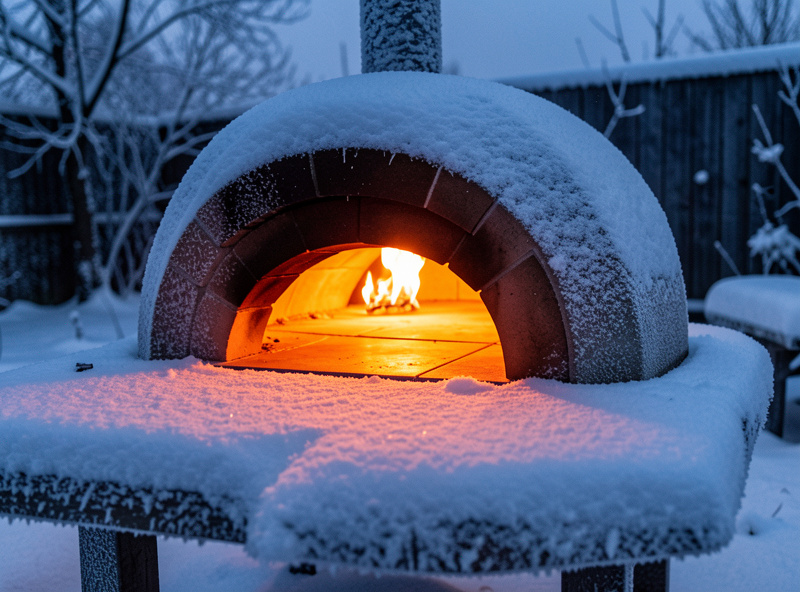
How Cold Weather Affects Propane Pizza Ovens
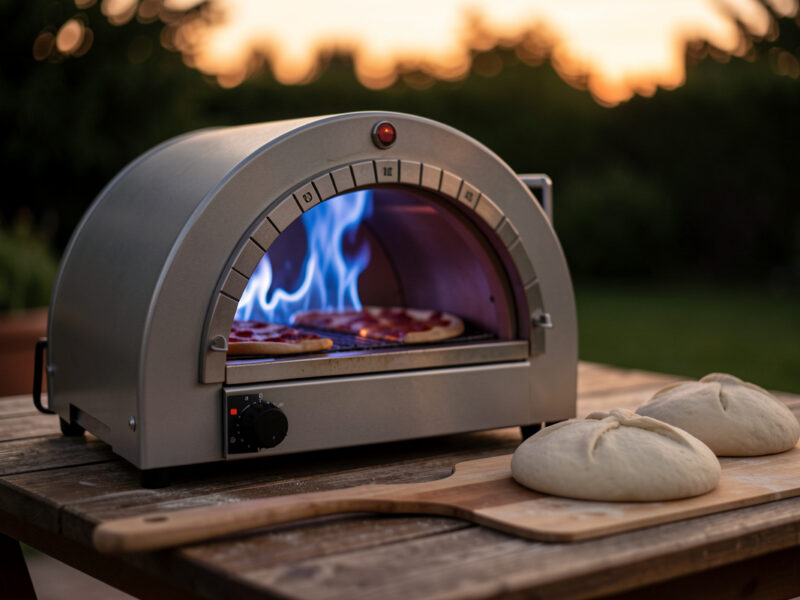
Cold weather hits propane ovens twice: the body radiates heat away faster, and propane vapor pressure drops as the tank chills, so below about 0°C the burner runs lean and cannot hold full output. A half-empty tank in a freezing wind will starve the flame mid-session, leaving you baking on a stalled, under-temperature stone.
This is the failure mode that catches people out, and I learned it the hard way on a cold evening when the flame visibly weakened halfway through a session. Propane needs to vaporize to burn, and that vaporization slows dramatically as the liquid in the tank gets cold — a nearly empty tank has less liquid surface area and chills faster, compounding the problem. My fixes: run the fullest tank I have, keep it out of the wind and ideally not sitting on frozen ground, and accept a longer heat soak than the summer number. An IR gun stops being optional in winter because the stone temperature you would assume from the clock is simply wrong. The same cold also stiffens dough, so I let my cold-fermented dough balls warm toward room temperature before launching.
Which Oven Class Wins in the Cold?
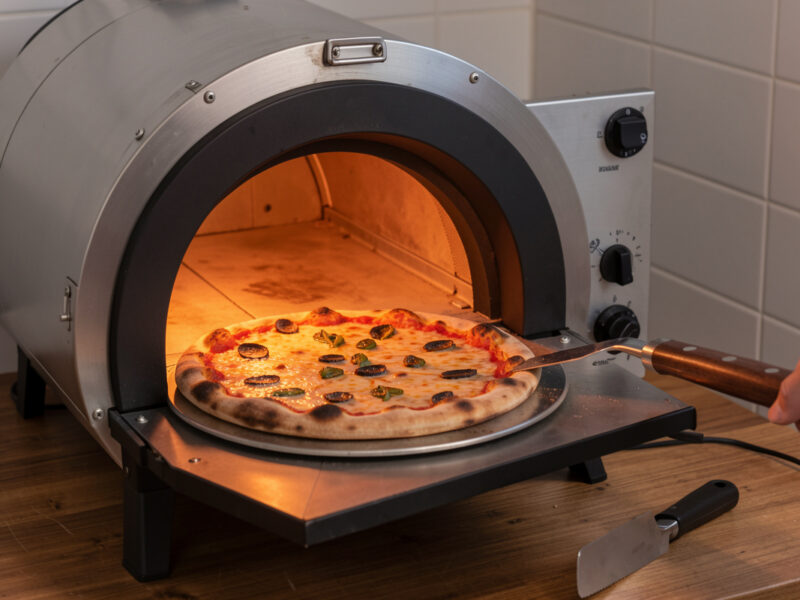
For pure cold-weather outdoor baking, a heavy dome oven with real mass wins over a thin portable, because it holds heat through door openings and wind. But the class that truly wins a Nordic climate is the indoor electric — it does not care about wind, cold, or propane at all, and it bakes every week of the year.
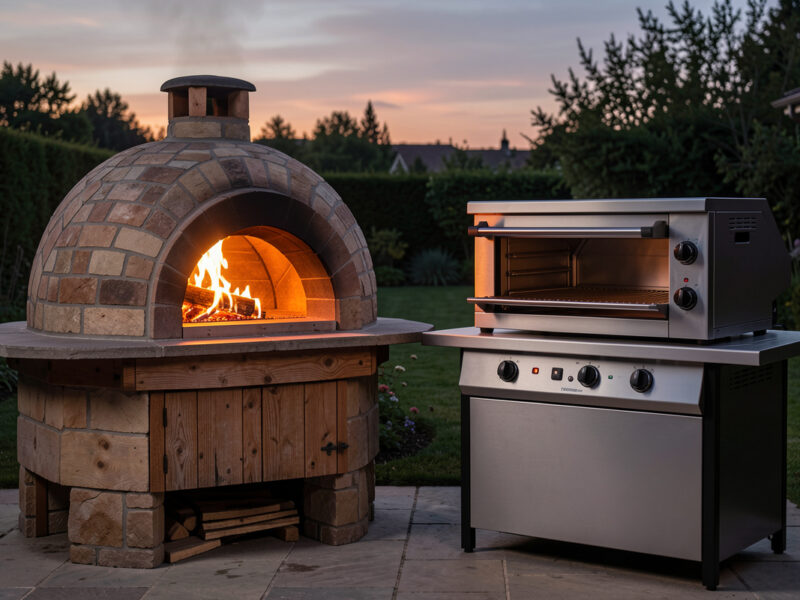
Ranked honestly for cold use: the indoor electric is first because it removes the weather entirely; the heavy dual-fuel dome is second because mass beats wind outdoors; the thin portable gas oven like the Ooni Koda 16 is usable down to about freezing but struggles below, and is last for genuine winter baking. None of this means a portable is a bad oven — mine is brilliant nine months of the year. It just means that if your baking season is mostly November to March, you should weight the decision toward mass or, better, toward an electric you can run from a warm kitchen. The full class-by-class logic is in the pizza oven buying guide.
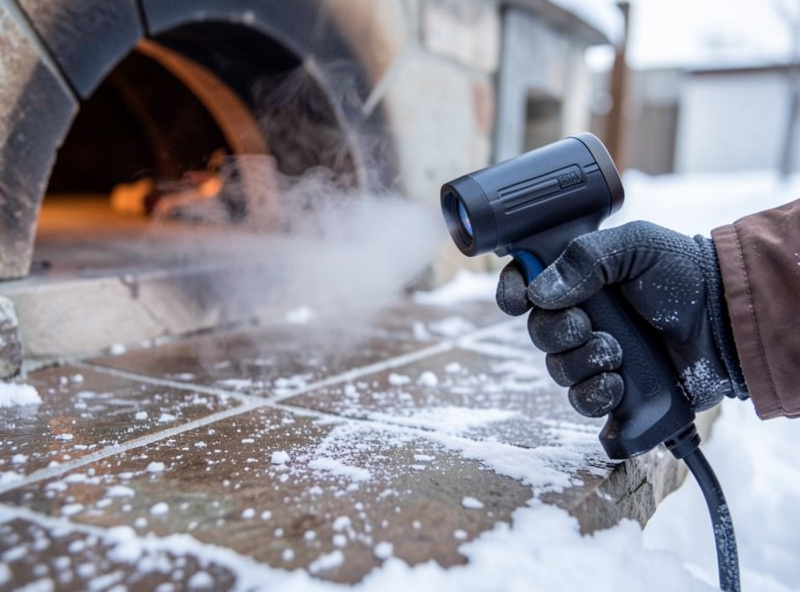
Cold-Weather Baking Technique That Actually Works
The winning cold-weather routine is: full propane tank kept out of the wind, oven mouth angled away from the breeze, a longer heat soak than summer, and an IR gun to confirm the real stone temperature before every launch. Warm your dough toward room temperature, work fast at the door, and give the stone extra recovery time between pizzas.
These habits compound. I position the oven so the prevailing wind hits the back, not the open mouth, because a draft straight into the chamber is the fastest way to lose heat. I keep the door closed except for the actual launch and turn, minimizing the time cold air pours in. I build in more recovery between pizzas than I would in July, watching the stone climb back on the IR gun rather than launching onto a cooled patch. And I batch my launches so I am not standing with the door open deciding what to do next. None of this is exotic — it is just respecting that in the cold, every open-door second costs you, and the oven needs help holding what it has built. Get the routine right and you can bake genuinely good pizza outdoors in real winter; ignore it and you will fight a stalled stone all night.
Frequently Asked Questions
What kind of pizza oven is best for cold climates?
An indoor electric is best for cold climates because it ignores weather entirely and bakes year-round from the kitchen. For outdoor cold-weather baking, a heavy dome oven with real thermal mass beats a thin portable because it holds heat through door openings and wind.
Can you use a pizza oven in winter?
Yes, with adjustments. Use a full propane tank kept out of the wind, angle the oven mouth away from the breeze, allow a longer heat soak, and confirm the real stone temperature with an IR gun. Thin portable gas ovens work down to about freezing but struggle below.
Why does my gas pizza oven not get hot enough in the cold?
Two reasons: the body radiates heat away faster in cold air, and propane vapor pressure drops as the tank chills, so the burner runs lean below about 0C. A nearly empty tank in a freezing wind makes it worse. Use the fullest tank you have, kept out of the wind.
Does thermal mass matter for cold-weather pizza ovens?
It matters more than peak temperature. Mass stores enough heat to ride out the stone-temperature drops that happen every time you open the door in the cold. A heavy dome recovers through door openings and wind where a thin portable empties its heat reservoir quickly.
How do you keep heat in a pizza oven when it is cold outside?
Keep the door closed except to launch and turn, angle the mouth away from the wind, run a full propane tank, and give the stone extra recovery time between pizzas. Working fast at the door and batching launches limits how much cold air enters the chamber.
Related Guides
- How to Choose a Pizza Oven: The Complete Buying Guide
- Is an Indoor Electric Pizza Oven Worth It?
- Ooni Koda 16: A Long-Term Review
- Cold Ferment Pizza Dough: The 48-Hour Method
More from This Cluster
- “What Size Pizza Oven Should You Actually Buy?”
- “Used Pizza Oven Checklist: What to Inspect”
- “Is an Indoor Electric Pizza Oven Worth It?”
- “Gas vs Wood Pizza Oven: The Honest Difference”
- “Ooni Koda 16 Review: A Long-Term Verdict”
- “How to Choose a Pizza Oven: The Complete Buying Guide”

About Kenny Nyhus Fadil
A home pizza maker documenting deck temps, dough logs, and the occasional wrecked launch.