Same-Day vs Overnight Pizza Dough: Which to Make

Same-day versus overnight pizza dough comes down to one honest trade-off: time for flavor. A same-day dough rises in a few warm hours and gets you pizza tonight; an overnight (or longer) cold-fermented dough takes planning but rewards you with noticeably better flavor, browning, and a lighter, more digestible crust. Neither is wrong — they’re tools for different evenings. The mistake is thinking they’re interchangeable, because they genuinely taste different, and knowing which to make when is one of the most useful judgments in home pizza.
I make both, depending on whether I planned ahead or decided on pizza at 4pm. Having run them side by side many times — same recipe, one rushed warm and one fermented cold — I can tell you the difference is real and consistent. Here’s the honest comparison, what each one is good for, and how to decide. It builds on the fundamentals in the complete pizza dough guide.
What Same-Day Dough Is
Same-day dough is mixed and fermented at warm room temperature over roughly 4 to 8 hours, using more yeast to drive a faster rise so you can bake the same day you mix. It’s convenient and reliable, but the short, warm ferment produces a milder, more bread-like flavor and a slightly tighter crumb.
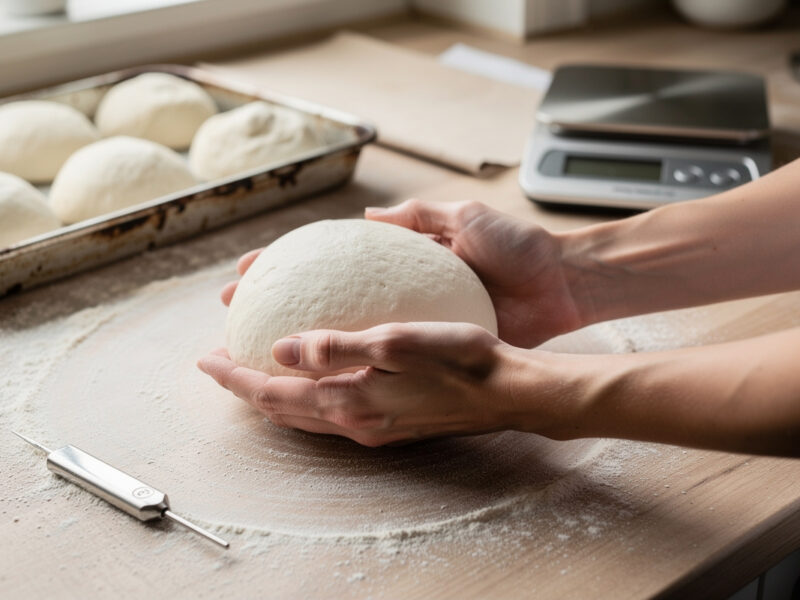
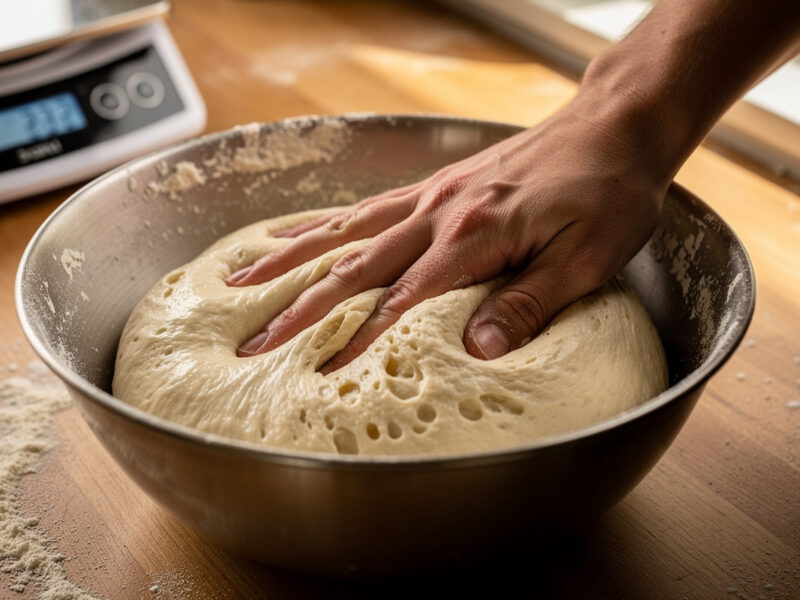
This is the dough for spontaneity. Mix in the early afternoon, let it bulk-rise warm, ball it, give the balls a short proof, and you’re baking by dinner. Because there’s no time for slow flavor development, you use more yeast to get the rise you need in a few hours. The result is perfectly good pizza — let me be clear, a same-day dough makes a genuinely enjoyable pie — it just doesn’t have the aromatic depth or the open, blistered crumb that time builds. Think of it as the weeknight option: fast, forgiving, and on the table tonight. If you forgot to plan ahead, same-day dough is what saves the evening, and it’s far better than no homemade pizza at all. One thing that doesn’t change between same-day and cold-ferment: the preheat time your steel or stone needs before the first launch — the preheat time guide covers how long each surface actually needs and whether rushing that part costs you a bake.
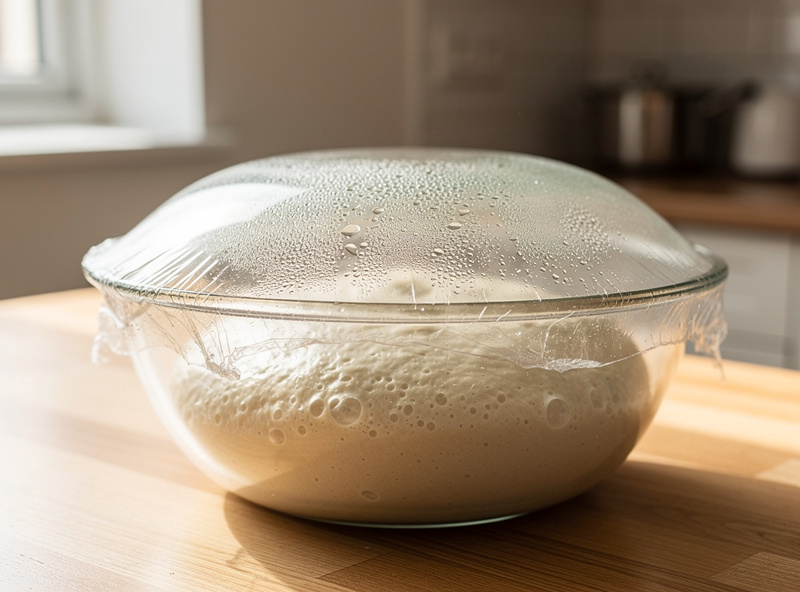
What Overnight and Cold-Fermented Dough Is
Overnight dough rests in the fridge for 24 to 72 hours on very little yeast, letting a slow, cold fermentation develop deep flavor, better browning, and a lighter, more digestible crust. It needs planning a day or more ahead, but it’s the better-tasting dough by a clear margin.
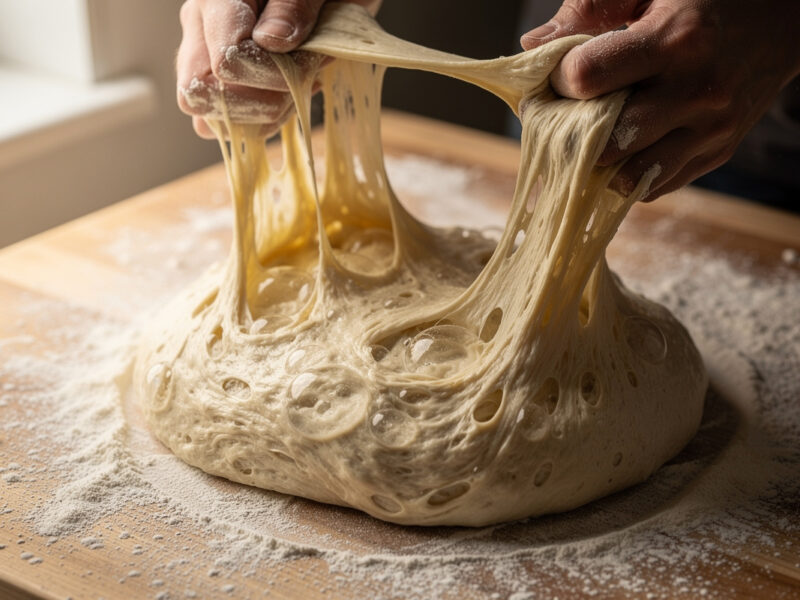
This is the dough you make when pizza is the plan, not the impulse. The long, cold ferment slows the yeast right down while the flour’s enzymes keep breaking starches into sugars — building complex, slightly tangy flavor and leaving residual sugar that browns and leopards beautifully under heat. The crumb comes out lighter and more open, and many people find the longer-fermented crust easier to digest. The catch is purely logistical: you have to think ahead, because the dough needs its time in the fridge. My standing default for any pizza I care about is a cold ferment for exactly this reason — the flavor payoff is large and the only cost is planning — though when it comes to baking night, even perfectly fermented dough needs the right oven conditions; the home oven max temp workarounds covers how to squeeze more heat out of a domestic oven when you don’t have a dedicated pizza oven. The full schedule is in the 48-hour cold ferment guide.
Same-Day vs Overnight: Side by Side
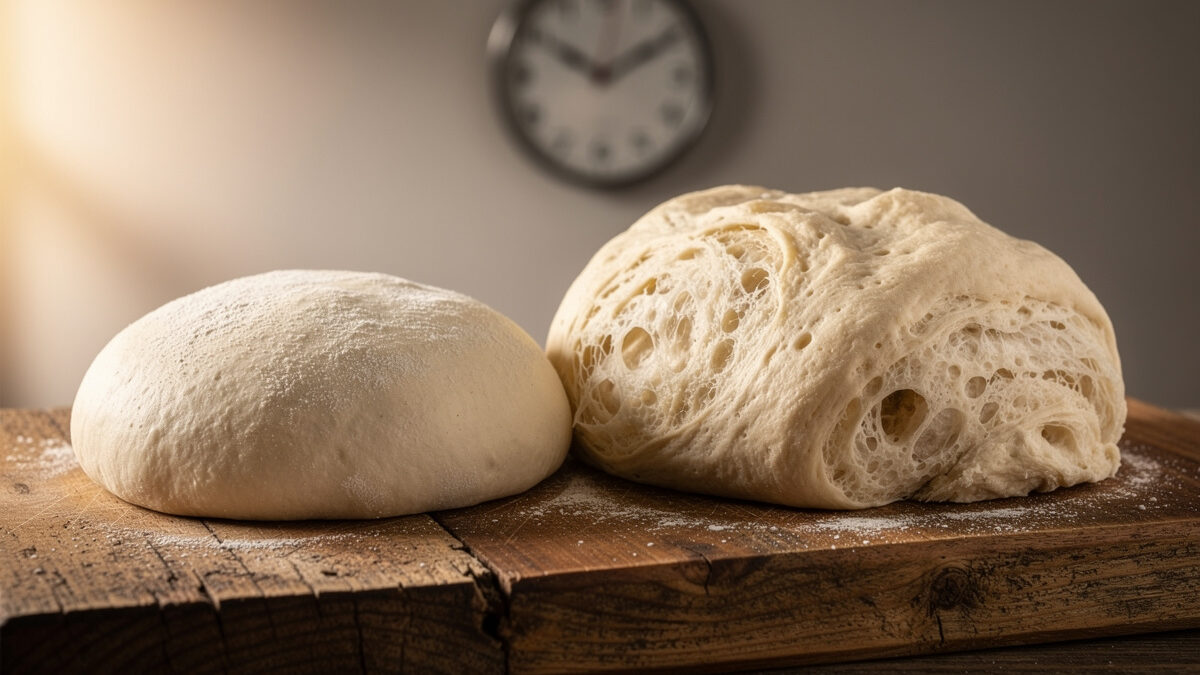
Here’s how the two stack up across the things that actually decide which one you should make tonight. The headline: same-day wins on convenience, overnight wins on everything to do with the final pizza.
| Factor | Same-Day Dough | Overnight / Cold Ferment |
|---|---|---|
| Total time | 4–8 hours | 24–72 hours |
| Planning needed | None — decide today | A day or more ahead |
| Yeast amount | More | Very little |
| Flavor | Mild, bread-like | Complex, tangy depth |
| Crumb | Tighter | Lighter, more open |
| Browning / leoparding | Less | Better (residual sugar) |
| Digestibility | Standard | Often easier |
| Best for | Weeknight, last-minute | When you can plan ahead |
Why Time Changes the Flavor So Much
The flavor difference comes from fermentation chemistry: over a long cold rest, enzymes convert starches into sugars and the slow ferment produces acids and aromatic compounds, while a fast warm rise never has time to develop any of these. More time equals more flavor, and there’s no shortcut around it.
This is worth understanding because it explains why you can’t just “add flavor” to a same-day dough. The depth in a long-fermented crust is the accumulated product of hours of slow enzymatic and microbial activity — it’s built, not added. The extra sugars produced also feed better browning, which is why a cold-fermented pizza leopards and a rushed one stays pale. It’s genuinely the same principle behind so much of fermentation: time and the right conditions do work that no ingredient can replace. That’s why, across this whole site, the single cheapest upgrade I keep pointing people toward isn’t a better oven or fancier flour — it’s a colder, longer ferment. It costs nothing but a day of patience.
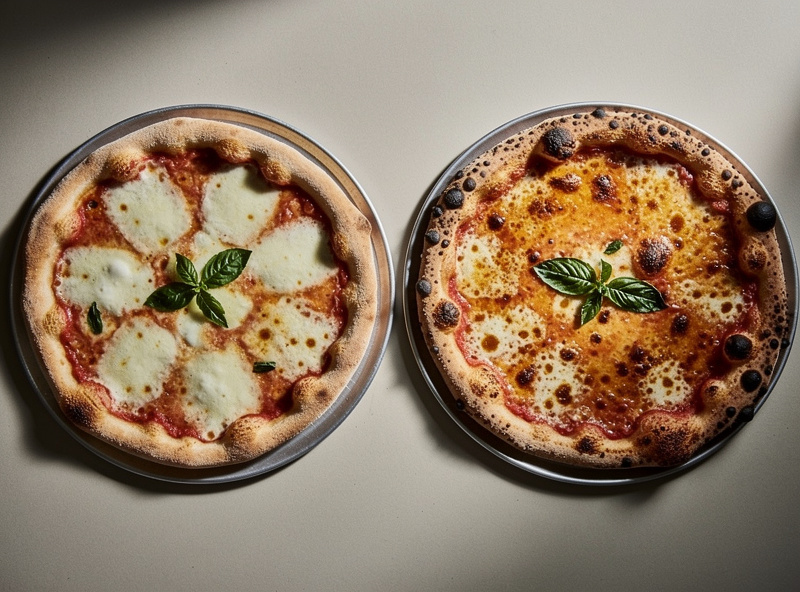
How to Decide Which to Make
Make overnight dough whenever you can plan a day ahead — it’s the better pizza and the planning is the only cost. Make same-day dough when pizza is a spontaneous decision and you don’t have a fermented dough waiting. The smart move is to keep cold-fermented dough on hand by default so you rarely need the same-day version.
My practical system is to make a batch of cold-ferment dough on the weekend, bake what I want, and keep the rest in the fridge so there’s always good dough ready for a few days. That way “pizza tonight” almost always means reaching for a properly fermented ball, not rushing a same-day dough. But life happens, plans change, and the same-day dough is a genuinely useful fallback — there’s no shame in it, and it beats delivery or skipping pizza entirely. The only real error is making a same-day dough, being underwhelmed, and concluding that homemade pizza “isn’t worth it.” It is — you just hadn’t given the dough its time yet. Try the overnight version once and the difference will sell itself.
Can You Get the Best of Both?
Yes — the closest thing to a shortcut is an overnight cold ferment that only needs about 24 hours, which still delivers most of the flavor benefit with just one day of planning. And keeping cold-fermented dough stocked means you effectively always have “same-day convenience” with overnight quality.
A 24-hour cold ferment is the sweet spot for people who want better dough without a multi-day commitment: mix today, bake tomorrow, get most of the flavor of a longer ferment. It’s a small habit change — think one day ahead instead of zero — for a big jump in quality. And once you get used to keeping a tray of cold-fermented balls in the fridge, the whole same-day-versus-overnight question mostly dissolves, because you’ve always got good dough on hand. The dough is ready when you are. For storing those balls right through their fridge life, see the dough ball storage guide, and to set the hydration for either schedule, the hydration guide walks it through.
Frequently Asked Questions
Is overnight pizza dough better than same-day?
Yes, overnight cold-fermented dough tastes noticeably better, with more complex flavor, better browning, and a lighter, more digestible crust. Same-day dough is milder and more bread-like. The only advantage of same-day is convenience when you cannot plan a day ahead.
How long does same-day pizza dough take?
Same-day dough is mixed and fermented at warm room temperature over about 4 to 8 hours using more yeast for a faster rise. That gets you pizza the same day you mix, but the short warm ferment produces a milder flavor and tighter crumb than a long cold ferment.
Can I cold ferment dough for just one night?
Yes. A 24-hour cold ferment is the sweet spot for getting most of the flavor benefit with only one day of planning. Mix today, ferment in the fridge overnight, and bake tomorrow for a clear improvement over same-day dough with minimal extra effort.
Why does my same-day dough taste bland?
Because a fast warm ferment has no time to develop flavor. The complex, tangy taste of good pizza dough comes from a long, slow fermentation that builds acids and aromatic compounds. For more flavor, switch to an overnight cold ferment; there is no shortcut around time.
How much yeast for overnight vs same-day dough?
Same-day dough uses more yeast to rise in a few hours, while overnight cold-fermented dough uses very little, around 0.2 to 0.3% of flour weight, because it has a day or more to rise slowly. Too much yeast in a long ferment over-proofs the dough.
Related Guides
- How to Make Pizza Dough: The Complete Guide — the full process behind both schedules.
- Cold Ferment Pizza Dough — the overnight method, step by step.
- Pizza Dough Balls Storage — keep cold-fermented dough ready on demand.
- Pizza Dough Hydration Explained — setting hydration for either schedule.
More from This Cluster
- “Pizza Dough Balls: Storage
- “Pizza Dough Too Sticky? Fix It Without Adding Flour”
- “Poolish Pizza Dough: The Preferment Method”
- “00 Flour vs Bread Flour for Pizza: What Actually Matters”
- “Cold Ferment Pizza Dough: The 48-Hour Method”
- “Pizza Dough Hydration Explained (and How to Pick Yours)”
- “How to Make Pizza Dough: The Complete Guide”

About Kenny Nyhus Fadil
A home pizza maker documenting deck temps, dough logs, and the occasional wrecked launch.