Pizza Dough Too Sticky? Fix It Without Adding Flour

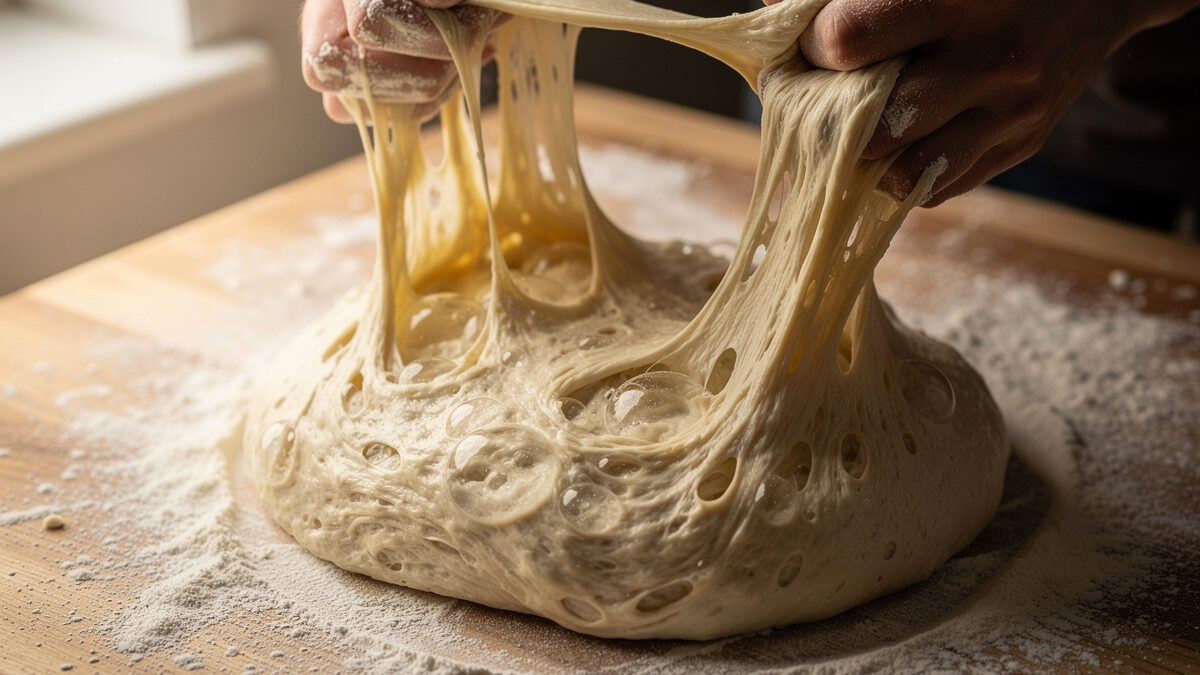
If your pizza dough is sticking to everything — your hands, the bowl, the bench, the peel — the fix is almost never “add more flour.” That’s the instinct, and it’s the instinct that quietly ruins more home pizza than any other single mistake. Sticky dough is usually telling you something specific: the gluten isn’t developed enough yet, the dough is too warm, or you’re handling it wrong. Diagnose which one it is and the stickiness resolves without you dumping in flour and turning a light crust into a dense brick.
I’ve handled sticky dough at every hydration from forgiving to genuinely wet, and over the years it became clear that stickiness is a signal, not a defect. This is how I read that signal and fix it on the bench. It’s a companion to the broader pizza dough guide and especially to the hydration guide, since hydration is where a lot of people accidentally create the problem.
Why “Just Add Flour” Is the Wrong Fix
Adding flour to sticky dough changes your hydration on the fly, raising the effective flour weight and drying out the crumb — the result is a denser, tougher, less open crust. You spent care getting your hydration right; flouring your way out of stickiness throws that away and bakes the mistake in permanently.
Here’s the thing to understand: a small amount of stickiness is normal and even desirable in a well-hydrated dough. The goal isn’t a dough that never tacks to anything — it’s a dough you can manage. When you fight tackiness with flour, you’re treating a handling situation as if it were a recipe error, and you overcorrect into dry territory. Every time you knead in extra flour because the dough felt wet, you nudged the crust toward bready and dense. The better operators I know almost never add flour past the initial mix; they change how they handle the dough instead. That mindset shift — from “make it less sticky” to “handle the sticky dough better” — is the whole game.
Cause 1: Under-Developed Gluten
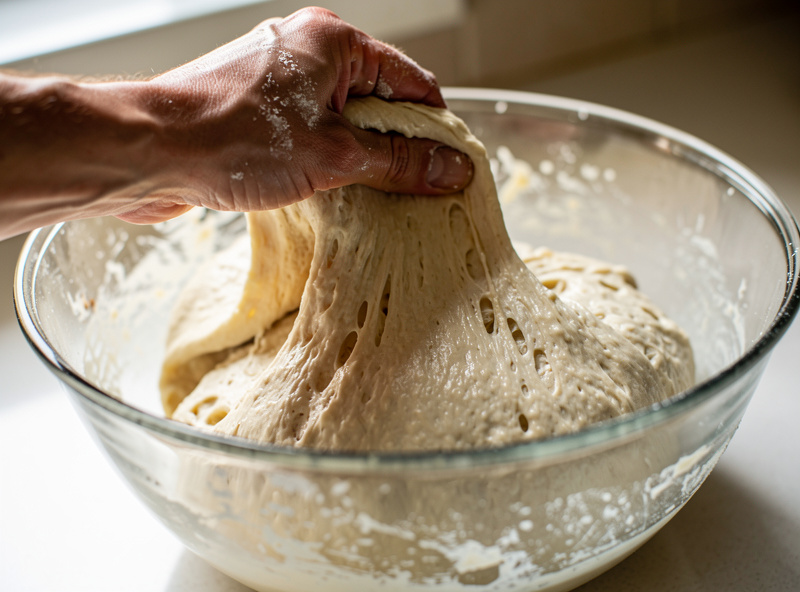
The most common cause of excessively sticky dough is under-developed gluten — the protein network hasn’t organized enough to hold the water, so the dough feels slack and tacky. The fix is more development through kneading or, better for wet doughs, a series of stretch-and-folds with rest periods in between.
Early in mixing, dough is supposed to be a sticky, shaggy mess — the flour hasn’t finished absorbing its water and the gluten hasn’t linked up. Give it time. I mix to a rough mass, rest it 20–30 minutes so the flour fully hydrates (an autolyse), then do three or four rounds of stretch-and-folds spaced 20 minutes apart. With each fold the dough gets noticeably smoother, stronger, and less sticky as the gluten organizes. By the time it passes the windowpane test — stretching thin and translucent without tearing — the stickiness has largely resolved on its own, no flour required. If your dough is sticky right after mixing and you panic-flour it, you never give the gluten the chance to do this. Patience is the tool, not the flour bag.
Cause 2: The Dough Is Too Warm
Warm dough is far stickier and harder to handle than cold dough, because warmth makes the gluten slacker and the surface tackier. If your dough turns to glue as you work it, chilling it — or starting from a cold ferment — makes it dramatically more manageable at the exact same hydration.
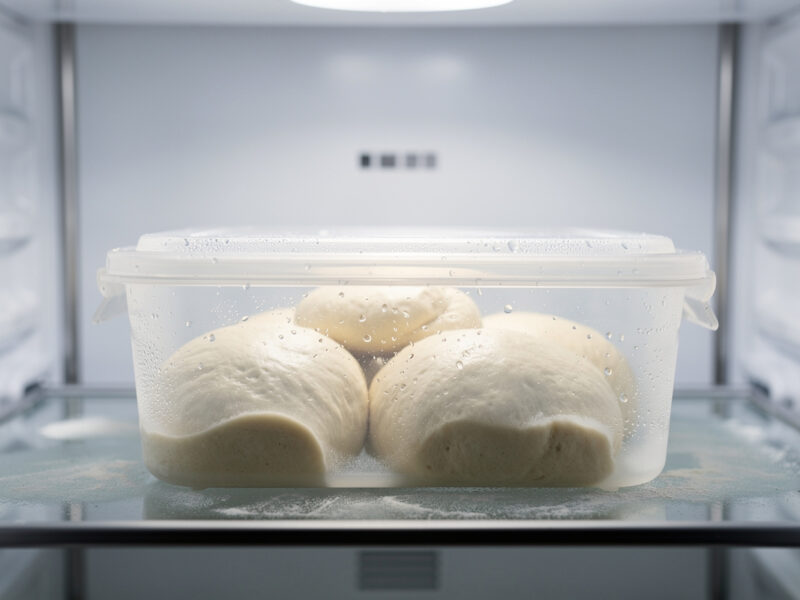
This one surprises people. The same dough that’s a sticky nightmare warm becomes firm and cooperative straight out of the fridge. Cold gluten is stiffer and less tacky, which is one of the underrated benefits of a long cold ferment: the dough you pull from the fridge handles like a lower hydration than it actually is. If you’re mixing a same-day dough and it’s fighting you, the kitchen may simply be warm, or friction from a stand mixer overheated it. Pop the bowl in the fridge for 30–60 minutes and try again — you’ll feel the difference immediately. When I shape a wet dough, I want it cool; a warm 67% dough is miserable, a cold one is a pleasure. If you ferment cold by default, you sidestep this entire problem, which is one more reason the cold ferment method is my standing default.
Cause 3: Handling and Surface Technique
A lot of “sticky dough” is really a handling problem: dry hands stick to wet dough, and an under-floured launch surface guarantees a stuck pizza. The fixes are wet hands when working wet dough, a bench knife to move and divide it, and the right dusting — semolina or flour — on your peel and bench; the same launch technique carries over directly to outdoor cooking, where knowing how to bake pizza on a grill with a stone opens up temperature ranges a home oven can’t reach.
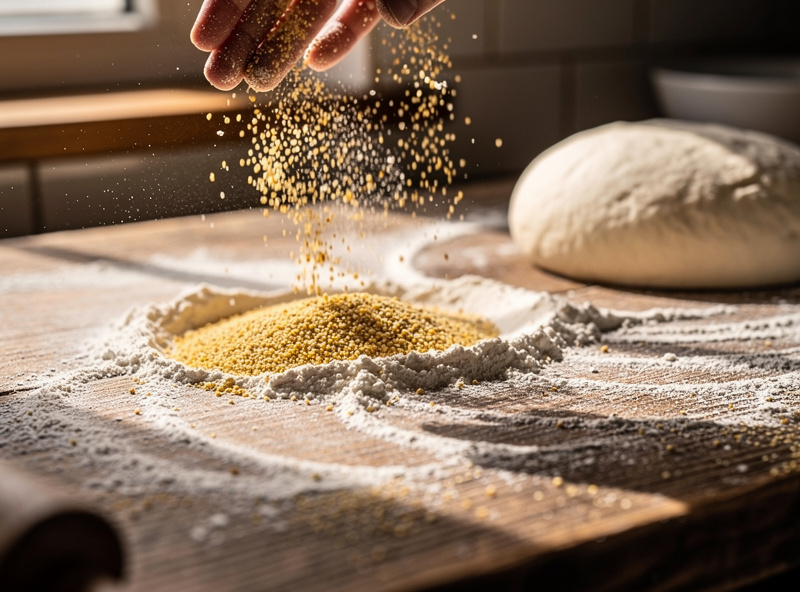
Wet dough sticks to dry hands; it slides off wet ones. When I work a high-hydration dough I keep a bowl of water nearby and wet my hands rather than flouring them — the water stops the dough grabbing without drying it. A bench knife (dough scraper) is the other essential: instead of peeling sticky dough off the counter with your fingers, you slide the knife under it and it releases cleanly. For shaping and launching, dust the bench with a little flour and use semolina or a flour blend on the peel — semolina acts like tiny ball bearings under the dough so it slides off cleanly. A stainless bench scraper is a few dollars and it transforms how sticky dough feels to work with. Most “I can’t handle this dough” complaints disappear the moment people start using wet hands and a scraper instead of fistfuls of flour.
Cause 4: Over-Fermentation
Dough that started fine but turned slack, sticky, and tearing late in its life is over-fermented — the gluten has broken down. Unlike the other causes, this one isn’t fully fixable in the moment; the prevention is less yeast, less time, or a colder ferment so the dough doesn’t run past its peak.
If your dough was manageable yesterday and is a sticky, soupy mess today, it over-proofed: the yeast kept working until the acids and enzymes degraded the gluten network that was holding everything together. You can sometimes rescue it slightly by gently re-balling and baking it sooner, but a badly over-fermented dough won’t fully recover its structure — it’ll bake flat and dense. The real fix is upstream: use less yeast for long ferments (a 48-hour cold ferment needs only a tiny pinch), keep it cold, and don’t let dough sit at warm room temperature for hours past when it’s ready. If you’re consistently over-fermenting, your yeast quantity or your timing is off, and the cold ferment schedule will get you back on track.
Cause 5: Hydration Too High for Your Setup
Sometimes the dough really is too wet — but it’s a recipe decision, not a flour-bag fix. If you chose a high hydration your oven can’t bake fast enough and your hands aren’t ready to handle, the dough will feel uncontrollably sticky no matter how well you develop it. The answer is to lower the hydration on the next batch, not to flour your way out of this one.
This is the cause people reach for first when it’s actually the rarest, because blaming the water lets you skip the harder diagnoses above. But it does happen — usually when someone copies a 72% Neapolitan recipe and runs it in a 250°C home oven with six months of handling experience. If you’ve honestly worked through gluten development, temperature, and technique and the dough is still beyond manageable, then yes, your hydration outran your setup. Drop it 2–3% next time and log the result. A dough at the right hydration for your oven and skill should feel tacky but cooperative, never like wet cement. The fix lives in the recipe you write down for next week, which is exactly why I treat hydration as a number to dial in slowly rather than a figure to copy from someone else’s much hotter kitchen.
A Quick Sticky-Dough Checklist
When the dough feels too sticky, run through these in order before you ever reach for flour. First: is it just early in mixing? Give it rest and folds. Second: is it warm? Chill it. Third: are your hands dry and your bench bare? Wet your hands, grab a scraper, dust with semolina. Fourth: did it over-ferment? Bake it sooner and fix the yeast next time. Only if none of that applies, and the dough is genuinely far wetter than your oven can handle, should you consider that your hydration was too high for your setup to begin with — and that’s a recipe decision for next batch, not a handful of flour now.
The pattern across all four causes is the same: stickiness is information. It tells you about gluten development, temperature, technique, or ferment time. Read it correctly and you fix the actual cause; reach for flour reflexively and you bury the symptom while degrading your crust. Keep a logbook, note which cause it was each time, and within a few bakes you’ll diagnose sticky dough by feel in seconds — and you’ll have stopped wrecking good dough with the flour bag.
Related Guides
- How to Make Pizza Dough: The Complete Guide — the full process and where stickiness comes from.
- Pizza Dough Hydration Explained — set a hydration your oven and hands can actually handle.
- Cold Ferment Pizza Dough — cold dough handles far better than warm.
- 00 Flour vs Bread Flour — stronger flour holds water with less stickiness.
As an Amazon Associate I earn from qualifying purchases. The tools I link are ones I use on the bench; buying through these links supports the site at no extra cost to you.
More from This Cluster
- “Same-Day vs Overnight Pizza Dough: Which to Make”
- “Pizza Dough Balls: Storage
- “Poolish Pizza Dough: The Preferment Method”
- “00 Flour vs Bread Flour for Pizza: What Actually Matters”
- “Cold Ferment Pizza Dough: The 48-Hour Method”
- “Pizza Dough Hydration Explained (and How to Pick Yours)”
- “How to Make Pizza Dough: The Complete Guide”

About Kenny Nyhus Fadil
A home pizza maker documenting deck temps, dough logs, and the occasional wrecked launch.