Pizza Dough Balls: Storage, Timing, and Freezing

How you ball and store your pizza dough decides whether it stretches like a dream or fights you and tears — and how long you have before it’s past its best. Dough balls need a tight, smooth skin, an airtight container with room to expand, and a clear sense of their timing window: how long they can sit in the fridge, when to pull them to warm up, and how to read the signs they’ve over-proofed. Get this right and your dough is a pleasure to work; get it wrong and even a perfectly fermented dough turns into a sticky, tearing mess on the bench.
This is the part of the process that quietly fixes the most “my dough won’t stretch” complaints, because the failure usually isn’t the recipe — it’s the balling, the container, or the timing — and once you have those sorted, knowing how to look after your baking surface is the next piece of the puzzle: the pizza baking surface care guide covers cleaning, seasoning, and storage for both steel and stone. Here’s exactly how I ball, store, and time my dough, drawn straight from the schedules I run. It’s a companion to the complete pizza dough guide and pairs naturally with the cold ferment method.
How to Ball Dough Properly
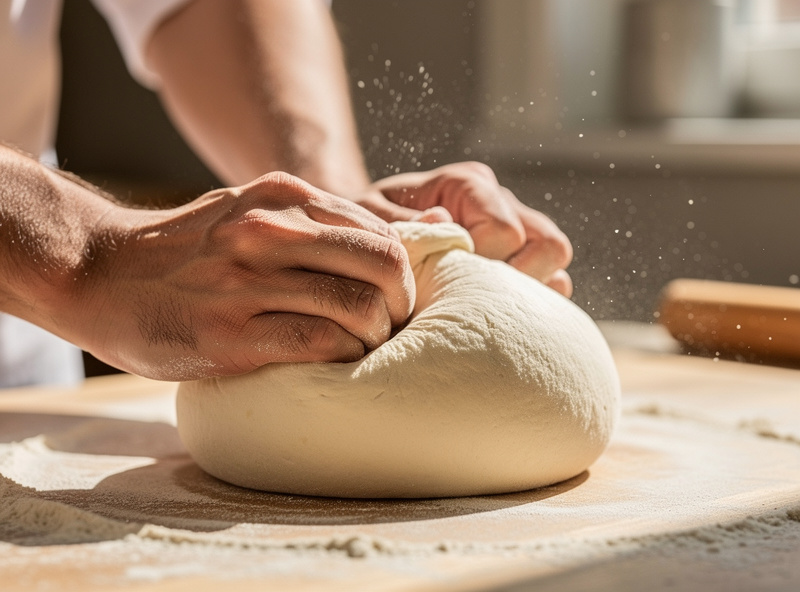
A good dough ball has a tight, smooth, taut skin created by tucking the dough under itself to build surface tension. That tension is what makes the ball hold a round shape, rise upward instead of spreading flat, and open into an even round when you stretch it later.
The technique is simple but worth practicing. After the bulk ferment, divide the dough into portions (I weigh each one — 250g is my standard for a roughly 12-inch pizza). For each piece, gather the edges underneath and pinch them together at the bottom, then cup your hand around the ball and drag it across the bench in small circles so the surface tightens into a smooth dome. You’re building a skin under tension. A loose, slack ball with a wrinkled surface will spread flat and proof poorly; a tight ball holds its shape and proofs upward. This is also where weighing pays off — equal-weight balls proof at the same rate and make the same size pizza, which matters when you’re cooking several. The difference between a tight ball and a sloppy one shows up directly in how the dough stretches an hour later.
The Right Container
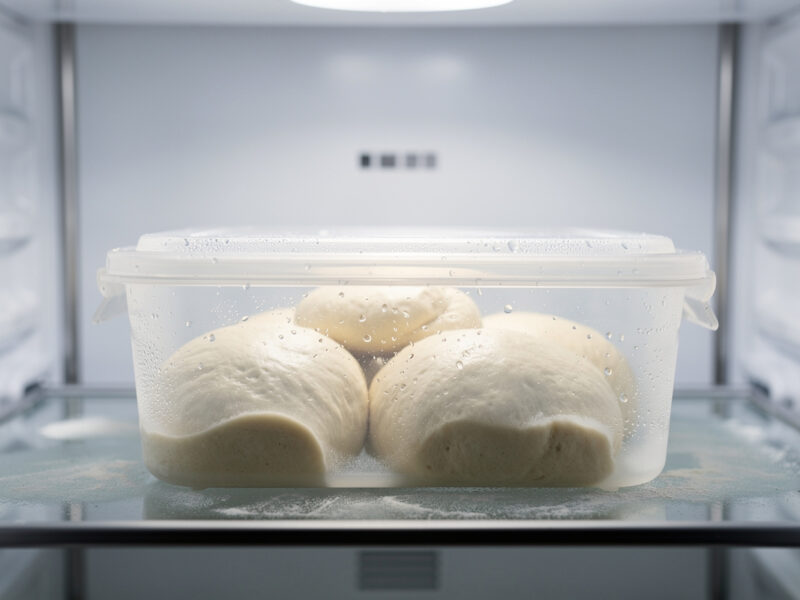
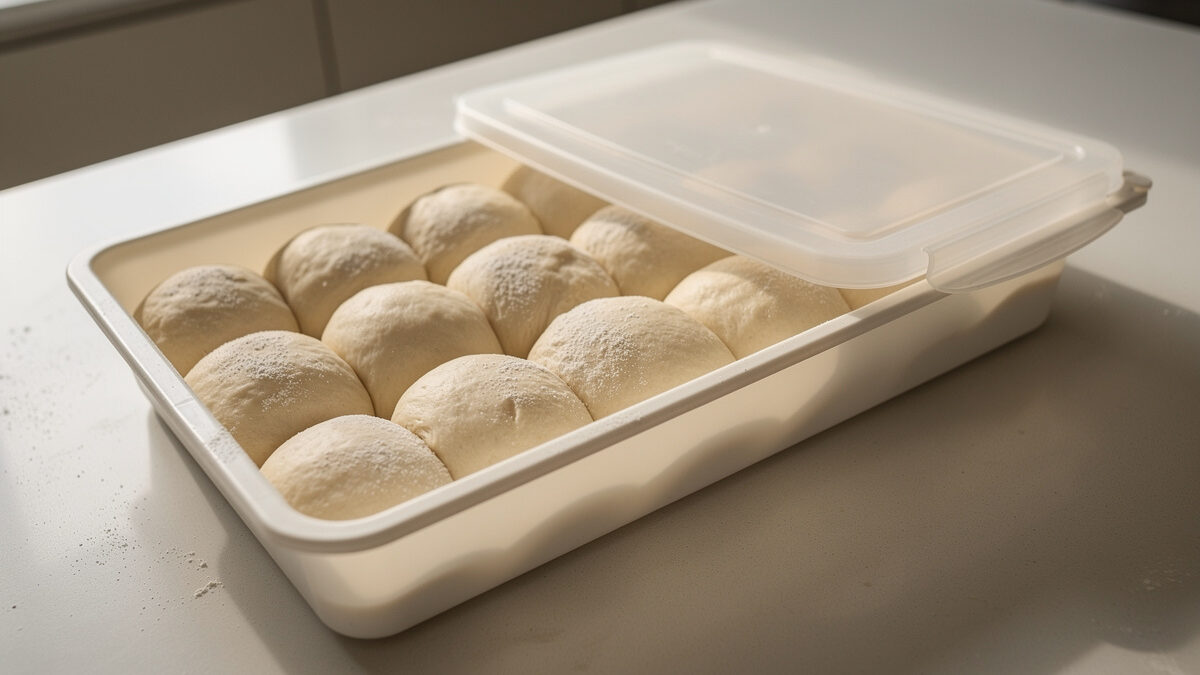
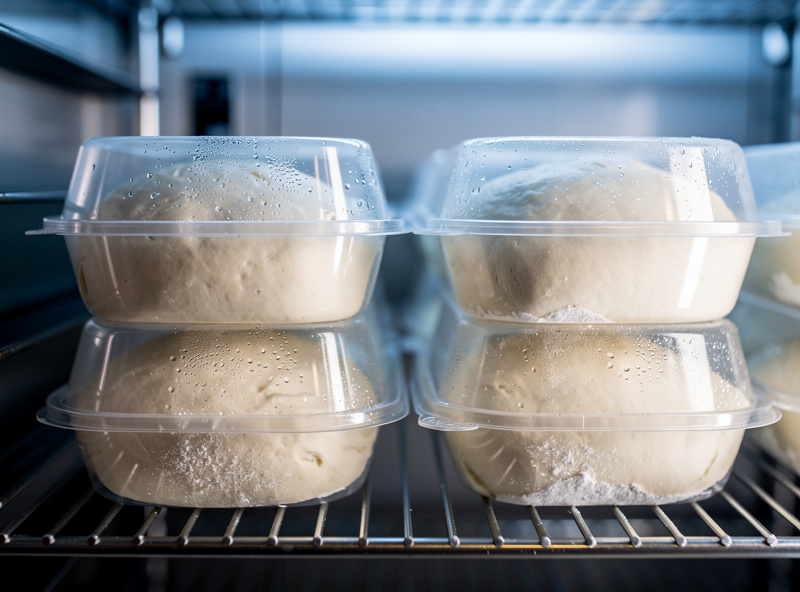
Store dough balls in an airtight container with enough space for each to roughly double without touching its neighbors. A dedicated dough proofing tray, individual sealed tubs, or a large lidded container all work — the essentials are an airtight seal to stop the surface drying and skinning, and enough room for expansion.
The two failures here are a non-airtight container (the surface dries into a leathery skin that won’t stretch and tears) and a cramped one (balls expand into each other, fuse, and deform). I use a stackable proofing tray with a lid, lightly oiled so the balls release cleanly, with each ball spaced so it has room to grow. Over a long cold ferment a ball can nearly double, so be generous with spacing. If you’re using individual tubs, a light film of oil and an airtight lid is all you need. Avoid storing balls uncovered or under a loose tea towel for long ferments — that’s fine for a quick rise but guarantees a dried skin over many hours. A purpose-made dough proofing tray with a lid is one of the cheapest upgrades that makes a visible difference, especially once you’re making four or more balls at a time.
How Long Do Dough Balls Last?
In the fridge, well-made dough balls hold for about 1 to 4 days depending on yeast quantity, with flavor improving over the first 2–3 days before the gluten starts to degrade. At room temperature they’re on a much shorter clock — a few hours — and frozen, they keep for a couple of months.
The exact window depends on how much yeast you used: a low-yeast cold-ferment dough designed for the long haul holds beautifully for 2–3 days and is often best on day two or three; a higher-yeast dough races through its life faster and may over-proof by day two. The table below is how I think about it across the schedules I run.
| Storage method | Typical window | Notes |
|---|---|---|
| Room temperature (proofed) | 2–6 hours | Bake near peak; over-proofs fast in warmth |
| Fridge, low-yeast cold ferment | 1–4 days | Often best day 2–3; gluten degrades after |
| Fridge, higher-yeast dough | 1–2 days | Watch for over-proofing sooner |
| Freezer | 1–2 months | Freeze after balling; thaw in fridge overnight |
When to Take Dough Out Before Baking
Pull dough balls from the fridge 1 to 3 hours before baking so they come to room temperature, relax, and become extensible. Cold dough straight from the fridge is tight and snaps back when you stretch it; warmed dough opens easily and holds its shape. This single timing step fixes the most common “my dough won’t stretch” problem there is.
This is the detail I see skipped more than any other, and it’s the cause of more frustration than any recipe error. The gluten in cold dough is firm and contracted — try to stretch it straight from the fridge and it fights you, springs back, and tears. Give it 1–3 hours at room temperature (less in a warm kitchen, more in a cold one) and it relaxes into a slack, extensible dough that opens almost on its own. The ball should look domed and slightly puffy, and feel soft and pliable rather than firm and cold. In a Swedish winter kitchen I sometimes need closer to 3 hours; in summer, one is plenty. Watch the dough, not just the clock — it’s ready when it’s lost its chill and gone soft.
Signs a Dough Ball Has Gone Too Far
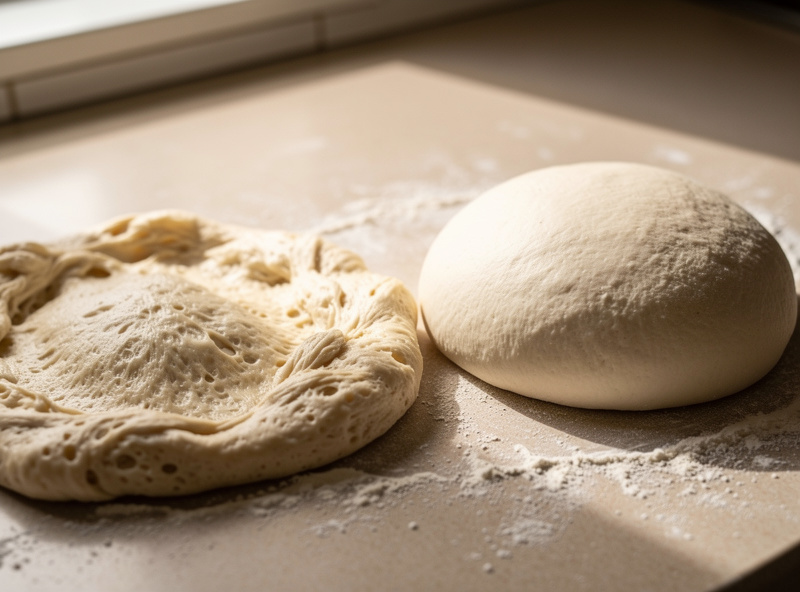
An over-proofed ball is flat and spread rather than domed, feels slack and overly soft, may have a wrinkled or collapsed surface, and smells strongly of alcohol. It tears easily when handled and bakes flat and dense. Once a ball is badly over-proofed, it won’t fully recover.
Learning to read this saves a lot of disappointing pizzas. A healthy, ready ball is domed, holds its shape, has a smooth surface dotted with a few small bubbles, and smells pleasantly yeasty. An over-proofed one has lost that dome — it’s spread into a puddle, the surface is wrinkled or sunken, and the smell has tipped from yeasty to boozy. If you catch it just slightly over, you can sometimes gently re-ball it and bake soon, but a ball that’s fully collapsed is past saving and will give you a flat, gummy crust. The prevention is upstream: right yeast quantity, right ferment time, and pulling balls to bake near their peak rather than letting them coast for hours past it.
Freezing Dough Balls
To freeze dough, ball it as normal, then freeze the individual balls (lightly oiled and wrapped or in sealed containers) before they fully proof. Thaw in the fridge overnight, then bring to room temperature before baking as you would any cold-fermented dough.
Freezing is genuinely useful for batch-making — I’ll sometimes make a big batch, bake what I need, and freeze the rest so a future pizza night is just thaw-and-bake. Freeze the balls after shaping but before they’ve fully proofed, since the freezer pauses fermentation and the dough will finish proofing as it thaws and warms. Wrap each ball individually or use sealed single-portion containers so they don’t stick together and don’t pick up freezer odors. Thaw slowly in the fridge overnight, then give it the usual 1–3 hour room-temperature warm-up before stretching. The result is very close to fresh — frozen dough loses a little of its liveliness but is far better than a rushed same-day dough when you’re short on time.
Frequently Asked Questions
How long do pizza dough balls last in the fridge?
Well-made dough balls last about 1 to 4 days in the fridge, depending on yeast amount, and are often best on day 2 or 3 as flavor develops. After that the gluten starts to degrade and the dough turns slack. Lower-yeast cold-ferment doughs hold the longest.
How long before baking should I take dough out of the fridge?
Take dough balls out 1 to 3 hours before baking so they reach room temperature and relax. Cold dough is tight and snaps back; warmed dough stretches easily without tearing. Use less time in a warm kitchen, more in a cold one, and judge by feel.
Why won’t my dough ball stretch without tearing?
Usually it is still cold from the fridge or it dried out and formed a skin. Cold dough is tight, so warm it 1 to 3 hours first. A dried skin means the container was not airtight. Both make dough tear instead of stretching smoothly.
How do I know if a dough ball is over-proofed?
An over-proofed ball is flat and spread rather than domed, feels slack and very soft, may have a wrinkled or collapsed surface, and smells strongly of alcohol. It tears easily and bakes flat and dense. A ready ball is domed, smooth, and smells pleasantly yeasty.
Can you freeze pizza dough balls?
Yes. Ball the dough, then freeze the individual balls lightly oiled and sealed before they fully proof. They keep 1 to 2 months. Thaw in the fridge overnight, then bring to room temperature for 1 to 3 hours before stretching and baking.
As an Amazon Associate I earn from qualifying purchases. The storage gear I link is what I use; buying through these links supports the site at no extra cost to you.
Further Reading
- How to Make Pizza Dough: The Complete Guide — where balling and storage fit in the process.
- Cold Ferment Pizza Dough — the multi-day fridge schedule these storage rules support.
- Pizza Dough Too Sticky? — why cold, properly stored dough handles better.
More from This Cluster
- “Same-Day vs Overnight Pizza Dough: Which to Make”
- “Pizza Dough Too Sticky? Fix It Without Adding Flour”
- “Poolish Pizza Dough: The Preferment Method”
- “00 Flour vs Bread Flour for Pizza: What Actually Matters”
- “Cold Ferment Pizza Dough: The 48-Hour Method”
- “Pizza Dough Hydration Explained (and How to Pick Yours)”
- “How to Make Pizza Dough: The Complete Guide”

About Kenny Nyhus Fadil
A home pizza maker documenting deck temps, dough logs, and the occasional wrecked launch.