Turning Peel for Pizza Ovens: Is It Worth It?

A turning peel is worth it the moment your oven bakes a pizza in under two minutes — and close to pointless if it doesn’t. In a 90-second gas or wood oven, rotating the pizza is the only way to stop one side charring while the other stays pale, and the big launch peel can’t do that job. In a slower 450°C electric or a home-oven steel, the bake is even enough that you can skip it. That single fact decides whether this is essential kit or money you don’t need to spend.
I run a turning peel constantly on my fast ovens and almost never on the indoor electric. Here’s exactly who needs one, what to look for, and why the tool matters less than the cadence you use it with.
What a Turning Peel Actually Does
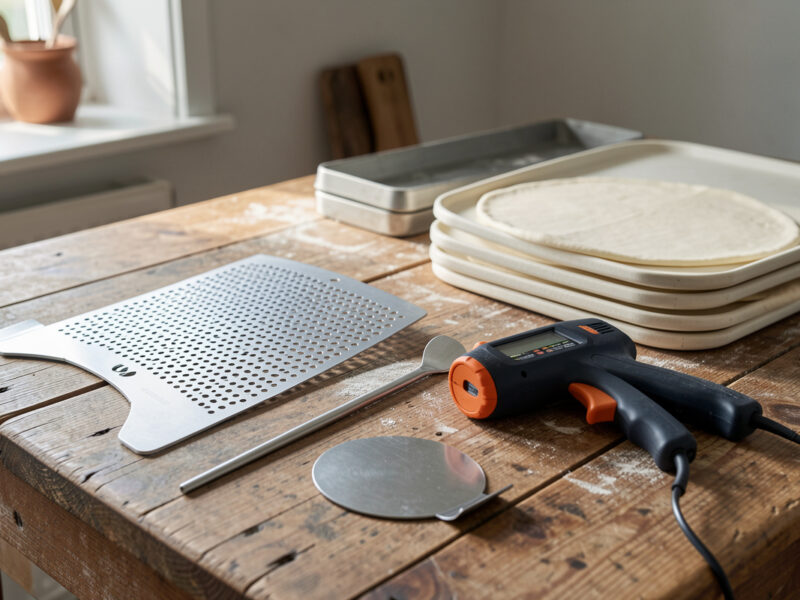
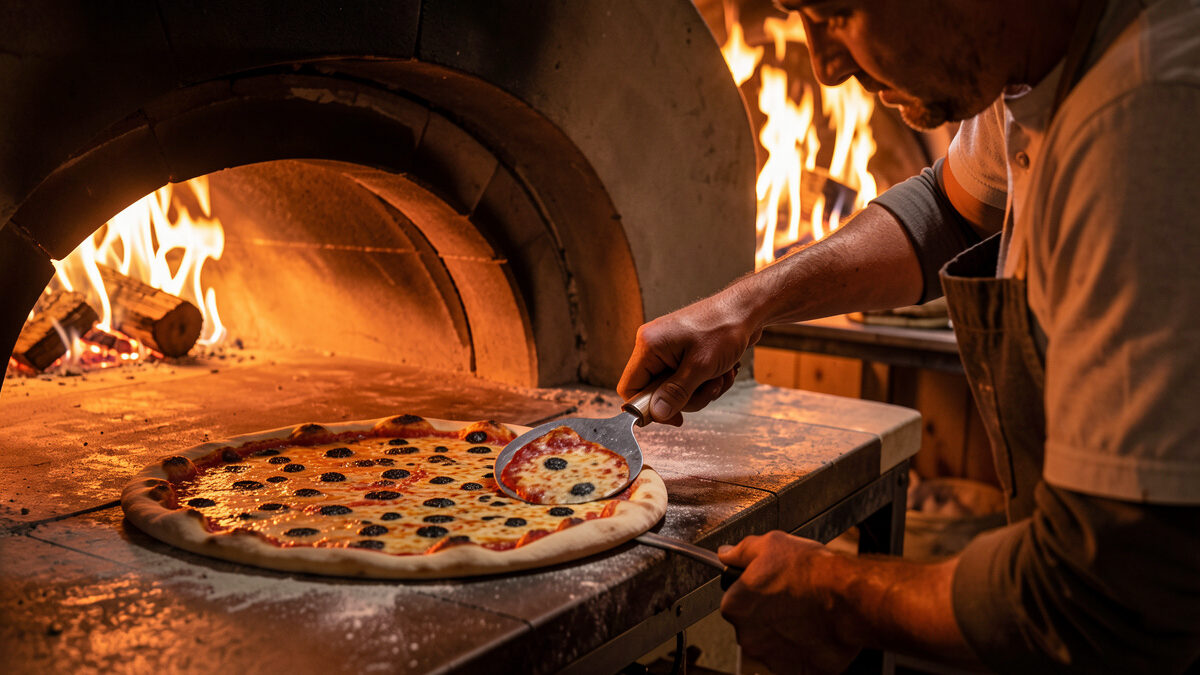
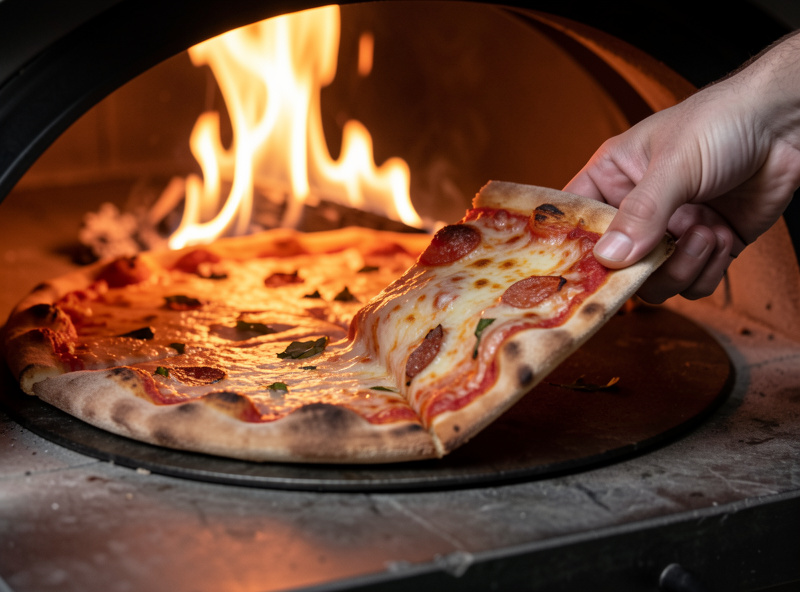
A turning peel is a small round metal head — usually 7 to 9 inches — on a long handle, and its only job is to rotate a pizza mid-bake without pulling it out of the oven. You slide it under one edge, lift about an inch, and spin the pizza a third of a turn so the side that was facing the hottest part of the oven moves away from it.
This matters because no oven heats evenly. A gas oven has a burner along one side or the back; a wood oven has the fire banked to one edge. The side of the pizza facing that heat sets and chars in seconds while the far side is still raw. In a fast bake you don’t have time to rescue that with anything slow — you turn, and you turn often. The launch peel is hopelessly large to maneuver inside a hot chamber, which is why the turning peel exists as a separate tool. If you’re sizing both peels together, the pizza peel size guide covers the pair.
Is It Worth It? Decide by Bake Time
Here’s the honest test: time your bake. If your pizza is done in 60 to 120 seconds, a turning peel is essential and you’ll use it three or four times per pizza. If your bake runs four minutes or longer, the heat has time to even out, you can rotate once with the launch peel or not at all, and the turning peel becomes a nice-to-have rather than a need.
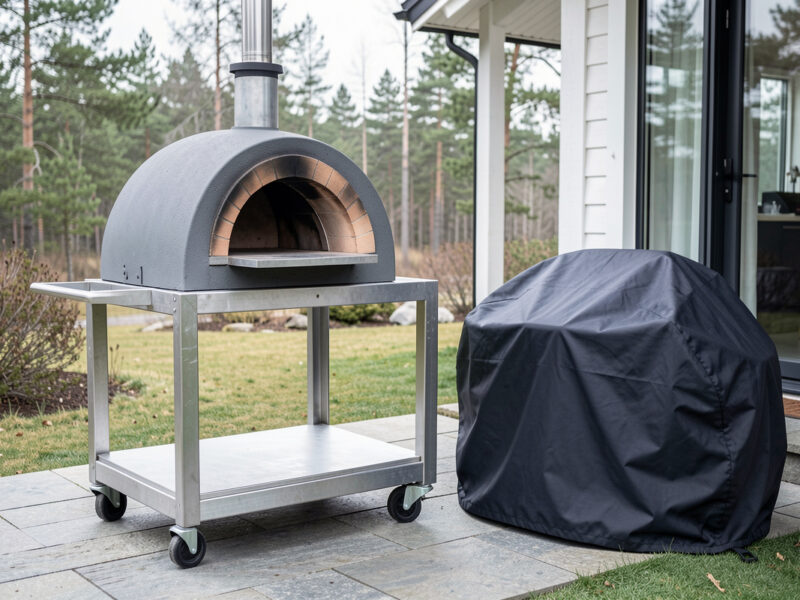
My fast gas oven and the dual-fuel dome both bake in roughly 90 seconds, and I wouldn’t run either without a turning peel — the difference between a turned and an unturned pizza in those ovens is the difference between even leoparding and a half-burnt, half-blonde mess. The indoor electric at a steady 450°C bakes in three to four minutes and heats evenly enough that I rarely reach for it. And under the home-oven broiler, the broiler method bakes slowly enough that a single rotation with the launch peel does the job. Buy the turning peel for the oven, not for the idea of owning one.
The pattern matches everything else on this site: the gas and wood ovens that chase 90-second Neapolitan bakes need the most accessories precisely because they’re fast, while the slower, steadier ovens are more forgiving. Speed buys you char and oven spring; it costs you the need to manage the bake actively, and the turning peel is the tool that management requires.
What to Look For When Buying
Once you’ve decided you need one, the choices are simple. Get a round head in the 7-to-9-inch range — small enough to maneuver, large enough to support the pizza as you lift. Avoid the tiny 4-inch heads sold as “turning peels”; they’re too small to lift a full pizza cleanly and they tear the base. The handle should be long, like a launch peel’s, so your hand stays out of the oven mouth.
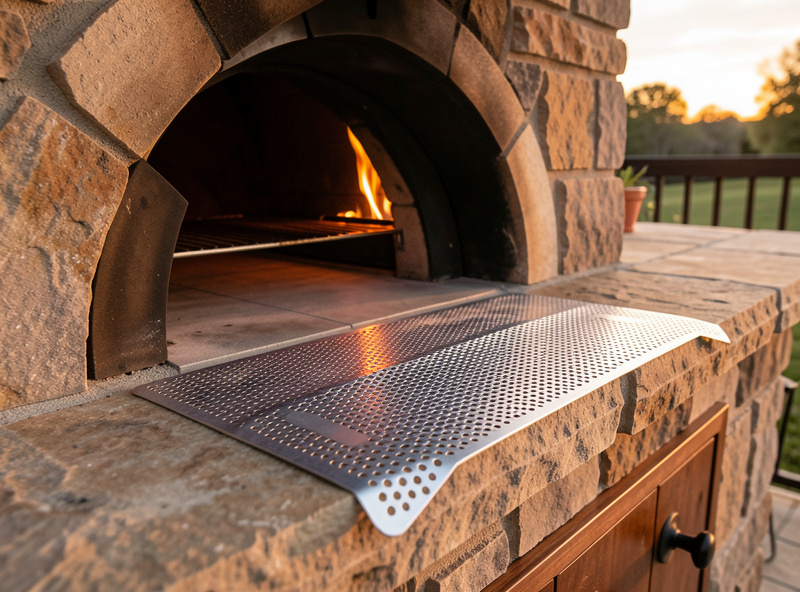
Head material is the one real choice. Aluminum is light and cheap and works fine. A perforated or dimpled head reduces the contact area so the dough is less likely to stick to the metal as you turn. Some prefer a head with a slight bend or offset where it meets the handle, which gives a flatter approach angle under the pizza — I find that genuinely helps on a low-mouthed oven. What you don’t need is a heavy, solid, premium-priced head; the turning peel does light work, and lighter is better. As an Amazon Associate I earn from qualifying purchases. A basic 8-inch perforated turning peel covers every fast oven I’ve run.
The Mistakes That Aren’t About Cadence
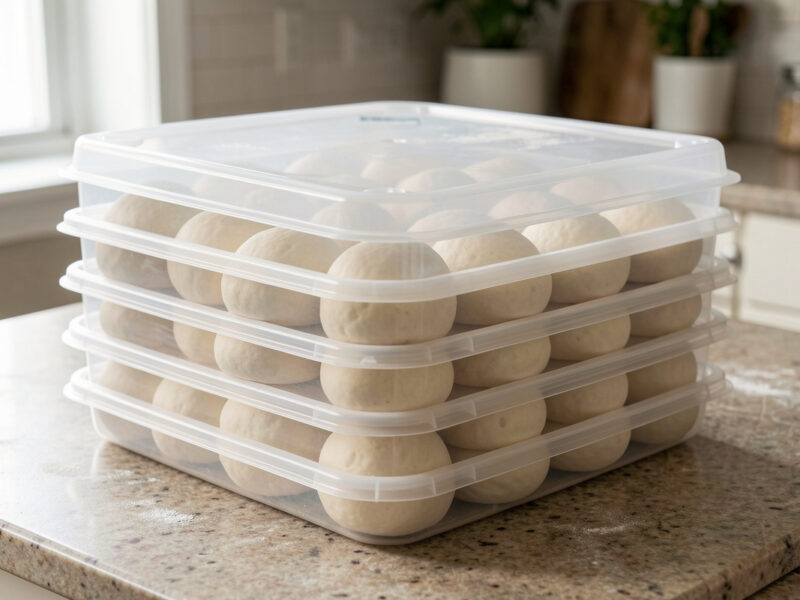
Two turning-peel problems have nothing to do with timing. The first is a head that sticks. If your dough drags on the metal every time you slide under it, the issue is usually too much flour on the base turning to grit, or a base that’s underproofed and gummy — not the peel. A perforated head helps, but the real fix is dough, which is why I keep my balls on a proper 48-hour cold ferment so the base sets quickly and lifts clean.
The second is approach angle. On a low-mouthed oven, a flat turning peel can’t get under the pizza without scraping the stone or catching the crust. A head with a slight offset bend solves this, but so does technique: come in shallow from the side rather than straight on, lift only an inch, and let the pizza pivot on the peel rather than riding fully on top of it. I learned this on the dual-fuel dome, where the mouth sits low and a straight-on approach just bulldozes the pizza.
Keep the head clean between bakes, too. Baked-on flour and char build a rough surface that grabs the next pizza. A quick wipe or brush while the peel is still warm keeps it slick — the same low-effort maintenance habit that keeps a stone working, covered in the surface care guide.
The Tool Is Easy, the Cadence Is the Skill
Buying a turning peel is the cheap part; using it well is what takes practice. The common beginner mistake is turning too late — waiting until one side is already charred — or lifting too high and folding the soft pizza onto itself. The fix is a rhythm: a small lift, a small turn, repeated every fifteen to twenty seconds, starting early in the bake before any side has set hard.
I think of it as keeping the pizza moving so no single spot ever sits in the hottest zone long enough to burn. The full technique — when to start, how far to turn, how to read the leoparding as you go — is its own piece in the pizza turning technique guide. The peel just gives you the reach; the cadence is what produces an even bake. Get both right and the turning peel quietly becomes the accessory you’d replace first if you lost it.
If you’re still assembling your kit, the turning peel sits firmly in the slice-changer tier alongside the launch peel and the IR thermometer in the complete accessories guide — but only for fast ovens. Decide by bake time, buy light, and spend your real effort on the cadence.
Frequently Asked Questions
Is a turning peel worth it?
It is worth it if your oven bakes a pizza in under two minutes. In a fast gas or wood oven you rotate the pizza three or four times per bake to stop one side charring, and the launch peel is too big for that. In a slower 450C electric or home-oven steel, the bake is even enough to skip it.
What size turning peel should I buy?
A round head of 7 to 9 inches on a long handle. That is large enough to support a full pizza as you lift and small enough to maneuver inside a hot chamber. Avoid 4-inch heads, which are too small to lift a pizza cleanly and tend to tear the base.
Can I turn a pizza with my launch peel instead?
In a fast oven, no. The large launch peel cannot be maneuvered inside the chamber to rotate a pizza without disturbing the bake. In a slow oven that bakes in four minutes or more, you can rotate once with the launch peel, which is why slow ovens do not really need a turning peel.
Aluminum or steel turning peel head?
Aluminum is lighter, cheaper, and works well; a perforated or dimpled head reduces sticking. The turning peel does light work, so a light head is an advantage. Avoid heavy premium solid heads, which add cost and weight without improving how the tool turns a pizza.
When should I start turning the pizza?
Start early, within the first 15 to 20 seconds of a fast bake, before any side sets hard, then turn a small amount every 15 to 20 seconds. Turning too late, after one side has already charred, is the most common mistake and cannot be undone once the crust has set.
Related Guides
- Pizza Oven Accessories: The Complete Guide
- Pizza Peel Size Guide
- Pizza Turning Technique: Cadence and the Lift
- Ooni Koda 16: A Long-Term Verdict
- Pizza Dough Proofing Trays

About Kenny Nyhus Fadil
A home pizza maker documenting deck temps, dough logs, and the occasional wrecked launch.