Pizza Oven Cold Weather and Wind: Baking in Winter

Cold air and wind are the two heat thieves that wreck outdoor pizza baking, and wind is the worse of the two. A breeze can double an oven’s recovery time and make the stone reading wobble 30–50°C between gusts, while sub-zero ambient air steadily drains heat through the shell. Baking well in winter is mostly about defeating those two forces before you ever launch.
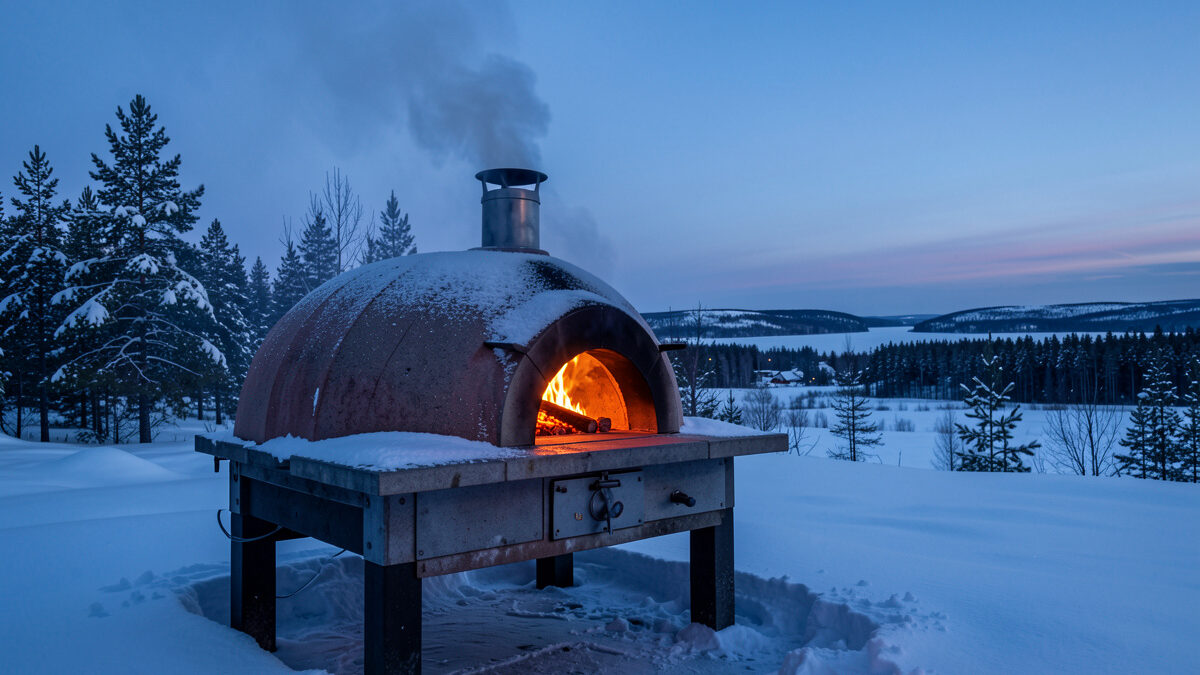
I bake in Sweden, where for half the year the oven earns its keep in real cold, and that is where I learned what heat retention is actually made of. A catalogue retention claim that looks great on a still summer evening gets audited fast at -5°C with a wind. This guide is everything cold-weather baking has taught me — what the cold and wind actually do, and the adjustments that keep winter pizza as good as summer. It sits under my pizza oven temperature guide, and pairs with my cold-climate oven buying take.
Wind Is Worse Than Cold
Still cold air is a slow, predictable thief — it pulls heat through the oven shell at a steady rate you can simply out-soak and out-fuel. Wind is a fast, erratic one. It strips the thin boundary layer of hot air clinging to the oven’s surfaces and replaces it with cold, accelerating heat loss dramatically, and it does so in gusts that make the deck temperature lurch. That instability is what ruins bakes, not the average. The same wind-chill mechanism that makes -5°C feel like -15°C on bare skin is what strips heat off the oven’s shell.
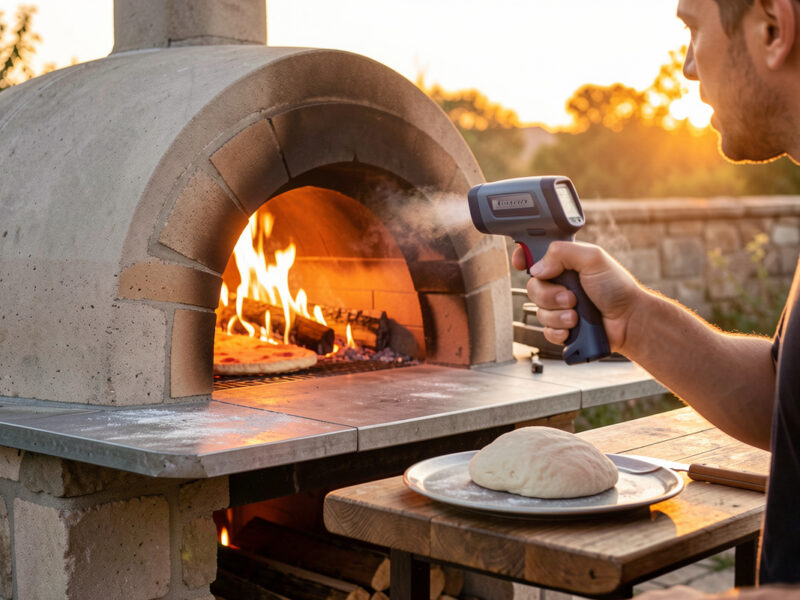
The practical proof is in the gun: on a still winter evening my stone reading holds rock-steady, but the moment a gust hits an exposed oven I can watch the number drop and then claw back. You cannot bake consistently against a moving target, which is why wind management comes before everything else in cold-weather baking. The infrared gun is what makes the problem visible in the first place.
Positioning the Oven Against the Wind
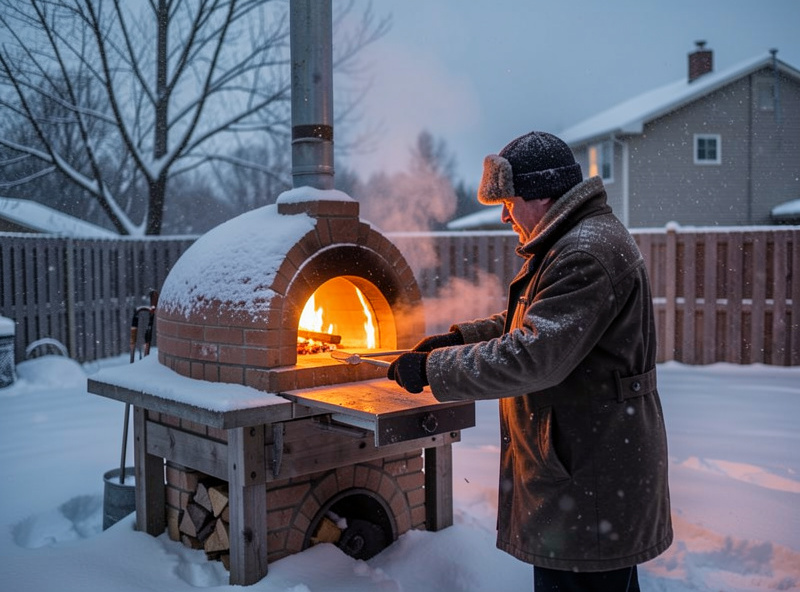
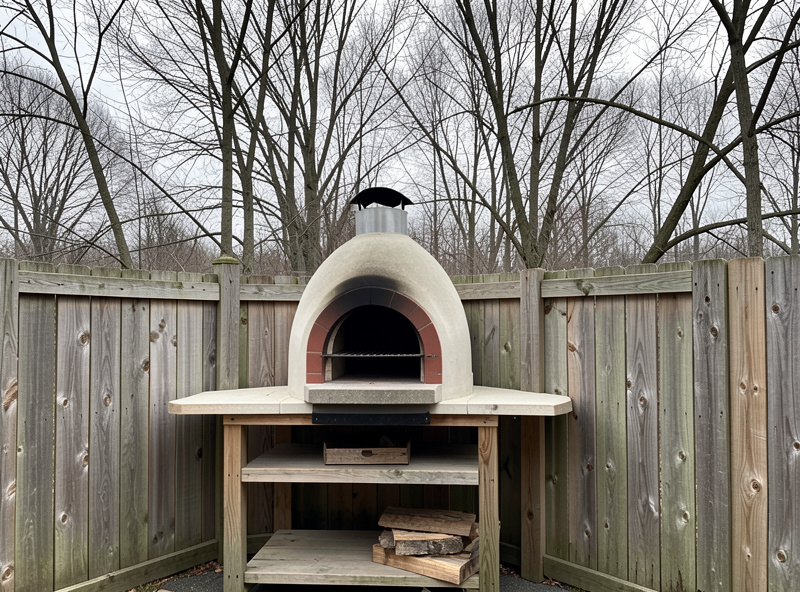
The first and cheapest fix is position. Put a solid windbreak on the windward side — a wall, a fence, a closed section of the house — and point the oven’s mouth away from the prevailing wind so gusts are not blowing straight into the chamber and across the deck. A mouth facing into the wind is the worst case, because the wind robs the launch zone exactly where your pizza sits.
I keep my winter baking spot tucked against a wall that blocks the prevailing northerly, with the oven mouth turned away from it, and that single arrangement does more for cold-weather consistency than any amount of extra fuel. If you cannot site the oven permanently, even a temporary windbreak set up for the session transforms the bake. Never block the chimney or flue draw, and never enclose a gas or wood oven so far that exhaust cannot escape — shelter the sides, not the breathing.
Soak Longer, Fuel Harder
Cold steals heat from the stone faster than it can soak in, so the single biggest adjustment is time. In winter I light the oven significantly earlier and add to my normal soak, because a stone fighting -5°C ambient takes noticeably longer to build the deep reservoir it needs. Rushing the soak in the cold guarantees a cratered deck on the first pizza — the same failure as skipping soak in summer, only worse. I learned that the hard way one December: I rushed my Ooni Koda 16 in a biting wind, launched on a surface that read on target, and served three pale, gummy bases before I accepted the stone was nowhere near soaked through.
Fuel use climbs too. A gas oven runs the burner harder to hold temperature against the cold, and recovery between pizzas lengthens, so I bake in deliberate waves with pauses to let the deck rebuild rather than grinding it down. The full mechanics of that rebuild are in my heat recovery guide, and why the soak takes longer in the first place is in heat soak explained. Expect to wait longer between pizzas in winter and plan the night around it.
Snow, Damp, and the Stone
Winter brings moisture as well as cold, and water is its own problem for a pizza oven. Snow blowing into the chamber or settling on a cold stone, condensation forming on the deck overnight, or rain on a covered oven that was not properly dried all leave the stone holding water it must boil off before it can climb to temperature. A damp stone soaks slower and can even spit and crack if heated too hard too fast from cold.
My winter habit is simple: keep the oven covered and dry between sessions, brush any snow out of the chamber before lighting, and bring a cold, possibly damp stone up gently at first so the moisture leaves before the real heat goes in. A stone that has sat outside through a wet, freezing week needs an even longer, gentler warm-up than the cold alone would suggest. Rushing a damp cold stone is the fastest way to a cracked deck, and a cracked stone holds and transfers heat unevenly forever after — stone care matters more in winter, which I cover in my stone and steel care guide.
Reading the Deck When the Numbers Move
The infrared gun behaves differently in the cold, and you have to read it differently. In a gusting wind a single reading is almost meaningless because the surface temperature is lurching; what matters is the steady reading you get during a lull, and whether the deck holds that number for more than a moment. I take several reads across a calm window and trust the consistent figure, not the highest or the one snatched mid-gust.
I also launch a touch hotter in winter than I would in summer, aiming for the upper end of my target range, because I know the deck will lose ground the instant the cold pizza lands and the ambient is working against recovery. That small buffer absorbs the extra heat loss that winter guarantees. It is the same launch-on-the-gun discipline from the rest of this series, just calibrated for a deck that is fighting the weather the whole time — the target ranges themselves are unchanged and laid out in stone temperature by style.
Dough in the Cold
The cold works on your dough as much as your oven. A dough ball left out in winter air firms up and chills fast, and a cold ball fights oven spring and pulls extra heat from the deck at launch. I bring my cold-fermented balls indoors to come up toward room temperature before baking, and in deep winter I keep the staged dough inside until the last moment rather than letting it sit by the oven.
This is the through-line from my fermentation bench: the same starter raises every pizza on this site, and the dough’s temperature at launch is as much a variable as the stone’s. A cold dough on a cold-fought deck is two strikes at once. If your winter pizzas spring poorly, warm the dough before you blame the oven — start with my cold ferment method and hydration guide for the foundation.
A Winter Bake, Start to Finish
Here is how a cold-weather session actually runs for me, because the order matters as much as the individual tricks. I set the windbreak and turn the mouth away from the prevailing wind first, before lighting, so the oven is sheltered from the cold start. Then I light significantly earlier than I would in summer and let it climb on a steady flame rather than a blast, accepting that the soak will take longer against the ambient cold.
While the oven soaks, the dough stays indoors warming toward room temperature, not sitting outside chilling by the fire. I read the deck across calm windows rather than mid-gust, wait for a steady reading at the upper end of my target, and only then bring the first ball out to stretch. Between pizzas I run the flame high to rebuild the deck, bake in waves with real pauses, and keep checking the gun rather than the clock. None of it is exotic — it is the same temperature discipline as a summer bake, just started earlier, sheltered harder, and paced slower to account for a deck that is losing a constant fight with the weather. Do that, and winter pizza is genuinely as good as summer, which years of baking through Swedish Decembers has proven to me more than once.
When to Just Bake Indoors
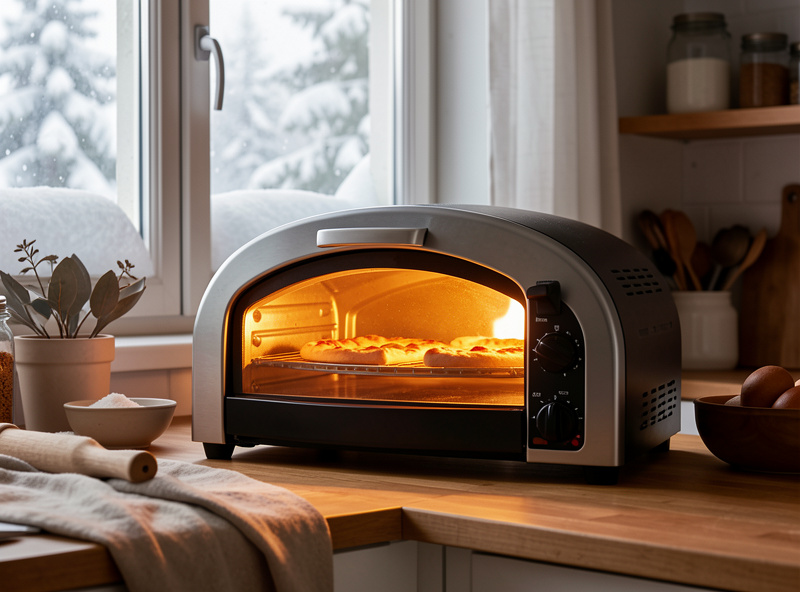
There is a point where fighting the weather stops being worth it, and in a real Nordic winter that point comes often. When it is -10°C with a steady wind, no amount of soak and windbreak makes an outdoor portable gas oven behave, and that is exactly why an indoor electric oven became my winter weapon. My 450°C Effeuno with its thick biscotto deck holds a steady temperature no gust can touch, all year, indoors.
This is not surrender — it is matching the tool to the conditions. The outdoor oven owns summer and the shoulder seasons; the indoor electric owns deep winter and gives me consistent pizza when the backyard is a snowdrift. If you live somewhere with hard winters and you are choosing gear, factor this in heavily: read my take on whether an indoor electric oven is worth it and the broader cold-climate buying guide, then dial the deck to the right number with stone temperature by style. Cold-weather baking is not about toughing it out — it is about knowing which oven to light, and the full thermal picture lives in the temperature discipline hub.
Keep Baking Through the Cold
- Pizza Oven Temperature Discipline: The Complete Guide
- Heat Recovery Between Pizzas
- Heat Soak Explained for Pizza Ovens
- Stone Temperature by Pizza Style
- Is an Indoor Electric Pizza Oven Worth It?

About Kenny Nyhus Fadil
A home pizza maker documenting deck temps, dough logs, and the occasional wrecked launch.