Sourdough Pizza: The Complete Guide

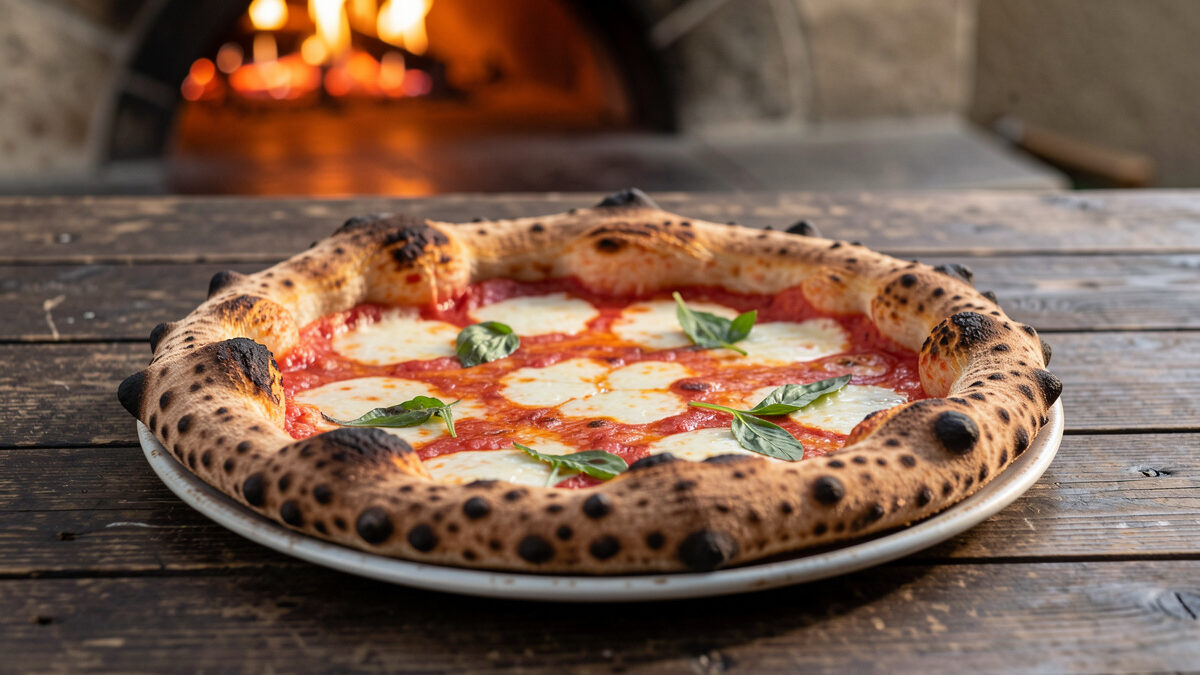
Sourdough pizza is a Neapolitan-style or pan dough leavened entirely by a wild-yeast starter instead of commercial yeast. Done well, it bakes with the same oven spring and leoparding as a yeasted dough, but the crumb is more digestible and the crust carries a faint tang. The single biggest variable is not the starter at all — it is ferment time and temperature.
I have run sourdough against commercial yeast on the same bench for years, splitting one batch of flour and water into two bowls and baking them the same evening across my ovens. The starter that raises every pizza on this site is the same culture I keep for my fermentation bench — fridge-kept, years old, the same canon I use for bread. What follows is the working map from my dough log: how the starter converts to pizza dough, how to time the ferment so it peaks when you want to bake, what hydration suits your oven class, and where sourdough actually changes the slice versus where the romance gets ahead of the result.
What Sourdough Pizza Actually Is
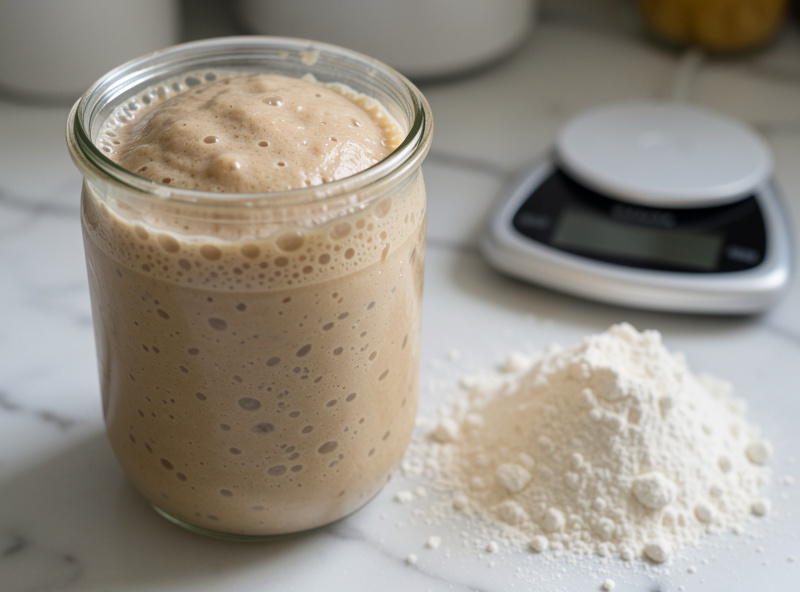
Sourdough pizza is pizza dough leavened by a maintained flour-and-water culture — wild yeast and lactic bacteria — rather than packaged baker’s yeast. The yeast provides the rise and oven spring; the bacteria produce the acids that give the crust its flavor and improve its keeping quality. Everything else about the dough is unchanged.
This matters because beginners assume sourdough pizza is a different recipe. It is not. It is the same flour, water, and salt you would use for a yeasted Neapolitan or New York dough — the only swap is the leavening agent. A dough that is 62% hydration with bread flour stays 62% hydration with bread flour whether you raise it with a gram of instant yeast or 80 grams of active starter. What changes is the clock. Wild yeast works more slowly and less predictably than commercial yeast, so the entire build is governed by reading fermentation rather than following a fixed timer. If you already make a good yeasted dough, you are most of the way there; you are just learning to watch the dough instead of the kitchen clock.
The acids are the real prize. A long, cool sourdough ferment breaks down some of the flour’s starches and proteins before the dough ever sees heat, which is why a well-fermented sourdough crust tastes of something even with nothing but flour, water, and salt. A rushed sourdough — or one with an underfed starter — tastes flat and bakes dense, which is where most disappointment comes from.
The Starter: Your One True Variable
A pizza starter does not need to be exotic. A standard 100%-hydration white-flour starter — equal weights flour and water — that doubles reliably in four to eight hours at room temperature is all you need. Strength and timing matter far more than flour pedigree.
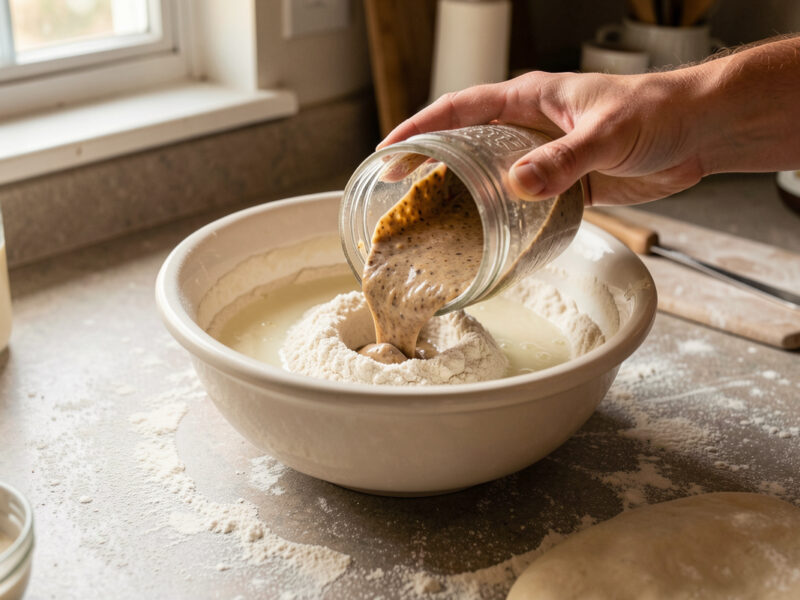
The mistake I see most often is baking with a starter that is technically alive but not actually strong. A culture pulled straight from the fridge after two weeks of neglect will limp a dough along over many hours and give you a flat, gummy result. Before any pizza build, I feed the starter once or twice at room temperature and bake when it is at or near its peak — domed, webbed with bubbles, and just starting to recede. That peak is the window where the yeast population is highest and the dough will spring in the oven. If you want the deeper mechanics of feeding ratios and reviving a sluggish culture, I keep that on the fermentation bench: the sourdough starter feeding schedule and the broader home sourdough canon over at Ferment Foundry cover the culture-keeping side in full — the same starter, the same rules.
For pizza specifically, I keep the starter on the firmer, cooler side of healthy. An over-acidic, very ripe starter pushes too much sourness and can slacken the gluten, which fights you at the launch. The float test — a spoonful of starter dropping into water and floating — is a rough confirmation it is gassy enough, but the better signal is simply that it has doubled and looks alive. The full conversion procedure, from feeding to the finished dough ball, is its own piece: converting your starter to pizza dough.
How Much Starter to Use
The amount of starter in the dough sets the speed of the ferment, not the final flavor. More starter means a faster rise; less starter means a slower, cooler, more flavorful build. For a standard cold-ferment pizza dough, I work in the range of 5% to 20% starter as a percentage of the flour weight.
This is the lever most people miss. If you use 20% starter, the dough will move quickly and you will need to get it into the fridge before it overproofs. If you use 5%, you can stretch the same dough across a leisurely 48 to 72 hours in the cold and develop far more flavor. In my dough log, my standing default for a Friday-night bake is a low starter percentage built on Wednesday — it suits the way wild yeast rewards patience. The table below shows how I match starter percentage to the schedule I want; the full timing logic lives in the sourdough pizza ferment schedule.
| Starter % | Bulk + cold ferment | Total timeline | Best for | Flavor depth |
|---|---|---|---|---|
| 15–20% | 2–3 h bulk, then bake or short chill | Same day (6–10 h) | Forgot to plan ahead | Mild |
| 10–15% | 2 h bulk, 18–24 h cold | Overnight (~24 h) | Next-day baking | Moderate |
| 5–10% | 2 h bulk, 24–48 h cold | 2 days | My standing default | Deep |
| 3–5% | 2 h bulk, 48–72 h cold | 3 days | Maximum flavor, weekend plan | Deepest |
Hydration by Oven Class
Hydration — water as a percentage of flour weight — should be matched to the oven that bakes the pizza, not to a number you read online. The hotter and faster the oven, the more water the dough can carry; the slower a home oven, the more a high-hydration dough works against you. I run 60% to 70% across my ovens depending on the machine.
In my Effeuno-class indoor electric at 450°C and my gas dome oven, I push hydration to 65–70% because the intense top-and-bottom heat sets the crust fast enough to trap the steam and give a light, open crumb. On my 6mm steel under the home-oven broiler — the honest baseline I keep publishing against the specialty ovens — I pull hydration back toward 60–62%, because a wetter dough on a slower bake just spreads, sticks, and goes leathery before it springs. Sourdough complicates this slightly: the acids soften the gluten over a long ferment, so a 70% sourdough handles wetter than a 70% yeasted dough and needs a more confident hand at the launch. The full breakdown, with the wrinkles sourdough adds, is in the sourdough pizza hydration guide, and the fundamentals of the number itself are in pizza dough hydration explained.
The Cold Ferment Is the Whole Game
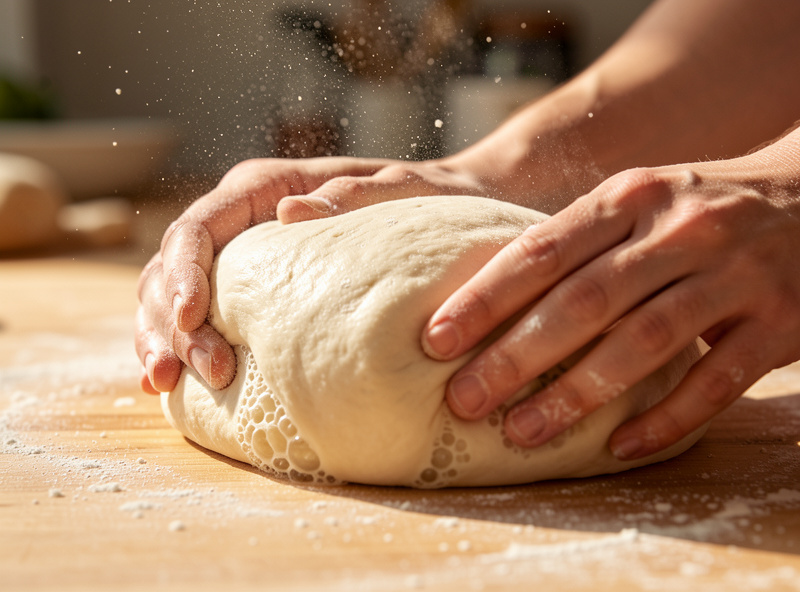
The cold ferment is where sourdough pizza earns its flavor and its workability. A long, cold rest in the fridge slows the yeast to a crawl while the bacteria keep developing acids, so the dough gains taste and extensibility without overproofing. For sourdough, I treat a 24-to-72-hour cold ferment as the default, not the exception.
The mechanics are the same as my yeasted 48-hour cold ferment, with one difference: wild yeast is slower and more temperature-sensitive, so I lean on a short room-temperature bulk first — usually two hours — to wake the culture before the cold sets it back. Skip that bulk and a sourdough straight into the fridge can stall for a day before anything happens. The cold ferment also fixes the most common sourdough complaint, which is excessive sourness: most of the harsh acetic tang comes from a warm, slow, oxygen-starved ferment, while a cool ferment favors the milder lactic acids. If your sourdough pizza tastes aggressively sour, the answer is usually a colder ferment and a fresher starter, not less starter. This same logic underpins the broader Neapolitan fermentation time question of 24 to 72 hours.
Stone Temperature and the Launch
A perfectly fermented sourdough is still ruined by a cold stone or a panicked launch. The dough does not care how it was leavened once it leaves the peel — it cares about the deck temperature and how cleanly it lands. For a Neapolitan-style sourdough, I want a stone reading 400–450°C on the IR gun; for a New York or pan style, far lower, around 290–320°C.
When I check the stone with the IR gun and it is in range, I launch fast and commit. Sourdough at high hydration is slightly more delicate on the peel than a stiff yeasted dough, so I flour the perforated peel well, shape on it at the last moment, and do not let it sit. A stuck launch tears the base and dumps your oven spring — the fix for that is the same regardless of leavening and lives in pizza stuck to the peel. For the deck numbers by style, see pizza stone temperature by style, and for the home-oven ceiling, Neapolitan oven temperature. The launch and turning cadence itself is covered in the launch technique guide and the broader launch and bake technique.
Sourdough vs Commercial Yeast: The Honest Verdict
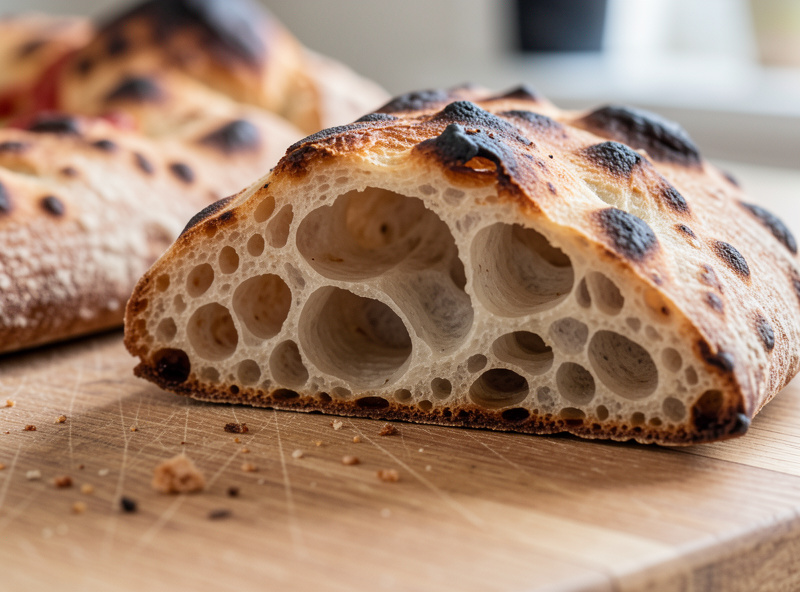
Sourdough does not bake a dramatically different-looking pizza than commercial yeast — the oven spring, char, and leoparding come from heat and hydration, not the leavening. What sourdough changes is flavor depth, a faint lactic tang, and digestibility, in exchange for slower, less predictable timing. For most home bakers, that is a worthwhile trade only if you already enjoy keeping a starter.
I have baked the two side by side enough times to be blunt about it: a well-made yeasted poolish dough and a well-made sourdough are closer in the mouth than the internet suggests. If you want the open crumb and the convenience, a poolish gets you most of the flavor with a fraction of the fuss. Sourdough wins on the long tail — the keeping quality, the deeper background flavor, the satisfaction of a closed loop from a culture you maintain. It does not win on “authenticity” at 90 seconds; that is mythology. The full tasting breakdown is in sourdough vs commercial yeast pizza flavor.
Flour and Strength
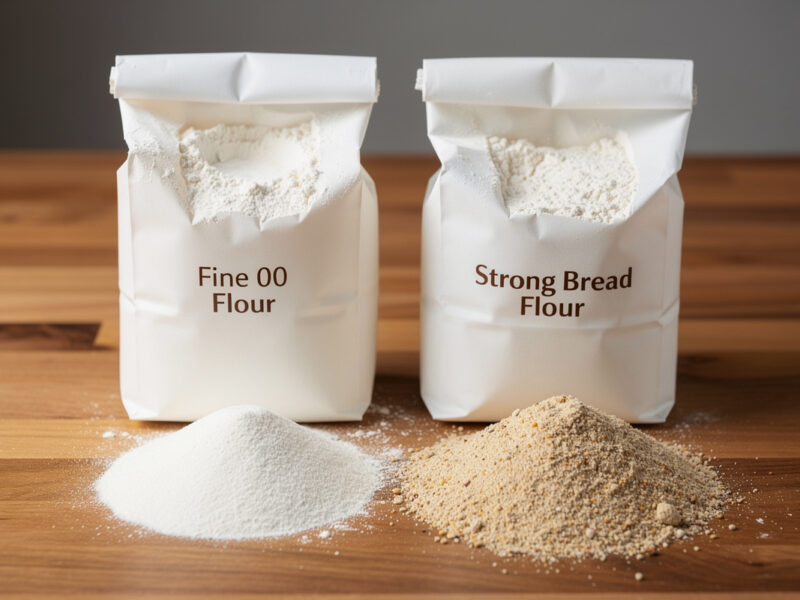
Sourdough’s long ferment demands a flour that can survive it. The acids and time degrade gluten, so a weak all-purpose flour that holds up fine for a same-day yeasted dough can turn slack and tear-prone after 48 hours of sourdough fermentation. I reach for a strong bread flour or a high-W 00 flour for any cold sourdough build.
For long ferments I want a flour with enough protein and gluten strength — expressed as W-strength on Italian flours — to still have structure when I shape it days later. A W300-plus 00 flour or a 12.5%-plus protein bread flour is the safe zone. The trade-off between 00 and bread flour is real and worth understanding before you commit a three-day ferment to it; I cover it in 00 flour vs bread flour. If your long-fermented dough keeps tearing or going soupy, the flour is the first suspect, not the hydration — though a too-wet, too-sticky dough has its own fixes that do not involve adding flour.
Managing Dough Balls and Timing the Bake
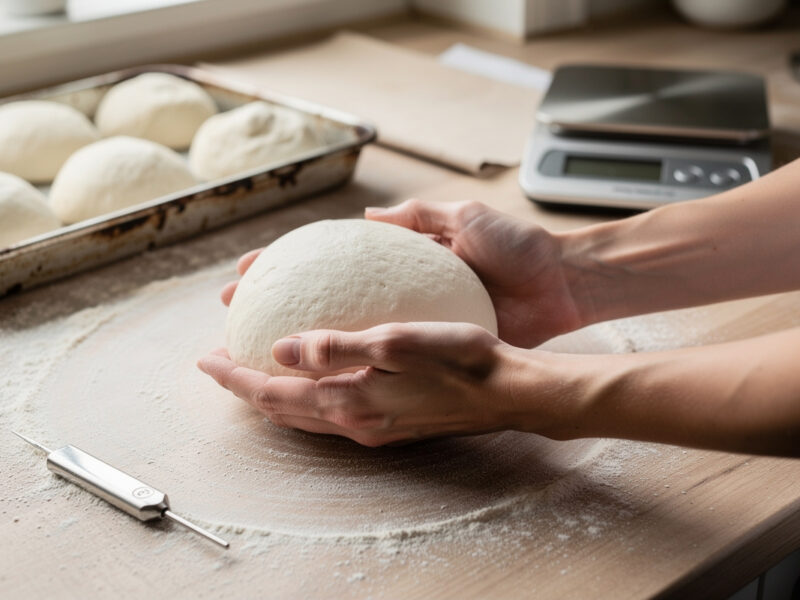
Once the cold ferment is done, the dough still needs to be balled and brought to bake temperature. I divide and ball straight from the fridge, then let the balls sit covered at room temperature for two to four hours before baking so they relax and warm through. A cold, tight ball fights the stretch and springs unevenly.
Sourdough balls are a little more forgiving on the back end than yeasted ones because the slow culture does not race to overproof at room temperature the way a heavily-yeasted dough does — but they are not infinitely patient. I watch for the balls going from tight domes to relaxed, jiggly, slightly spread rounds; that is the bake window. Storage, freezing, and the balling logic carry over directly from yeasted dough, covered in pizza dough balls storage, and proofing trays make this far cleaner — see dough proofing trays. A 0.1-gram scale is genuinely worth it here, because sourdough percentages only work if your starter, flour, and water are weighed precisely; a decent 0.1g digital kitchen scale is the cheapest accuracy you will ever buy.
As an Amazon Associate I earn from qualifying purchases.
Troubleshooting a Flat or Dense Sourdough Pizza
A flat, dense, or gummy sourdough pizza almost always traces back to fermentation, not the oven. The two usual culprits are a weak starter that never built enough gas and an underproofed or overproofed dough that lost its structure. Diagnose the ferment before you blame the bake.
In my dough log, the pattern is consistent. If the crust bakes pale, tight, and bready with no oven spring, the dough was underproofed or the starter was sluggish — feed the culture twice next time and give the dough a longer warm bulk before the cold. If the crust bakes flat and slack with big surface blisters and a tearing base, it was overproofed — the wild yeast ran past its peak in a too-warm fridge or too-long ferment. A gummy center under a browned top is a launch-and-heat problem, not a dough problem: the stone was too cold to set the base before the top cooked, and that fix lives in fixing a raw pizza center. The single most useful habit I have is splitting one batch across two ovens the same evening — same dough, both ovens — because it isolates whether a bad result came from the dough or the machine. Nine times out of ten on sourdough, it is the dough, and the dough means the ferment. Keep a simple log of starter condition, hydration, bulk time, cold-ferment hours, and result, and within a month you will stop guessing. That logged feedback loop is the whole reason my sourdough is repeatable, and it is the thinking I carry across every bench I run — a pizza oven is just a kiln you eat from.
Which Oven for Sourdough Pizza?
Sourdough pizza bakes beautifully in any oven that bakes good pizza — the leavening makes no demand on the machine. The oven question is the same as for any pizza: gas for convenience, dual-fuel for the wood option, indoor electric for all-year consistency, or a steel in your home oven as the honest starting point.
If you are deciding, my year-round reference is the indoor electric, which lets me bake sourdough through a Swedish winter without fighting the cold — see is an indoor electric pizza oven worth it. For outdoor work, the gas vs wood question and my Ooni Koda 16 long-term review lay out the trade-offs. And if you have not bought anything yet, do not: a steel under the broiler will bake a genuinely good sourdough pizza, and the cheapest upgrade to your pizza is always a colder, longer ferment — not a new machine. The full buying logic is in the pizza oven buying guide.
Frequently Asked Questions
Is sourdough pizza healthier than regular pizza?
Sourdough fermentation breaks down some starches and gluten before baking, and many bakers report the crust sits a little easier. It is flour, water, and salt either way, so treat it as a flavor and texture choice rather than a health claim.
How much starter do I need for pizza dough?
Use 5 to 20 percent starter as a percentage of flour weight. More starter ferments faster; less starter lets you run a longer, cooler, more flavorful build. For a 48-hour cold ferment I use 5 to 10 percent.
Why is my sourdough pizza so sour?
Aggressive sourness comes from a warm, slow ferment and an over-ripe starter, which favor harsh acetic acid. Use a freshly fed starter and ferment cold in the fridge, which favors the milder lactic acids and produces a balanced tang.
Can I make sourdough pizza in a regular home oven?
Yes. A 6mm pizza steel preheated under the broiler bakes an excellent sourdough pizza at around 290 to 320 degrees Celsius stone temperature. The leavening makes no demand on the oven, so any setup that bakes good pizza bakes good sourdough pizza.
How long does sourdough pizza dough take?
Plan on one to three days. A short room-temperature bulk of about two hours wakes the culture, then a 24 to 72 hour cold ferment in the fridge develops flavor and workability. Same-day sourdough is possible with more starter but tastes milder.
Do I need special flour for sourdough pizza?
You need a strong flour. The long ferment degrades gluten, so use a bread flour above about 12.5 percent protein or a high-W 00 flour above W300. Weak all-purpose flour can turn slack and tear-prone after a multi-day sourdough ferment.
Related Guides
- Converting Your Sourdough Starter to Pizza Dough
- Sourdough Pizza Ferment Schedule
- Sourdough vs Commercial Yeast Pizza Flavor
- Sourdough Pizza Hydration Guide
- Cold Ferment Pizza Dough: The 48-Hour Method
- Poolish Pizza Dough: The Preferment Method

About Kenny Nyhus Fadil
A home pizza maker documenting deck temps, dough logs, and the occasional wrecked launch.